

Free on Tutorly.sg
Practise Decimals with step-by-step help — free to start
On Tutorly.sg/app you can practise unlimited Singapore syllabus questions, get instant explanations when you are stuck, and use past-year papers — no sign-up needed to start.
- ✓ PSLE, O Level, A Level, and more
- ✓ Step-by-step working when you are stuck
- ✓ Works on phone and laptop
Quick answer
You know that sinking feeling when you see a decimals question and the clock is ticking? Don’t worry! After reading this, you'll know how to avoid common mistakes and manage your time better. Let's get your marks back on track.
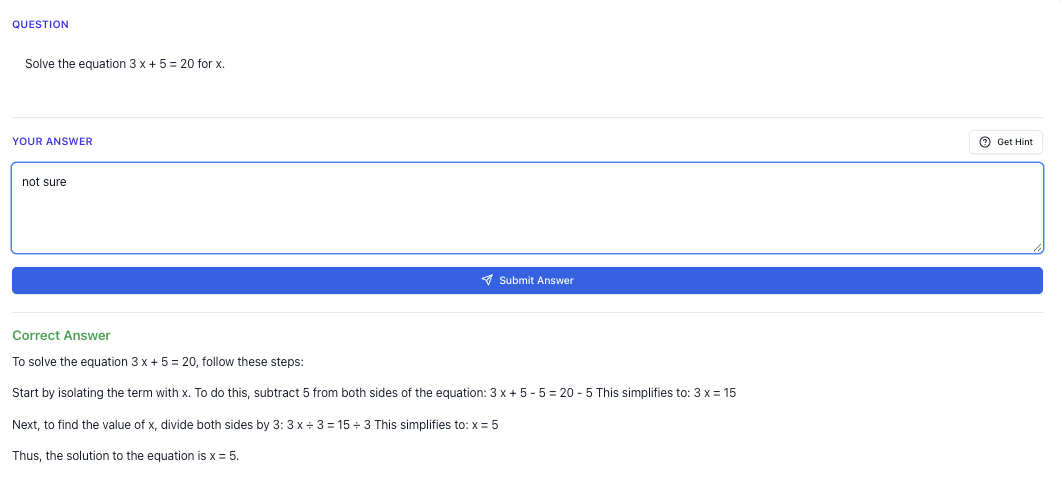
“Stuck on a question? See simple explanations that help you understand fast.”
👉 Give it a try and turn confusion into clarity in minutes.
What you need to know
Decimals are numbers with a point (like 3.14). They show parts of a whole. You'll see them a lot in exams. It's important to know how to add, subtract, multiply, and divide them. Understanding decimals helps you solve money problems and measurements.
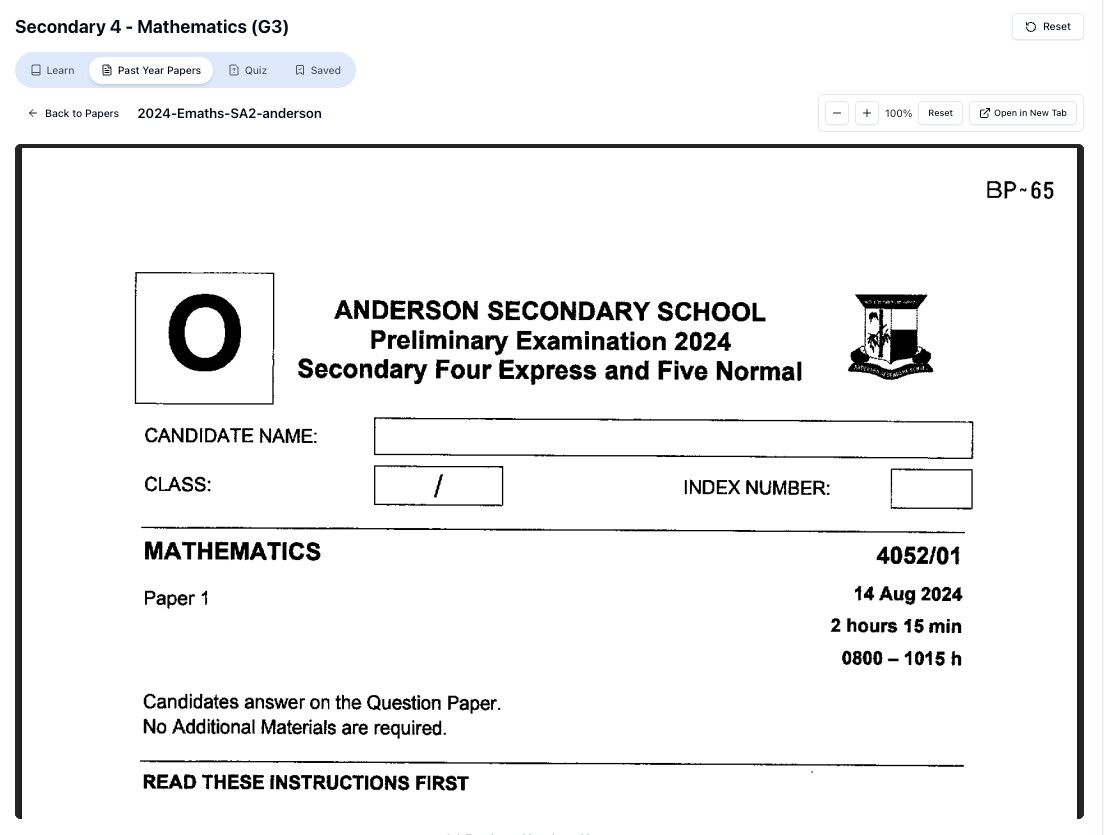
“Access more than 1000+ past year papers to practice”
👉 Start a paper today and test yourself like it’s the real exam.
Why students struggle with decimals
Decimals can be tricky because they look different from whole numbers. Many students find it hard to visualise them. Imagine a chocolate bar. If you cut it into 10 equal pieces, each piece is 0.1 of the bar. This helps to see decimals as parts of something bigger.
Quick check
- What is 0.5 + 0.25?
- Subtract 0.4 from 1.
- Multiply 0.6 by 3.
(Answers: 1. 0.75, 2. 0.6, 3. 1.8)
Common mistakes students make
-
Misplacing the Decimal Point: Students often get confused about where to place the decimal point, especially in multiplication and division. A simple trick I teach my students is to count the total number of decimal places in the numbers before multiplying, then match that in the answer.
-
Ignoring the Zero: Sometimes, students forget to write the zero before the decimal point in numbers like 0.75. This can lead to mistakes in calculations.
-
Rounding Errors: Rounding too early or incorrectly can cost marks. Parents are often surprised that their child loses marks this way. Always keep numbers exact until the final step.
-
Overlooking Units: In word problems, forgetting to include units (like dollars or centimetres) is a common slip.
-
Running Out of Time: Many students panic and rush in the second half of the paper. Practice helps, but knowing these common mistakes can save time too.
Exam tip
Keep your work neat. Align decimal points vertically when adding or subtracting. This helps prevent errors. If you’re stuck, don't panic. Mark the question and move on. Come back if there's time at the end. This way, you won't miss easy marks elsewhere.
Worked examples
Question 1
Find the sum of 2.45 and 3.7.
Solution
Step 1: Align the numbers by the decimal point:
Why: Aligning helps you see the decimal places clearly.
Step 2: Add from right to left. 5 + 0 = 5, 4 + 7 = 11 (write 1, carry 1), 2 + 3 + 1 (carry) = 6.
Why: Adding from right to left is easier because you handle carrying over as you go.
Answer: 6.15
Question 2
Multiply 0.6 by 0.5.
Solution
Step 1: Multiply as whole numbers: 6 × 5 = 30.
“Doing Secondary Science? Pick a topic and practise like it’s a real exam — with clear answers right after.”
👉 Try Tutorly now and start a Science topic in seconds.

Why: Treating them as whole numbers simplifies the multiplication.
Step 2: Count the total decimal places in the original numbers (1 in 0.6 and 1 in 0.5, total 2).
Why: You need to place the decimal point correctly in the answer.
Step 3: Place the decimal point in 30 to give two decimal places: 0.30.
Why: Ensuring the correct placement of the decimal point gives the correct answer.
Answer: 0.30
Quick summary
- Align decimal points vertically for addition/subtraction.
- Count decimal places for multiplication.
- Keep numbers exact until the final step (avoid early rounding).
- Don't forget units in your final answer.
- Practice regularly to improve speed and accuracy.
FAQ
Q: How do I align decimal numbers?
A: Write numbers in a column with decimal points in a straight line. Fill in blanks with zeros if needed.
Q: Why is my answer wrong even when I calculated correctly?
A: Check if you misplaced the decimal point or forgot to include units.
Q: How can I avoid running out of time?
A: Practice with a timer and learn to identify which questions to skip and return to later.
Q: How often should I practice decimals?
A: Short daily revision is more effective than cramming before exams. Just 10 minutes a day can make a big difference.
Free on Tutorly.sg
Practise Decimals with step-by-step help — free to start
On Tutorly.sg/app you can practise unlimited Singapore syllabus questions, get instant explanations when you are stuck, and use past-year papers — no sign-up needed to start.
- ✓ PSLE, O Level, A Level, and more
- ✓ Step-by-step working when you are stuck
- ✓ Works on phone and laptop
Free practice
Try it yourself
Ready to practise more decimals questions? Try similar questions with step-by-step help on Tutorly
- ✓ Unlimited similar questions
- ✓ Step-by-step help when you are stuck
- ✓ No sign-up needed to start
Related Topics You Should Learn Next
- Primary Mathematics: Decimals Made Easy for PSLE
- Primary Mathematics: Decimals Worked Examples Step by Step
- Primary Mathematics: Common Decimal Mistakes That Cost Marks
- Primary Mathematics: Decimals Explained Simply
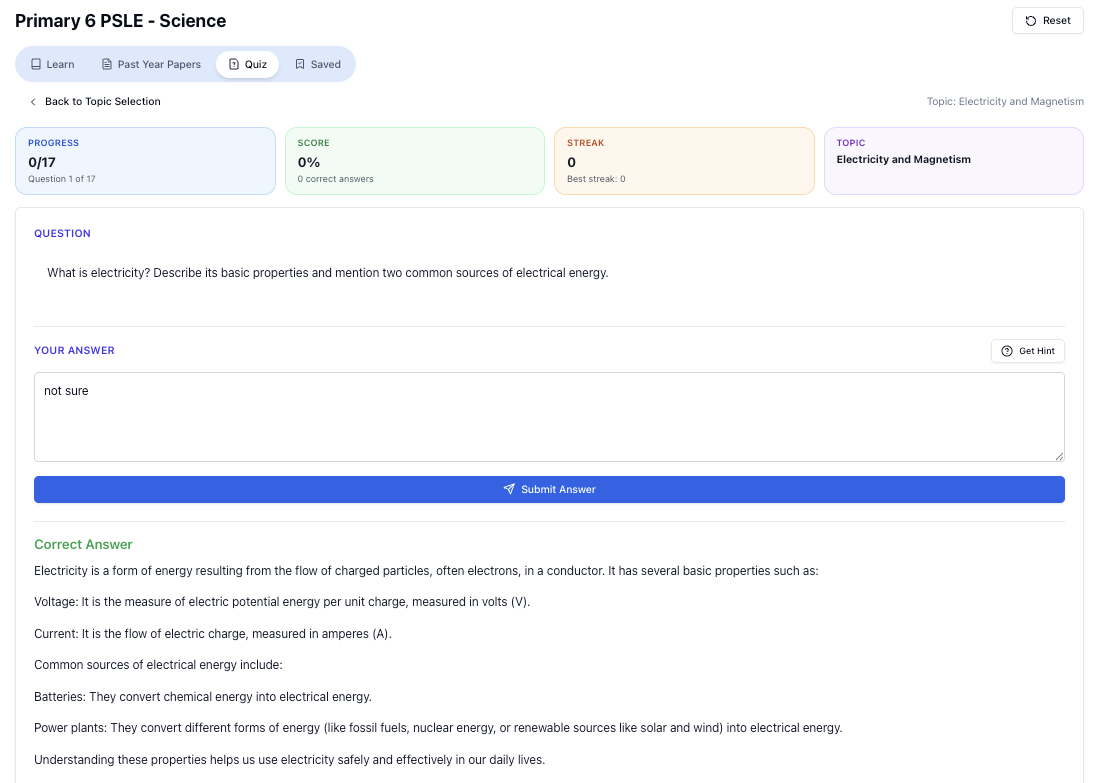
“Practice PSLE Science questions and get clear, step-by-step answers instantly.”
👉 Try a question now and see how fast you can improve.
Free on Tutorly.sg
Practise Decimals with step-by-step help — free to start
On Tutorly.sg/app you can practise unlimited Singapore syllabus questions, get instant explanations when you are stuck, and use past-year papers — no sign-up needed to start.
- ✓ PSLE, O Level, A Level, and more
- ✓ Step-by-step working when you are stuck
- ✓ Works on phone and laptop