

Free on Tutorly.sg
Practise Decimals with step-by-step help — free to start
On Tutorly.sg/app you can practise unlimited Singapore syllabus questions, get instant explanations when you are stuck, and use past-year papers — no sign-up needed to start.
- ✓ PSLE, O Level, A Level, and more
- ✓ Step-by-step working when you are stuck
- ✓ Works on phone and laptop
Quick answer
Have you ever felt your heart sink when you see a decimals question? You're not alone. Many students find decimals confusing, but once you break them down into smaller steps, they become much easier to handle. Stick with me, and you'll see how simple decimals can be.
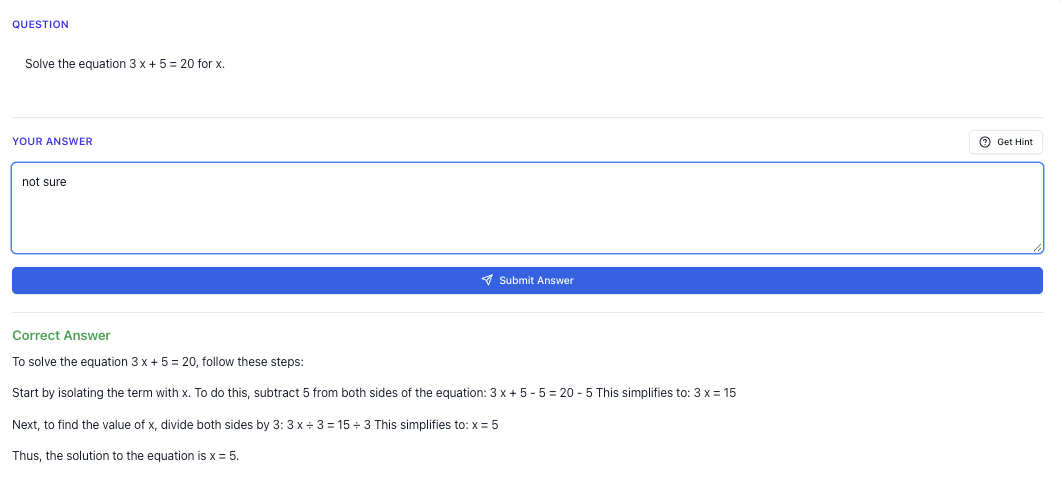
“Stuck on a question? See simple explanations that help you understand fast.”
👉 Give it a try and turn confusion into clarity in minutes.
What you need to know
Decimals are numbers that include a dot, called a decimal point, to show parts smaller than one whole. They help us deal with money, measurements, and even time. Think of decimals as another way to show fractions, just with a dot.
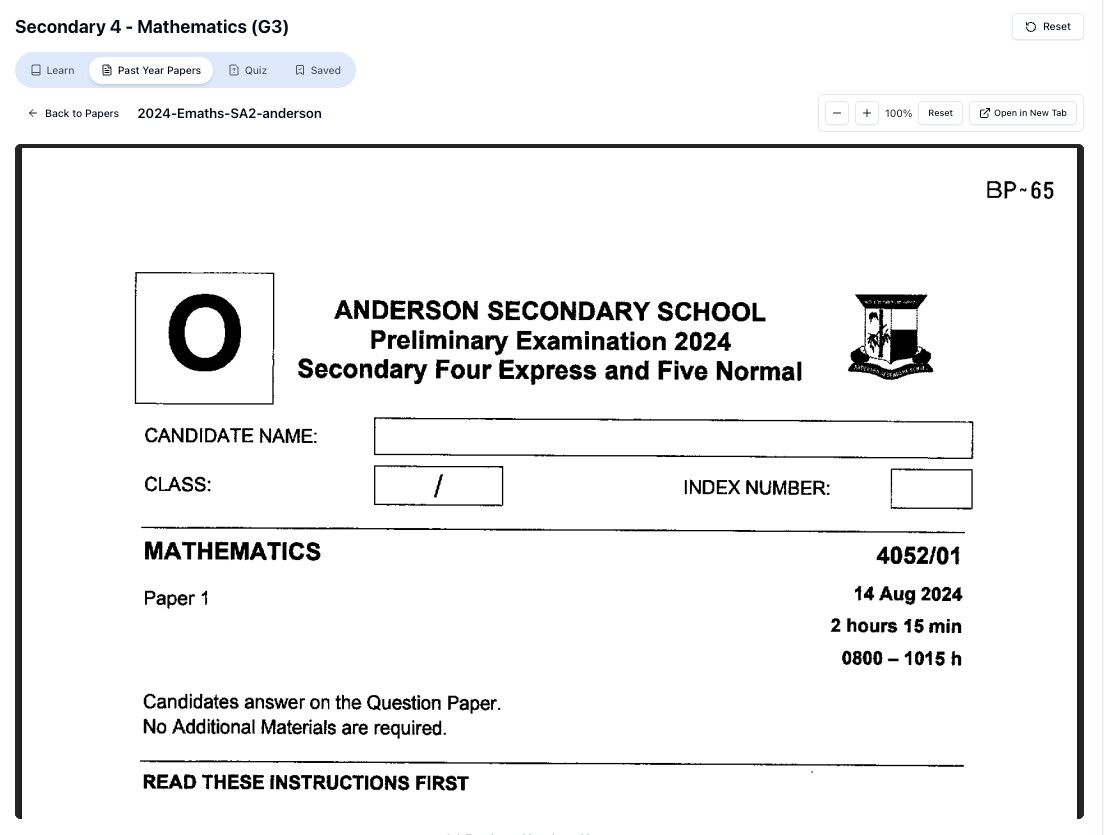
“Access more than 1000+ past year papers to practice”
👉 Start a paper today and test yourself like it’s the real exam.
Understanding Decimals
Decimals can be tricky because they look different from whole numbers. But don't panic. Once you understand how to read and write them, they make a lot of sense.
Visualizing Decimals
When I teach my students, I often say, "Imagine cutting a cake into ten slices. Each slice is a decimal." This way, you can see how decimals represent parts of a whole.
Place Value in Decimals
Place value is like a house for numbers, and each room has a name. For example, in the number 3.45, '3' is in the 'ones' place, '4' is in the 'tenths' place, and '5' is in the 'hundredths' place. Think of it like this: the further right you go, the smaller the slice of cake.
Quick check
Try these questions to test your understanding:
- What is the decimal for three and a half?
- If you divide 1 whole into 10 parts, what decimal represents 3 parts?
- Write 0.75 as a fraction.
Answers:
- 3.5
- 0.3
Common mistakes students make
Decimals can be confusing, especially during exams when stress levels are high. Here are some common mistakes:
- Misplacing the decimal point: This is a big one. Always check the place value to avoid losing marks.
- Adding zeros unnecessarily: For example, writing 0.50 instead of 0.5. They are the same, but in exams, keep it simple.
- Ignoring the decimal point: Sometimes, students forget the dot entirely, turning 2.5 into 25!
Exam tip
When you see a decimals question, breathe first. Check the place values and keep your work neat. This helps you avoid common mistakes like misplacing the decimal point. Always double-check your answers, especially in the last few minutes.
Worked examples
Question 1
Convert 0.75 to a fraction.
Solution
Step 1: Write the decimal as a fraction with a denominator of 100.
Why: A decimal like 0.75 means 75 out of 100 parts.
Step 2: Simplify the fraction by dividing both numerator and denominator by 25.
Why: Simplifying makes the fraction easier to understand and work with.
Question 2
“Doing Secondary Science? Pick a topic and practise like it’s a real exam — with clear answers right after.”
👉 Try Tutorly now and start a Science topic in seconds.

Add 2.3 and 1.45.
Solution
Step 1: Line up the decimal points and add as you would whole numbers.
2.30
+1.45
———
3.75
Why: Aligning decimal points ensures you add the correct place values together.
Step 2: Double-check by counting the number of decimal places in each number and confirm they match in your answer.
Why: Ensuring the decimal places match helps avoid mistakes.
Quick summary
- Decimals show parts of a whole with a dot.
- Each digit in a decimal has a place value.
- Common mistakes: misplacing the dot, adding unnecessary zeros.
- Always double-check decimal places in exams.
- Visualize decimals to understand them better.
FAQ
Q: How do I convert a fraction to a decimal?
A: Divide the top number (numerator) by the bottom number (denominator). For example, = 3 ÷ 4 = 0.75.
Q: Why are decimals important in daily life?
A: Decimals help with measuring things like money, weight, and length. They're used everywhere!
Q: Can decimals be negative?
A: Yes, decimals can be negative, just like whole numbers. For example, -2.5 represents a position two and a half units below zero.
Q: How do I multiply decimals?
A: Multiply as if there is no decimal point. Then count the total number of decimal places in both numbers and apply it to the answer.
Free on Tutorly.sg
Practise Decimals with step-by-step help — free to start
On Tutorly.sg/app you can practise unlimited Singapore syllabus questions, get instant explanations when you are stuck, and use past-year papers — no sign-up needed to start.
- ✓ PSLE, O Level, A Level, and more
- ✓ Step-by-step working when you are stuck
- ✓ Works on phone and laptop
Free practice
Try it yourself
Feeling confident? Practice more decimal questions and get step-by-step help on Tutorly.
- ✓ Unlimited similar questions
- ✓ Step-by-step help when you are stuck
- ✓ No sign-up needed to start
Related Topics You Should Learn Next
- Primary Mathematics: Decimals Made Easy for PSLE
- How To Convert Fractions To Decimals (Singapore Secondary Level Tutorial)
- Decimals Topic Cluster
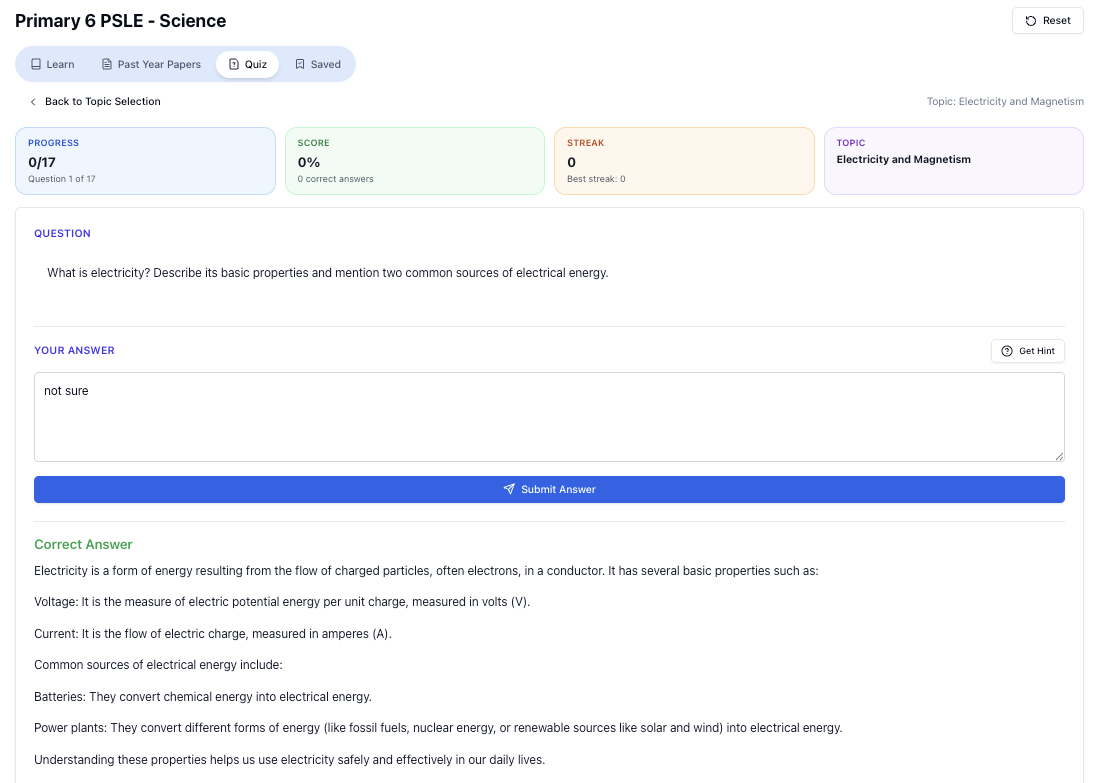
“Practice PSLE Science questions and get clear, step-by-step answers instantly.”
👉 Try a question now and see how fast you can improve.
Free on Tutorly.sg
Practise Decimals with step-by-step help — free to start
On Tutorly.sg/app you can practise unlimited Singapore syllabus questions, get instant explanations when you are stuck, and use past-year papers — no sign-up needed to start.
- ✓ PSLE, O Level, A Level, and more
- ✓ Step-by-step working when you are stuck
- ✓ Works on phone and laptop