

Free on Tutorly.sg
Practise Decimals with step-by-step help — free to start
On Tutorly.sg/app you can practise unlimited Singapore syllabus questions, get instant explanations when you are stuck, and use past-year papers — no sign-up needed to start.
- ✓ PSLE, O Level, A Level, and more
- ✓ Step-by-step working when you are stuck
- ✓ Works on phone and laptop
Quick answer
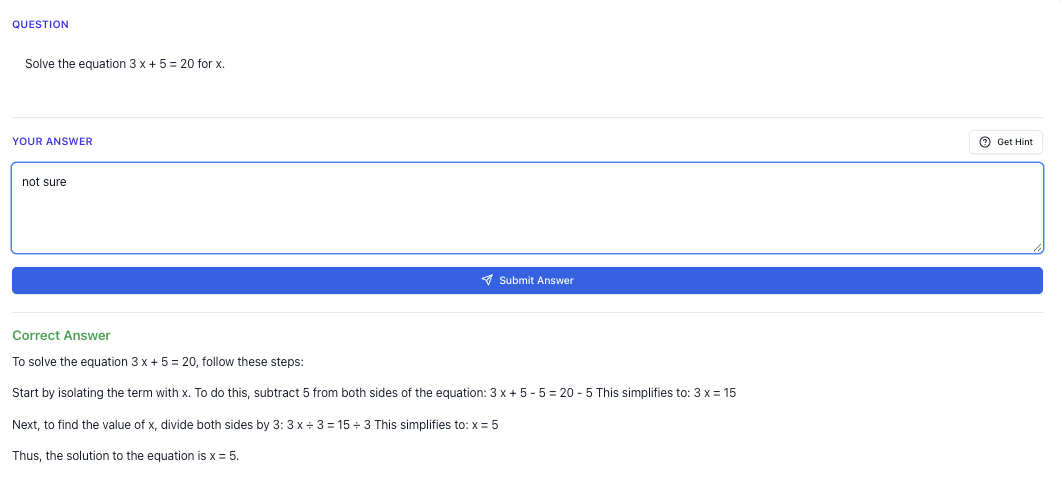
Decimals can be tricky, especially when the question looks different from what you're used to. But don't worry! Once you learn the step-by-step method, decimals will become much clearer.
“Stuck on a question? See simple explanations that help you understand fast.”
👉 Give it a try and turn confusion into clarity in minutes.
What you need to know
Decimals are numbers with a dot that separates whole numbers from parts of a whole. They are like fractions but written differently. For example, 0.5 is the same as .
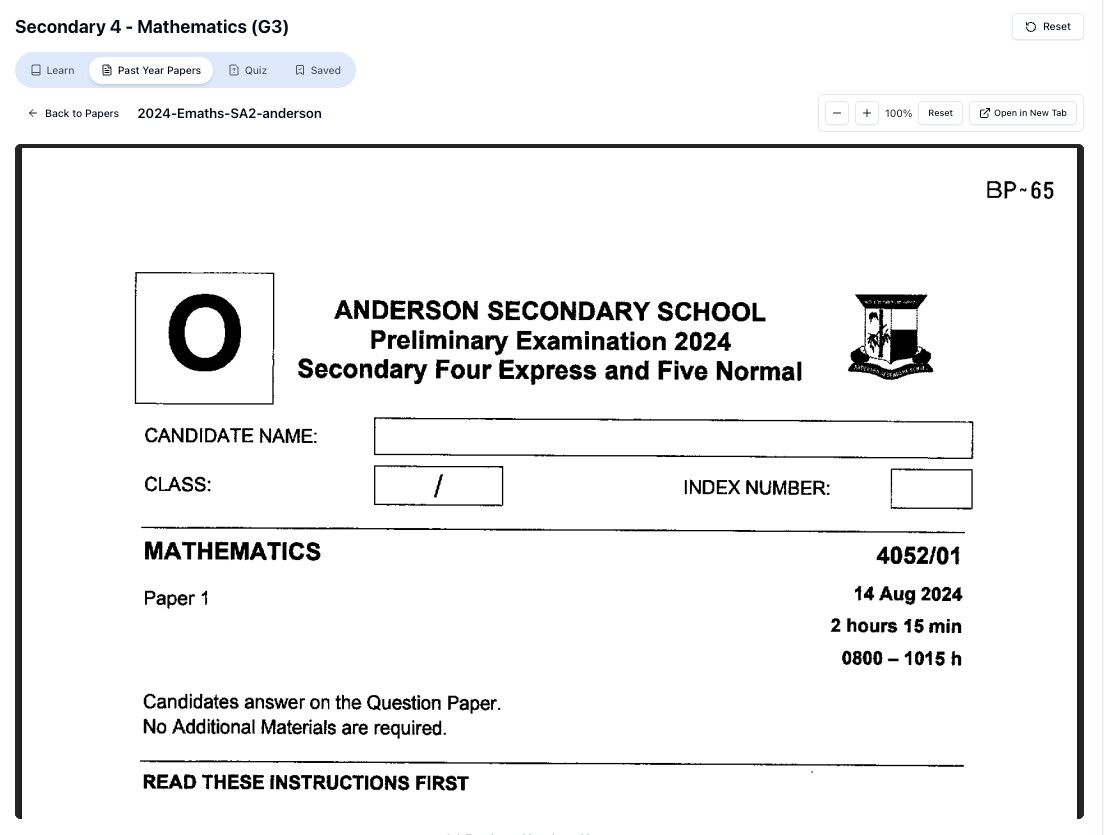
“Access more than 1000+ past year papers to practice”
👉 Start a paper today and test yourself like it’s the real exam.
Common mistakes students make
Mistake 1: Misplacing the decimal point
Many students accidentally place the decimal point in the wrong spot. This changes the number completely. Always double-check where the point goes.
Mistake 2: Ignoring place value
Each digit in a decimal has a place value. If you forget this, you might add or subtract them incorrectly. Remember, the tenths place is different from the hundredths.
Mistake 3: Forgetting to line up decimals
When adding or subtracting decimals, line up the decimal points. If they aren't aligned, the answer will be wrong.
Exam tip
During exams, always check if your decimal points are lined up when adding or subtracting. It's a simple trick I teach my students, and it helps avoid careless mistakes.
Worked examples
Question 1
Add: 2.35 + 1.4
Solution
Step 1: Write the numbers vertically, aligning the decimal points.
2.35
- 1.40
Why: Aligning the decimal points ensures you’re adding the correct place values together.
Step 2: Add the digits in each column, starting from the rightmost side (hundredths).
2.35
- 1.40
3.75
Why: Adding from right to left helps manage carry-over if needed.
Question 2
Subtract: 5.67 - 2.89
Solution
Step 1: Write the numbers vertically, aligning the decimal points.
5.67
- 2.89
Why: This alignment helps you subtract corresponding place values.
Step 2: Subtract the digits in each column, starting from the rightmost side (hundredths).
5.67
- 2.89
2.78
Why: Subtracting from right to left ensures you handle any borrowing correctly.
Question 3
Multiply: 0.6 x 4
Solution
Step 1: Multiply as if there are no decimal points: 6 x 4 = 24.
Why: Ignoring the decimal initially helps simplify the multiplication.
Step 2: Count the total decimal places in the original numbers (1 in 0.6). Place the decimal in the result so it has the same number of decimal places: 2.4.
Why: You need to adjust the decimal point to reflect the original numbers' place values.
“Doing Secondary Science? Pick a topic and practise like it’s a real exam — with clear answers right after.”
👉 Try Tutorly now and start a Science topic in seconds.

Question 4
Divide: 3.6 ÷ 0.9
Solution
Step 1: Change the divisor to a whole number by moving the decimal one place right: 36 ÷ 9.
Why: Whole numbers make division easier and more straightforward.
Step 2: Divide 36 by 9 to get 4.
Why: Dividing whole numbers simplifies the process and gives you the correct answer in decimal form.
Quick summary
- Always align decimal points when adding or subtracting.
- Remember place values for each digit in a decimal.
- Convert decimals to whole numbers when multiplying or dividing.
- Practice short daily revisions to build confidence.
FAQ
Why do I need to line up decimal points?
Lining up decimal points ensures that you are adding or subtracting the correct place values, which prevents mistakes.
How can I remember decimal place values?
Think of them like money: $1 is a whole, 10 cents is a tenth, and 1 cent is a hundredth.
What if I forget to move the decimal point back?
Your answer will be off by a factor of ten. Always check your work for decimal placement.
Is there a trick for multiplying decimals?
Yes, treat the numbers as whole numbers first, then adjust the decimal point in the answer to match the total decimal places in the original numbers.
How do I practice decimals better?
Use short daily practice sessions. Try a few problems each day instead of long sessions, so you don't get overwhelmed.
Free on Tutorly.sg
Practise Decimals with step-by-step help — free to start
On Tutorly.sg/app you can practise unlimited Singapore syllabus questions, get instant explanations when you are stuck, and use past-year papers — no sign-up needed to start.
- ✓ PSLE, O Level, A Level, and more
- ✓ Step-by-step working when you are stuck
- ✓ Works on phone and laptop
Free practice
Try it yourself
Practise similar decimal questions with step-by-step help on Tutorly
- ✓ Unlimited similar questions
- ✓ Step-by-step help when you are stuck
- ✓ No sign-up needed to start
Related Topics You Should Learn Next
- Primary Mathematics: Decimals Made Easy for PSLE
- Primary Mathematics: Decimals Explained Simply
- How To Convert Fractions To Decimals (Singapore Secondary Level Tutorial)
- Primary Math Decimals Topic Cluster
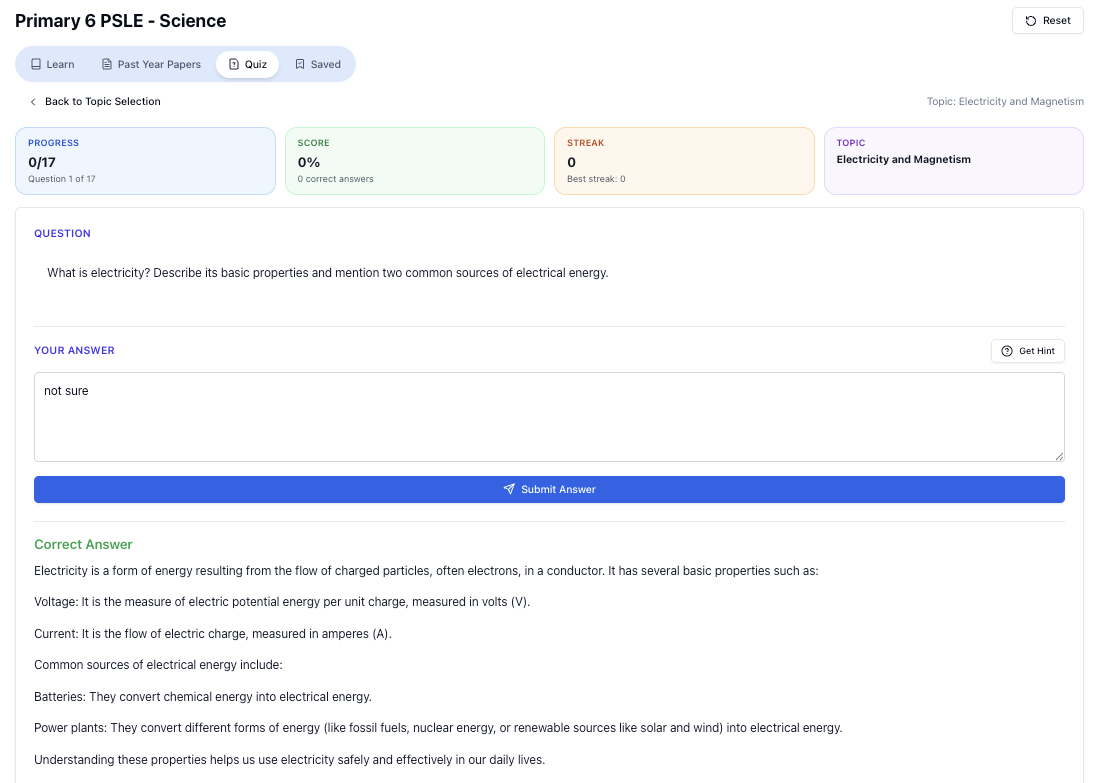
“Practice PSLE Science questions and get clear, step-by-step answers instantly.”
👉 Try a question now and see how fast you can improve.
Free on Tutorly.sg
Practise Decimals with step-by-step help — free to start
On Tutorly.sg/app you can practise unlimited Singapore syllabus questions, get instant explanations when you are stuck, and use past-year papers — no sign-up needed to start.
- ✓ PSLE, O Level, A Level, and more
- ✓ Step-by-step working when you are stuck
- ✓ Works on phone and laptop