

Free on Tutorly.sg
Practise Decimals with step-by-step help — free to start
On Tutorly.sg/app you can practise unlimited Singapore syllabus questions, get instant explanations when you are stuck, and use past-year papers — no sign-up needed to start.
- ✓ PSLE, O Level, A Level, and more
- ✓ Step-by-step working when you are stuck
- ✓ Works on phone and laptop
Quick answer
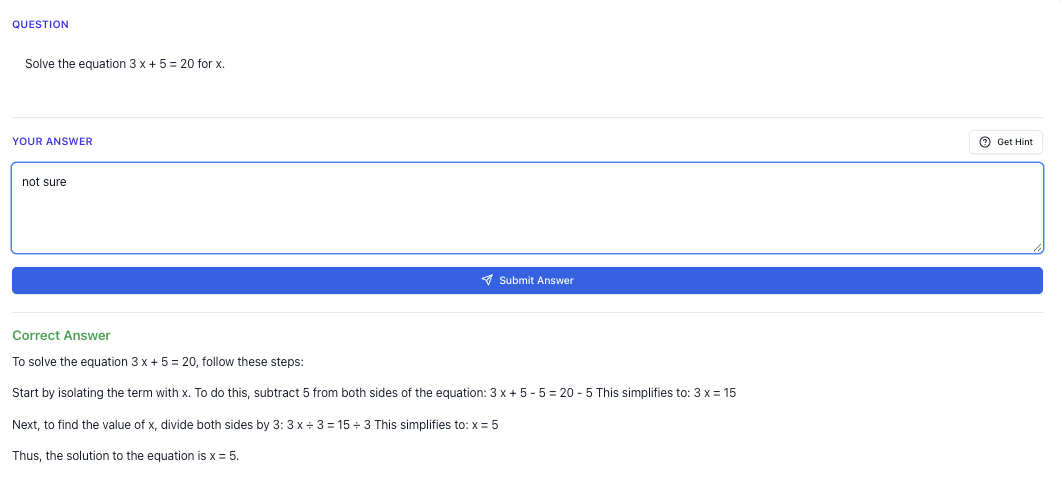
Decimals can feel tricky, especially when exams are near, but don't worry. With clear steps and practice, you can understand them easily. Let me show you how to tackle decimals without stress, so you can gain confidence and score well.
“Stuck on a question? See simple explanations that help you understand fast.”
👉 Give it a try and turn confusion into clarity in minutes.
What you need to know
Decimals are numbers that have a whole number part and a fractional part, separated by a dot called a decimal point. They are used to represent values that are not whole numbers, like money or measurements.
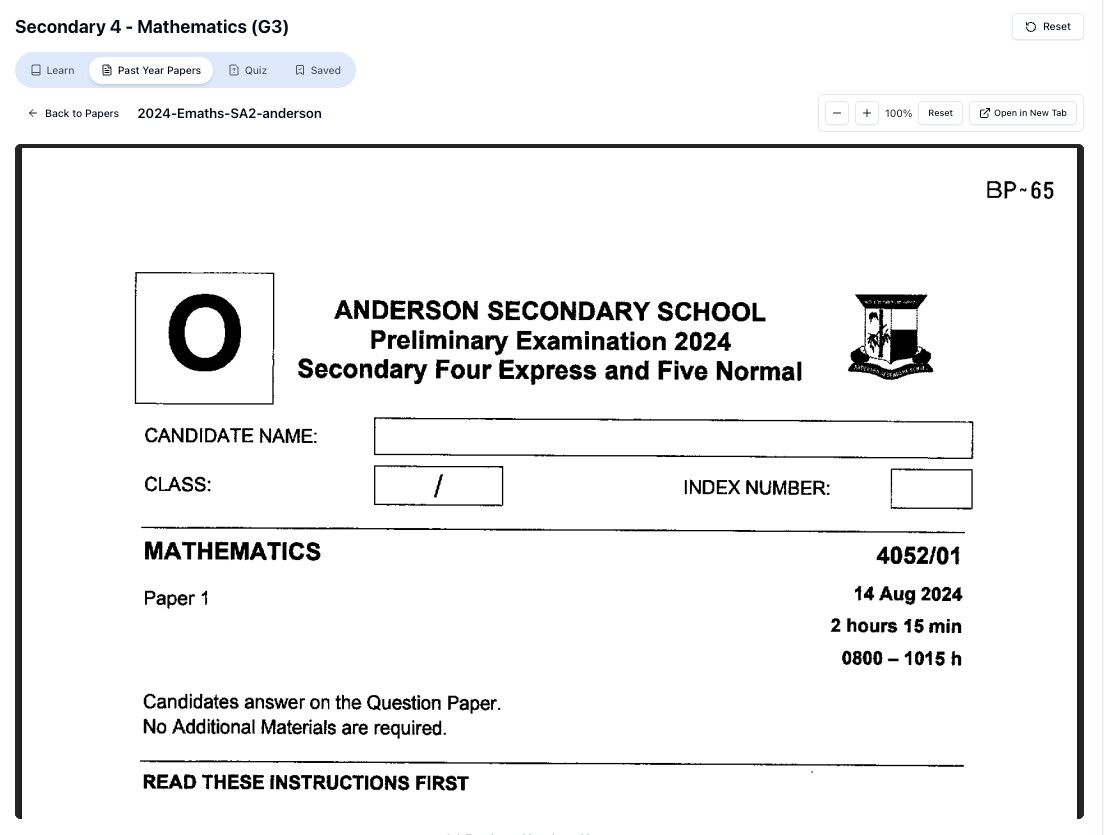
“Access more than 1000+ past year papers to practice”
👉 Start a paper today and test yourself like it’s the real exam.
Understanding Decimals
Decimals can be confusing at first, but once you break them down into smaller steps, they become much easier. I often tell my students, "A simple trick I teach my students is to visualize decimals as money." Imagine $0.50 as 50 cents.
Place Value in Decimals
Understanding the place value is crucial in decimals. Each digit after the decimal point represents tenths, hundredths, thousandths, and so on.
-
Step 1: Look at the number. Identify the decimal point.
-
Why: The decimal point separates the whole number from the fraction.
-
Step 2: Read each digit after the decimal point as tenths, hundredths, etc.
-
Why: This helps you understand the value of each digit.
Common mistakes students make
Misplacing the Decimal Point
One common mistake is misplacing the decimal point when adding or subtracting decimals. This can change the number entirely.
- Fix: Always line up the decimal points vertically before starting your calculation.
Ignoring Zeros
Many students ignore zeros after the decimal point, thinking they are not important.
- Fix: Remember, zeros can change the value of a decimal. For example, $0.5is not the same as \0.05$.
Exam tip
During exams, make sure to show all your working steps clearly. Examiners give marks for method, even if the final answer is wrong. And remember, when comparing decimals, line up the decimal points first!
Worked examples
Question 1
Convert $0.75$ to a fraction.
Solution
Step 1: Write as .
Why: The decimal $0.75$ means 75 out of 100 parts.
Step 2: Simplify the fraction by dividing both the numerator and the denominator by 25.
Why: Simplifying makes the fraction easier to understand.
Final Answer: .
Question 2
Add $1.3 and \2.45$.
Solution
Step 1: Line up the numbers by the decimal point:
Why: Aligning the decimal points ensures the digits are in the correct place value.
Step 2: Add from right to left, just like whole numbers.
Why: This is the standard addition method, ensuring accuracy.
“Doing Secondary Science? Pick a topic and practise like it’s a real exam — with clear answers right after.”
👉 Try Tutorly now and start a Science topic in seconds.

Final Answer: $3.75.
Quick check
Try these questions to test your understanding:
- What is as a decimal?
- Subtract $0.9 from \2.3$.
- Which is larger: $0.6 or \0.65$?
Answers:
- $0.25
- $1.4
- $0.65
Quick summary
- Decimals have whole and fractional parts.
- Line up decimal points for accurate calculations.
- Don't ignore zeros; they change the value.
- Show all working steps in exams.
- Simplify fractions for better understanding.
FAQ
Q 1: Why do I need to understand decimals?
Decimals are everywhere in real life. From money to measurements, understanding them helps in daily tasks and exams.
Q 2: How can I avoid mistakes with decimals?
Always line up decimal points and double-check your work. Practice regularly to build confidence.
Q 3: What if I still don't get it?
Don't worry. Take it step by step and practice. Use stories or images to help visualize concepts.
Q 4: Are decimals difficult for everyone?
Yes, many students find them tricky at first. But with practice, the topic becomes much easier.
Free on Tutorly.sg
Practise Decimals with step-by-step help — free to start
On Tutorly.sg/app you can practise unlimited Singapore syllabus questions, get instant explanations when you are stuck, and use past-year papers — no sign-up needed to start.
- ✓ PSLE, O Level, A Level, and more
- ✓ Step-by-step working when you are stuck
- ✓ Works on phone and laptop
Free practice
Try it yourself
Practicing similar questions can really help. Head over to Tutorly for step-by-step guidance on decimals and more practice questions
- ✓ Unlimited similar questions
- ✓ Step-by-step help when you are stuck
- ✓ No sign-up needed to start
Related Topics You Should Learn Next
- How To Convert Fractions To Decimals (Singapore Secondary Level Tutorial)
- Primary Mathematics Decimals Complete Guide Singapore
- Primary Math Decimals Topic Cluster
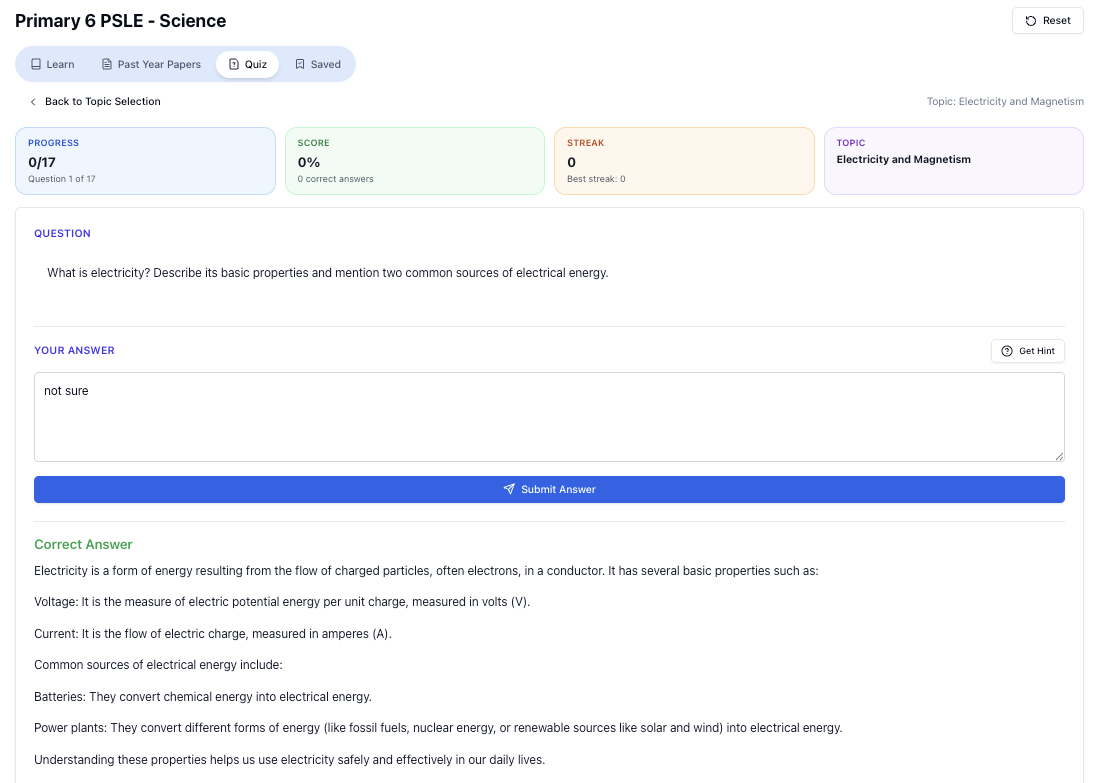
“Practice PSLE Science questions and get clear, step-by-step answers instantly.”
👉 Try a question now and see how fast you can improve.
Free on Tutorly.sg
Practise Decimals with step-by-step help — free to start
On Tutorly.sg/app you can practise unlimited Singapore syllabus questions, get instant explanations when you are stuck, and use past-year papers — no sign-up needed to start.
- ✓ PSLE, O Level, A Level, and more
- ✓ Step-by-step working when you are stuck
- ✓ Works on phone and laptop