

Free on Tutorly.sg
Practise Heat and energy with step-by-step help — free to start
On Tutorly.sg/app you can practise unlimited Singapore syllabus questions, get instant explanations when you are stuck, and use past-year papers — no sign-up needed to start.
- ✓ PSLE, O Level, A Level, and more
- ✓ Step-by-step working when you are stuck
- ✓ Works on phone and laptop
Quick answer
When tackling PSLE Science questions on heat and energy, it's crucial to break each problem into smaller steps. Understanding the flow of heat, the difference between conductors and insulators, and how energy is transferred will give you a solid foundation. Let's work through examples together — you'll feel more confident and less overwhelmed!
“Stuck on a question? See simple explanations that help you understand fast.”
👉 Give it a try and turn confusion into clarity in minutes.
What you need to know
Heat is energy that makes things warmer. It moves from hot to cold places. Energy is what makes things happen, like turning on lights or boiling water. In science, we study how heat moves and how energy changes form.
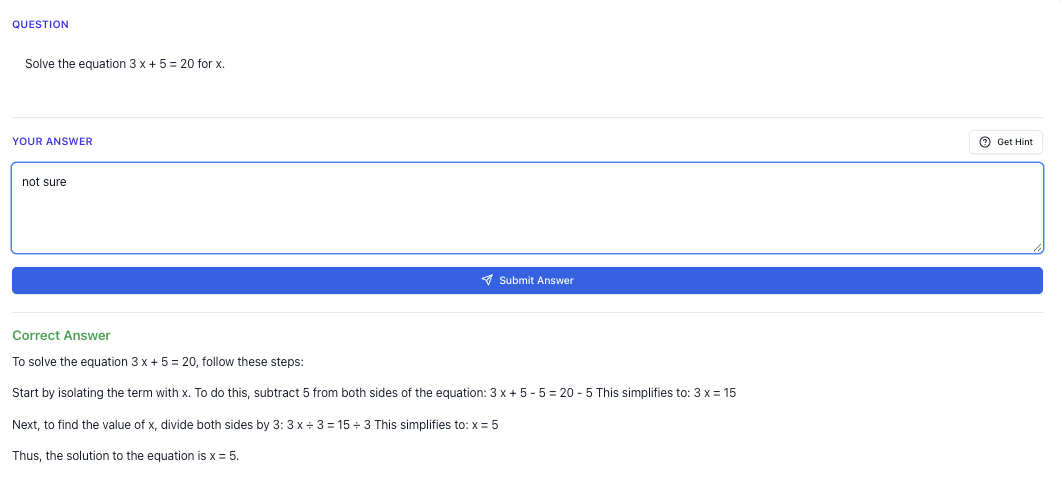
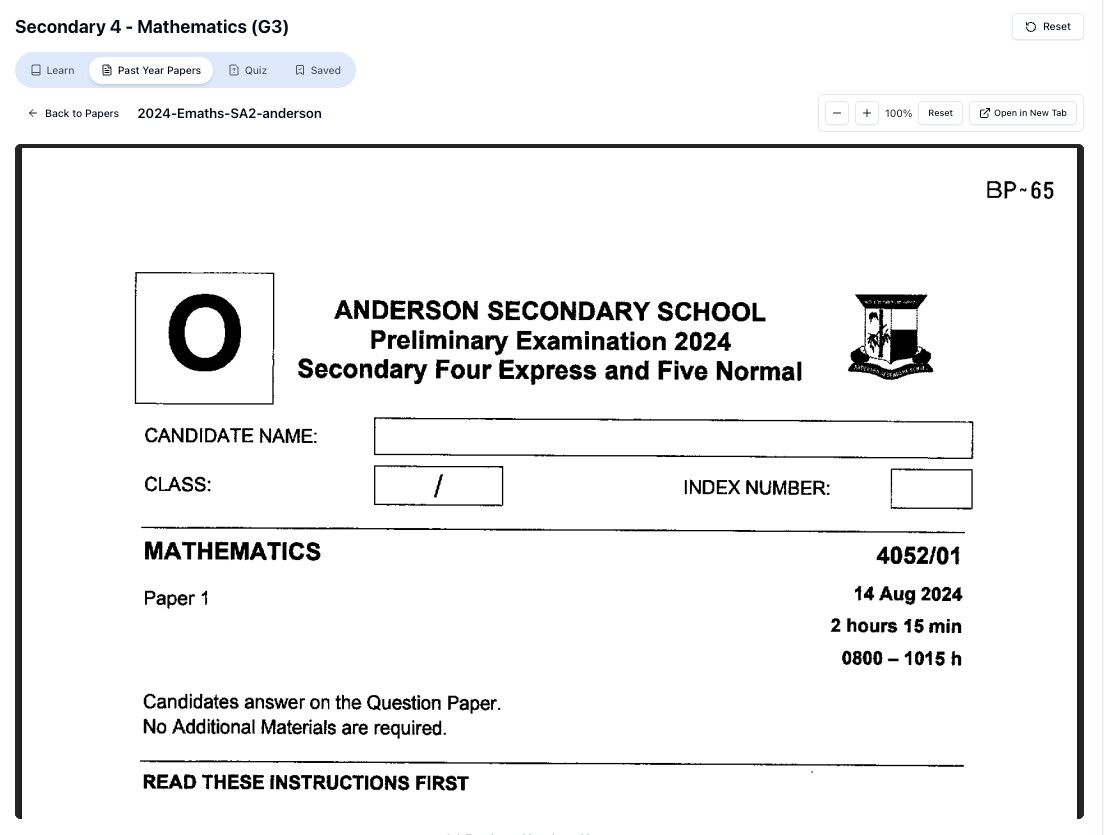
“Access more than 1000+ past year papers to practice”
👉 Start a paper today and test yourself like it’s the real exam.
Understanding Heat and Energy
Imagine you're sitting at home, and the fan is blowing. The air feels cool, right? That's because the fan helps to move heat away from your body. This is what we mean by heat transfer. In Singapore, where it's hot and humid, understanding heat and energy isn't just for exams — it's part of daily life.
Most Primary 5 students struggle with this transition because they try to memorise rather than visualise. Let's use stories and simple steps to make it easier.
Common mistakes students make
-
Confusing conductors and insulators: A simple trick I teach my students is to remember that metals are like busy MRT trains (conductors) and wood is like a quiet library (insulator).
-
Overlooking heat flow direction: Remember, heat always moves from hot to cold, just like how cold drinks warm up in your hand.
-
Misreading diagrams: Parents are often surprised that kids miss marks because they rush. Slow down, and look at where the arrows point in a diagram.
Exam tip
Always read the question twice. Look for keywords like "heat transfer" or "temperature change". These tell you what the question is really asking. Marks are often lost because students answer what they think the question says, not what's written.
Worked Examples
Let's work through some examples to see how these concepts apply.
Question 1
A metal spoon is placed in a cup of hot tea. Explain how heat is transferred to the spoon.
Solution
Step 1: Identify the objects involved: metal spoon and hot tea.
Why: Knowing the objects helps you think about how they interact.
Step 2: State the direction of heat flow: from hot tea to metal spoon.
Why: Heat always moves from hot to cold areas.
Step 3: Explain the process: Heat is transferred by conduction, as the spoon is in direct contact with the tea.
Why: Conduction happens when heat moves through direct contact between objects.
Question 2
Why does a plastic handle on a pot stay cooler than the metal part?
Solution
Step 1: Identify materials: plastic handle, metal pot.
Why: Different materials conduct heat differently.
Step 2: Explain: Metal conducts heat well, plastic does not.
Why: This is why the metal pot gets hot, but the plastic handle stays cool.
Step 3: Link to heat flow: Heat moves through metal quickly but not through plastic.
Why: Understanding this helps explain why some parts of an object get hotter than others.
Question 3
Describe what happens to ice cream left out on a hot day.
Solution
Step 1: Identify the heat flow: Heat moves from the warm air to the cold ice cream.
Why: This explains why the ice cream melts.
Step 2: Explain the process: Melting occurs as heat is absorbed by the ice cream.
Why: Absorbing heat changes the state from solid to liquid.
Question 4
How does a thermos keep drinks hot?
“Doing Secondary Science? Pick a topic and practise like it’s a real exam — with clear answers right after.”
👉 Try Tutorly now and start a Science topic in seconds.

Solution
Step 1: Identify the thermos parts: inner and outer layers.
Why: Knowing the structure helps understand how it works.
Step 2: Explain: The vacuum between layers reduces heat transfer.
Why: Without air, there is minimal conduction or convection.
Step 3: Link to heat retention: Keeps drink at a steady temperature longer.
Why: The design is meant to prevent heat loss.
Quick summary
- Heat moves from hot to cold areas.
- Conductors let heat pass, insulators do not.
- Diagrams can show heat flow direction.
- Always check for keywords in questions.
- Practice helps with tricky diagrams.
FAQ
Q 1: What is conduction?
A: Conduction is the way heat moves through direct contact, like when a spoon gets hot in tea.
Q 2: How do insulators work?
A: Insulators slow down heat transfer. They keep things hot or cold by not letting heat pass through easily.
Q 3: Why is understanding heat important for PSLE?
A: It helps you answer questions correctly and apply the knowledge in real life, like choosing the right materials for cooking.
Q 4: What should I do if I freeze during the exam?
A: Okay, breathe first. Break down the question into smaller parts, and look for familiar concepts.
Free on Tutorly.sg
Practise Heat and energy with step-by-step help — free to start
On Tutorly.sg/app you can practise unlimited Singapore syllabus questions, get instant explanations when you are stuck, and use past-year papers — no sign-up needed to start.
- ✓ PSLE, O Level, A Level, and more
- ✓ Step-by-step working when you are stuck
- ✓ Works on phone and laptop
Free practice
Try it yourself
Practise these concepts with more questions and step-by-step help on Tutorly
- ✓ Unlimited similar questions
- ✓ Step-by-step help when you are stuck
- ✓ No sign-up needed to start
Practise with free question sets
Work through more exam-style questions with answers and step-by-step solutions:
- 35+ Primary 6 PSLE Heat and energy Practice Questions for 2026 (based on Singapore MOE Syllabus)
- Topic study hub
Want unlimited similar questions with AI marking? Practise on Tutorly.sg/app
Related Topics You Should Learn Next
- PSLE Science: Mastering Heat and Energy Without Overload
- PSLE Science: Solving Heat and Energy Confusion with Simple Stories
- PSLE Science: How to Score Heat and Energy Questions Without Panic
- PSLE Science AI Tutor (Singapore): Answering Technique + Worked Questions
Remember, once this clicks, the rest is easier! Happy studying, and don't hesitate to ask questions.
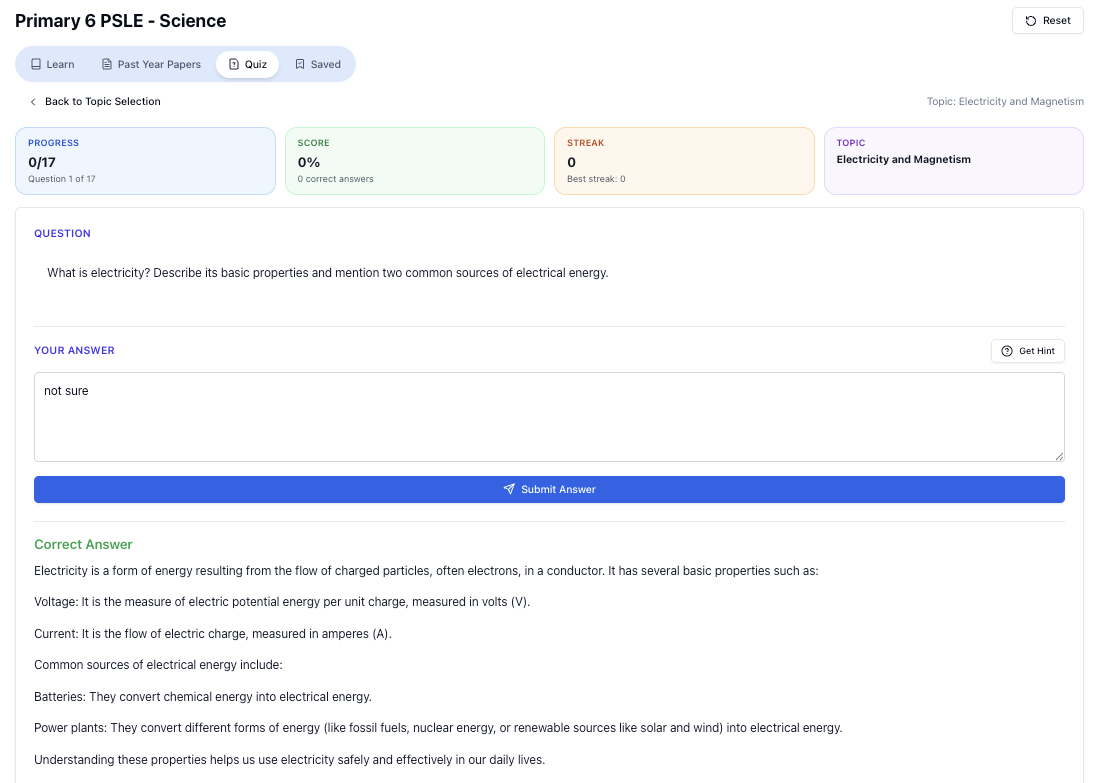
“Practice PSLE Science questions and get clear, step-by-step answers instantly.”
👉 Try a question now and see how fast you can improve.
Free on Tutorly.sg
Practise Heat and energy with step-by-step help — free to start
On Tutorly.sg/app you can practise unlimited Singapore syllabus questions, get instant explanations when you are stuck, and use past-year papers — no sign-up needed to start.
- ✓ PSLE, O Level, A Level, and more
- ✓ Step-by-step working when you are stuck
- ✓ Works on phone and laptop