

Free on Tutorly.sg
Practise Forces with step-by-step help — free to start
On Tutorly.sg/app you can practise unlimited Singapore syllabus questions, get instant explanations when you are stuck, and use past-year papers — no sign-up needed to start.
- ✓ PSLE, O Level, A Level, and more
- ✓ Step-by-step working when you are stuck
- ✓ Works on phone and laptop
Quick answer
Have you ever felt your heart sink during PSLE Science when you lose marks on Forces questions you thought you knew? You're not alone. Many students make common mistakes in this topic, but with a few simple tricks, you can avoid them and secure your marks.
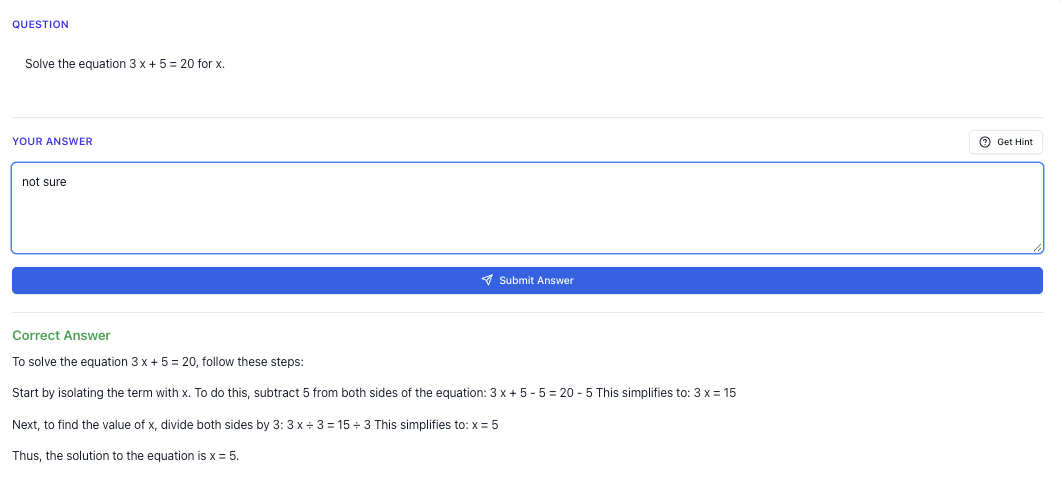
“Stuck on a question? See simple explanations that help you understand fast.”
👉 Give it a try and turn confusion into clarity in minutes.
What you need to know
Forces are pushes or pulls that can make things move, stop, or change direction. In PSLE Science, you'll learn about different types of forces, like gravity and friction. Understanding these can help you solve questions correctly.
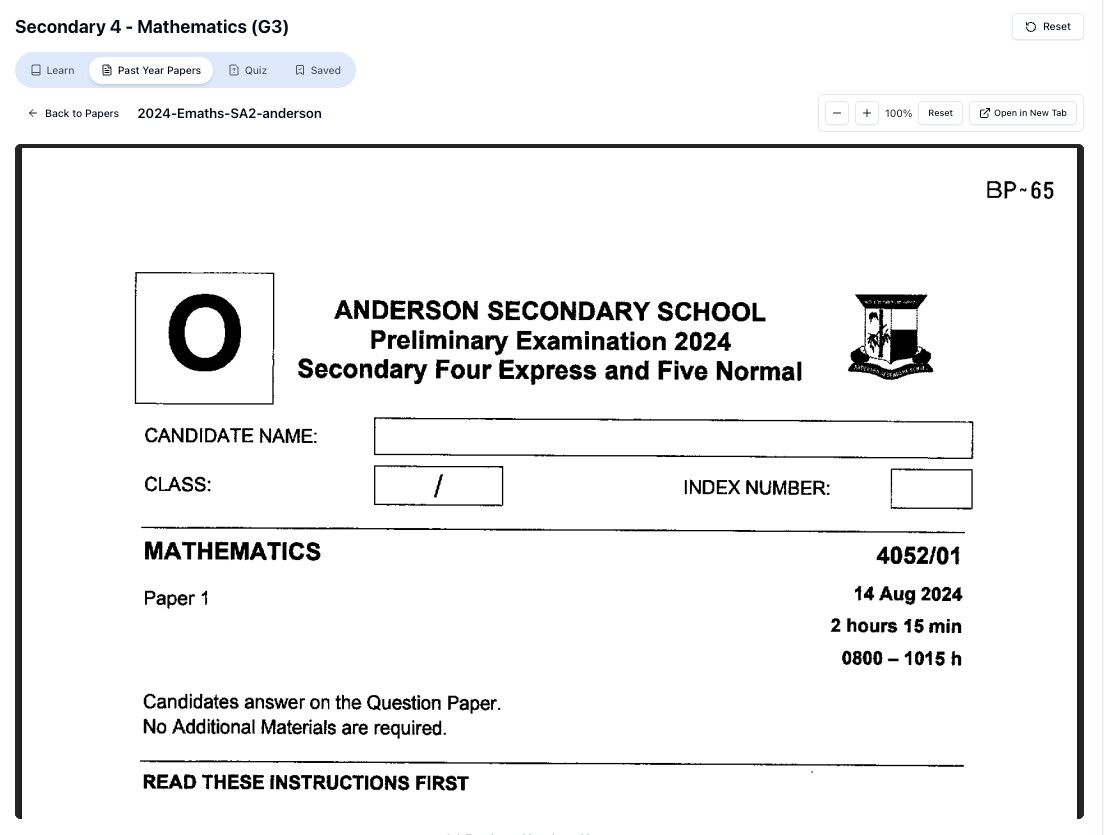
“Access more than 1000+ past year papers to practice”
👉 Start a paper today and test yourself like it’s the real exam.
Common mistakes students make
Misunderstanding the direction of forces
Sometimes, students get confused about which way a force is acting. For example, when a car is moving, friction acts in the opposite direction of movement.
How to fix:
- Step 1: Always draw a diagram with arrows showing the direction of each force.
- Why: Visualising the forces helps you see which way they act.
Mixing up mass and weight
Mass is how much matter is in an object, while weight is the force of gravity on that object. They are related but not the same.
How to fix:
- Step 1: Remember that weight = mass × gravity (𝑊 = mg).
- Why: Knowing the formula helps you calculate weight correctly.
Forgetting units
Sometimes, students write the wrong units, like using "kg" instead of "N" for weight.
How to fix:
- Step 1: Always check the units in your final answer.
- Why: Using the correct units ensures your answer is accurate.
Not considering all forces
Students often forget to consider all forces acting on an object, especially when there are multiple forces.
How to fix:
- Step 1: List all forces before solving the problem.
- Why: This ensures you include every force in your calculations.
Rushing through questions
In a hurry, you might skip important steps or misread questions.
How to fix:
- Step 1: Take a deep breath and read the question carefully.
- Why: Understanding the question fully helps you avoid mistakes.
Exam tip
Check your answers twice for unit consistency and logical direction of forces. Remember, in PSLE Science, presentation matters. Write clearly and label diagrams properly to avoid losing marks.
Quick check
- What is the difference between mass and weight?
- Draw a diagram showing the forces on a car moving forward. Label them.
- What units should you use for weight?
Answers:
- Mass is the amount of matter; weight is the gravitational force.
- Diagram should show arrows for gravity, friction, and engine force.
- Newtons (N) for weight.
Worked examples
Question
A 10 kg box is on a table. What is its weight?
Solution
Step 1: Use the formula: weight = mass × gravity (𝑊 = mg).
Why: This formula helps you find weight using mass and gravitational force.
Step 2: Substitute the given mass and gravity (9.8 m/s²): 𝑊 = 10 kg × 9.8 m/s².
Why: Substituting values lets you calculate the weight.
Step 3: Calculate: 𝑊 = 98 N.
Why: This gives you the final weight in Newtons.
Question
A car moves forward with a force of 500 N, but friction is 300 N. Calculate the net force.
“Doing Secondary Science? Pick a topic and practise like it’s a real exam — with clear answers right after.”
👉 Try Tutorly now and start a Science topic in seconds.

Solution
Step 1: Identify all forces: forward force and friction.
Why: Knowing all forces helps you calculate the net force.
Step 2: Calculate net force: 500 N - 300 N.
Why: Subtracting opposing forces gives the net force.
Step 3: Final net force = 200 N forward.
Why: This tells you the strength and direction of the total force.
Quick summary
- Forces are pushes or pulls; remember direction.
- Mass is not the same as weight; use 𝑊 = mg.
- Check units: Mass in kg, weight in N.
- Draw diagrams to visualise forces.
- Slow down and read questions carefully.
FAQ
What is the difference between mass and weight?
Mass is the amount of matter in an object, measured in kilograms (kg). Weight is the force of gravity acting on that mass, measured in Newtons (N).
How can I avoid mixing up force directions?
Always draw a diagram with arrows to show the direction of each force. This helps you visualise and avoid confusion.
Why do I lose marks for units?
Using incorrect units can lead to wrong answers. Always double-check your units, especially in final answers.
What's the best way to remember formulas?
Practice regularly and relate them to real-life situations. Short daily revision helps more than long study sessions.
How does friction affect movement?
Friction opposes motion, acting in the opposite direction to slow things down or stop them.
Free on Tutorly.sg
Practise Forces with step-by-step help — free to start
On Tutorly.sg/app you can practise unlimited Singapore syllabus questions, get instant explanations when you are stuck, and use past-year papers — no sign-up needed to start.
- ✓ PSLE, O Level, A Level, and more
- ✓ Step-by-step working when you are stuck
- ✓ Works on phone and laptop
Free practice
Try it yourself
Practise similar questions with step-by-step help on Tutorly
- ✓ Unlimited similar questions
- ✓ Step-by-step help when you are stuck
- ✓ No sign-up needed to start
Practise with free question sets
Work through exam-style questions with answers and step-by-step solutions:
- 35+ PSLE Science Forces Questions for (Singapore MOE Syllabus) with Answers and Explanations
- Topic study hub
[Practise unlimited questions on Tutorly.sg/app](https://www.tutorly.sg/app)
Related Topics You Should Learn Next
- PSLE Science Forces: Simple Steps to Secure Your Marks
- PSLE Science: Understanding Forces Without Losing Marks
- Mastering PSLE Science Keywords for Full-Mark Answers in Singapore
- How To Score Full Marks For PSLE Science Open Ended Questions In Singapore
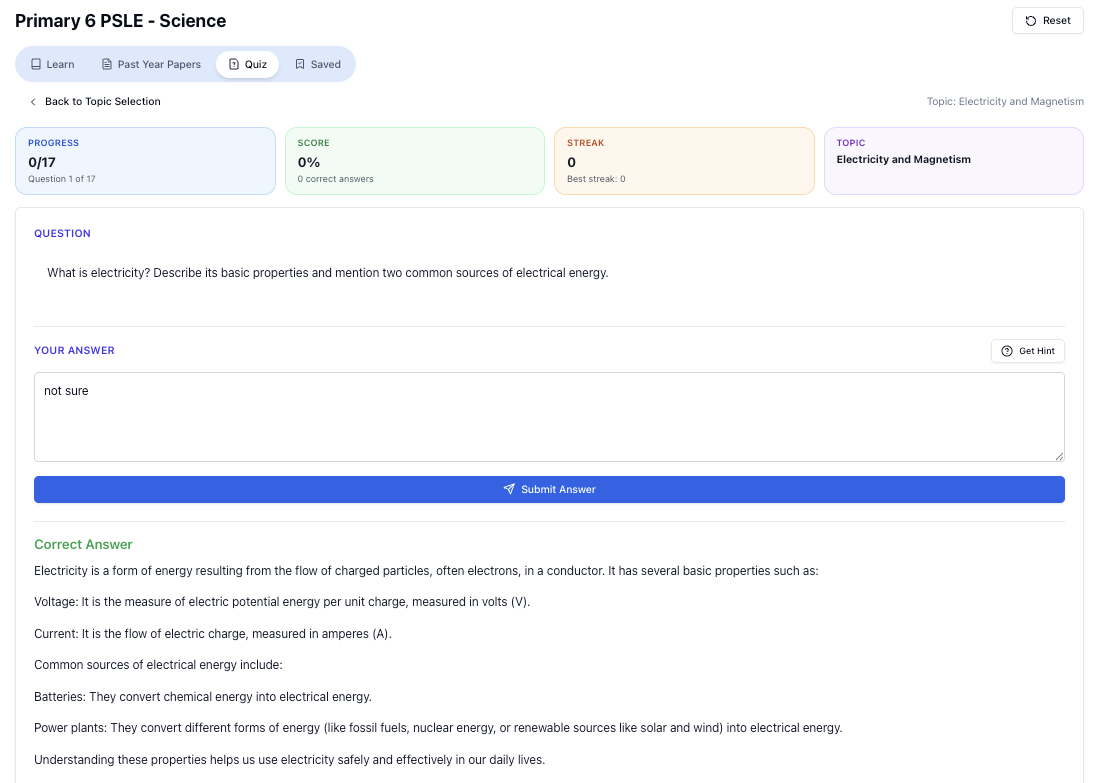
“Practice PSLE Science questions and get clear, step-by-step answers instantly.”
👉 Try a question now and see how fast you can improve.
Free on Tutorly.sg
Practise Forces with step-by-step help — free to start
On Tutorly.sg/app you can practise unlimited Singapore syllabus questions, get instant explanations when you are stuck, and use past-year papers — no sign-up needed to start.
- ✓ PSLE, O Level, A Level, and more
- ✓ Step-by-step working when you are stuck
- ✓ Works on phone and laptop