

Free on Tutorly.sg
Practise Forces with step-by-step help — free to start
On Tutorly.sg/app you can practise unlimited Singapore syllabus questions, get instant explanations when you are stuck, and use past-year papers — no sign-up needed to start.
- ✓ PSLE, O Level, A Level, and more
- ✓ Step-by-step working when you are stuck
- ✓ Works on phone and laptop
Quick answer
Feeling overwhelmed by forces in PSLE Science? You're not alone. Many students lose marks on this topic due to common mistakes, but with simple steps and some practice, you can master it. Let's break it down so you can feel more confident and secure those marks.
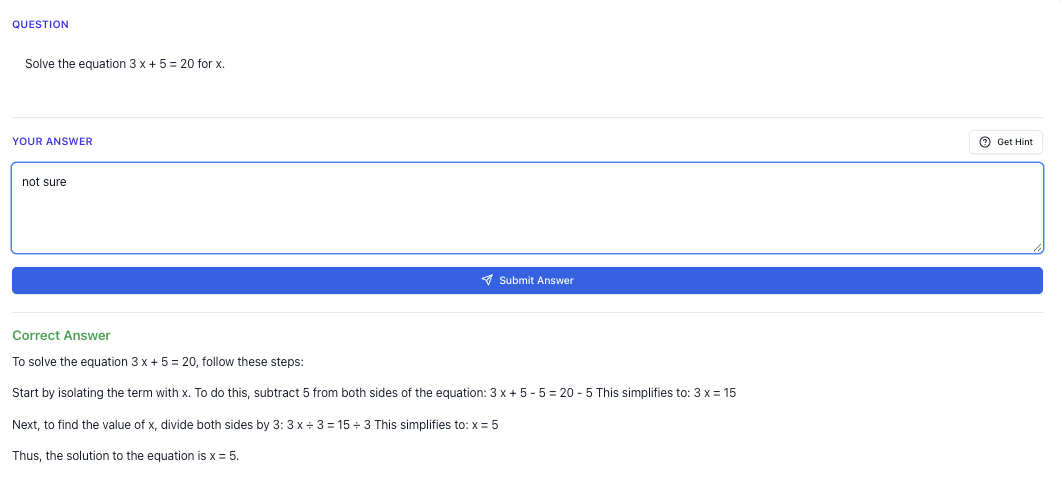
“Stuck on a question? See simple explanations that help you understand fast.”
👉 Give it a try and turn confusion into clarity in minutes.
What you need to know
Forces are pushes or pulls that can change the motion of an object. They can make things start moving, stop, or change direction. In PSLE Science, you will learn about different types of forces like gravity, friction, and magnetism.
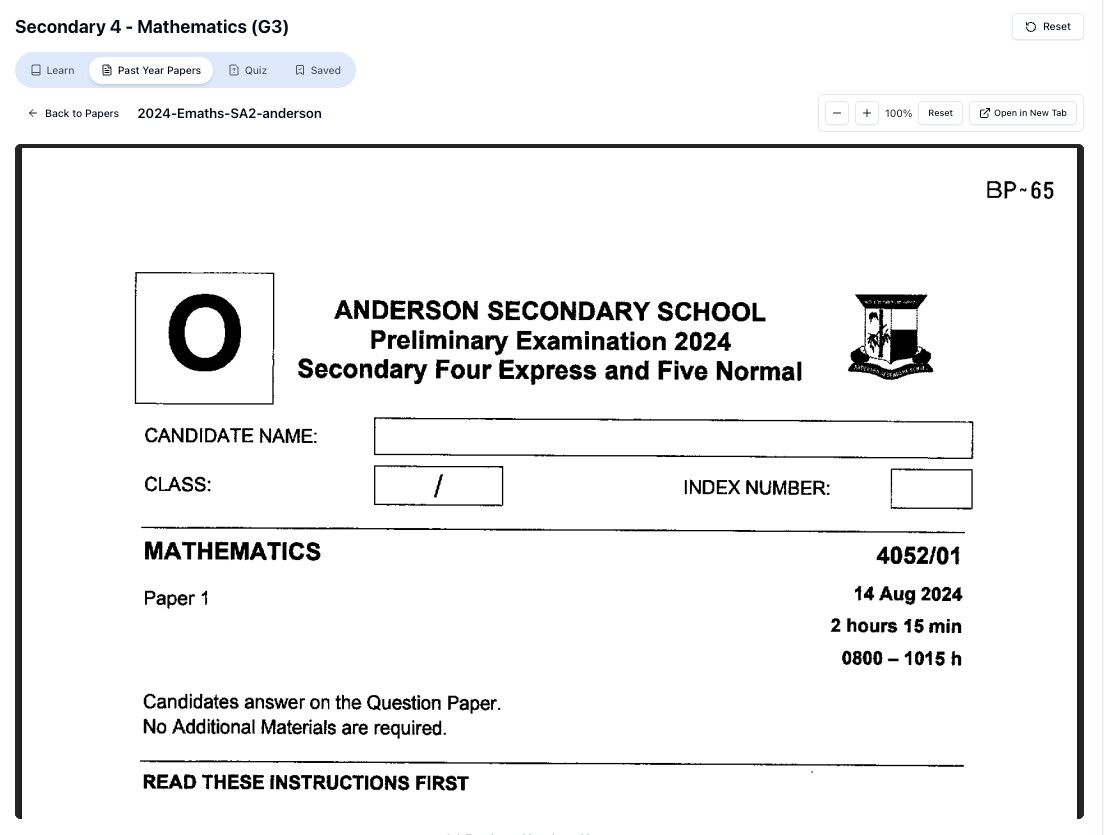
“Access more than 1000+ past year papers to practice”
👉 Start a paper today and test yourself like it’s the real exam.
Understanding Forces
Forces can be a tricky topic, especially when you're trying to visualise them. Most Primary 5 students struggle with this transition. But don't worry, this topic becomes easier when broken into smaller steps.
Types of Forces
-
Gravity: This is the force that pulls objects towards each other. On Earth, gravity gives weight to physical objects and causes them to fall to the ground when dropped.
-
Friction: Friction is the force that opposes motion. It happens when two surfaces rub against each other. It can slow things down or stop them.
-
Magnetism: This is the force caused by magnets. It can attract or repel certain metals like iron.
How Forces Work
When you push or pull something, you are applying a force. For example, when you kick a ball, your foot applies a force that makes the ball move. Understanding this basic idea helps you see how forces work in different situations.
Quick check
- What happens to an object when a force is applied?
- Name two types of forces you learned today.
- How does friction affect motion?
Answers:
- It can start moving, stop, or change direction.
- Gravity and friction.
- Friction opposes motion and can slow things down.
Common mistakes students make
Misunderstanding Friction
Mistake: Thinking friction only slows things down.
Fix: Remember that friction can also provide grip, like when tyres grip the road.
Confusing Mass and Weight
Mistake: Using mass and weight interchangeably.
Fix: Mass is the amount of matter in an object (measured in kilograms), while weight is the force of gravity on an object (measured in newtons).
Ignoring Direction in Forces
Mistake: Not considering the direction of forces.
Fix: Always note the direction of the force because it affects how an object moves.
Exam tip
When answering questions on forces, always underline key terms and make sure your units are correct. Marks can be lost if you mix up kilograms and newtons, or if you forget to mention the direction of a force.
Worked examples
Question 1
A 10 N force is applied to a toy car, causing it to move forward. If 2 N of friction acts against the car, what is the net force acting on the car?
Solution
Step 1: Identify the forces acting on the car.
Why: This helps us understand all the forces involved.
Step 2: Calculate the net force by subtracting the friction force from the applied force: .
Why: We need to find the total force acting on the car to understand its motion.
Question 2
A magnet attracts a paperclip. Describe the force involved and its effect.
“Doing Secondary Science? Pick a topic and practise like it’s a real exam — with clear answers right after.”
👉 Try Tutorly now and start a Science topic in seconds.

Solution
Step 1: Identify the force as magnetism.
Why: This helps us understand what type of force is acting.
Step 2: Explain that the magnetism pulls the paperclip towards the magnet.
Why: By describing the effect, we can see how the force changes the position of the paperclip.
Quick summary
- Forces are pushes or pulls that change motion.
- Types: gravity, friction, magnetism.
- Common mistakes: misunderstanding friction, confusing mass and weight, ignoring direction.
- Remember units: mass (kg), weight (N).
- Practice with real-life examples to visualise concepts.
FAQ
Q 1: What is the difference between mass and weight?
Mass is the amount of matter in an object, measured in kilograms. Weight is the force of gravity on that object, measured in newtons.
Q 2: How does friction affect a rolling ball?
Friction opposes the motion, causing the ball to slow down and eventually stop.
Q 3: What happens if two forces act in opposite directions?
The net force is the difference between the two forces. The object moves in the direction of the larger force.
Q 4: Why is understanding force important in PSLE Science?
It's crucial for explaining how objects move and interact, which is a big part of the syllabus.
Q 5: How can I improve my understanding of forces?
Use daily examples, like observing how your bicycle stops with brakes, and practice short revision sessions.
Free on Tutorly.sg
Practise Forces with step-by-step help — free to start
On Tutorly.sg/app you can practise unlimited Singapore syllabus questions, get instant explanations when you are stuck, and use past-year papers — no sign-up needed to start.
- ✓ PSLE, O Level, A Level, and more
- ✓ Step-by-step working when you are stuck
- ✓ Works on phone and laptop
Free practice
Try it yourself
Practice more questions on forces with step-by-step help at . You'll find it easier to see where you might trip up and how to fix it.
- ✓ Unlimited similar questions
- ✓ Step-by-step help when you are stuck
- ✓ No sign-up needed to start
Practise with free question sets
Work through exam-style questions with answers and step-by-step solutions:
- 35+ PSLE Science Forces Questions for (Singapore MOE Syllabus) with Answers and Explanations
- Topic study hub
[Practise unlimited questions on Tutorly.sg/app](https://www.tutorly.sg/app)
Related Topics You Should Learn Next
- PSLE Science Practice Questions in Singapore: How To Use Worksheet Practice To Actually Improve
- How To Score Full Marks For PSLE Science Open Ended Questions In Singapore
- Mastering PSLE Science Keywords for Full-Mark Answers in Singapore
- PSLE Science Revision Singapore: A Practical Game Plan That Actually Works
- PSLE Science Forces Guide
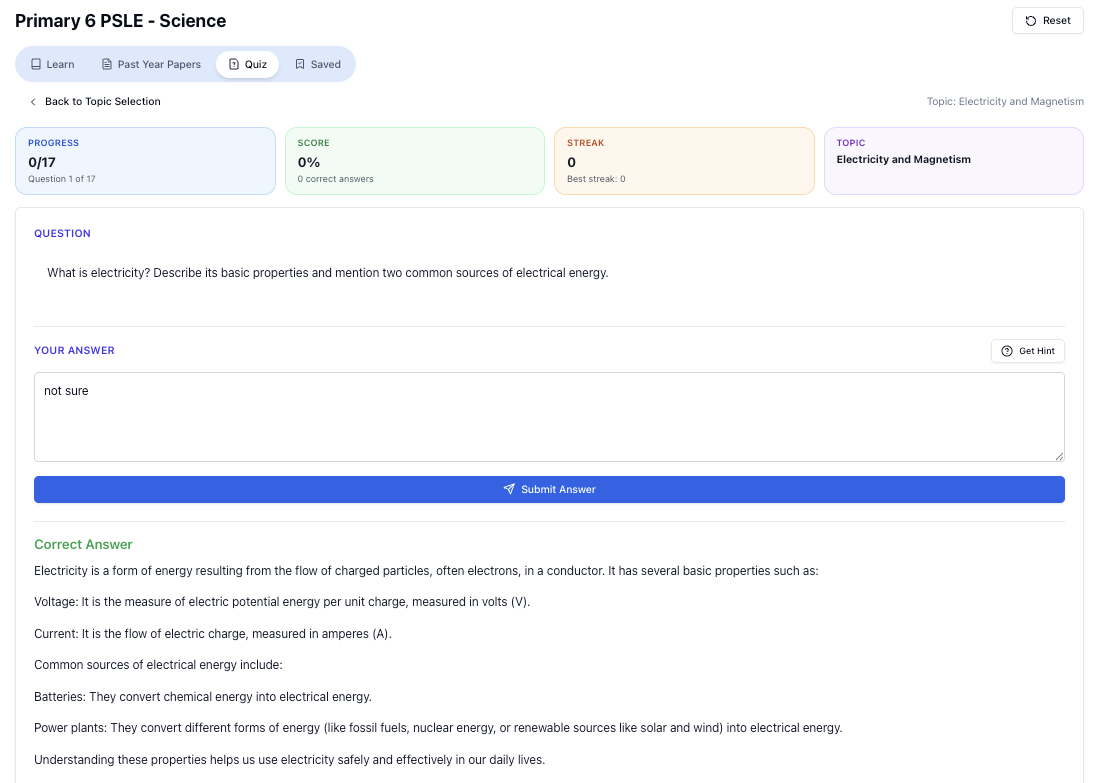
“Practice PSLE Science questions and get clear, step-by-step answers instantly.”
👉 Try a question now and see how fast you can improve.
Free on Tutorly.sg
Practise Forces with step-by-step help — free to start
On Tutorly.sg/app you can practise unlimited Singapore syllabus questions, get instant explanations when you are stuck, and use past-year papers — no sign-up needed to start.
- ✓ PSLE, O Level, A Level, and more
- ✓ Step-by-step working when you are stuck
- ✓ Works on phone and laptop