

Free on Tutorly.sg
Practise Forces with step-by-step help — free to start
On Tutorly.sg/app you can practise unlimited Singapore syllabus questions, get instant explanations when you are stuck, and use past-year papers — no sign-up needed to start.
- ✓ PSLE, O Level, A Level, and more
- ✓ Step-by-step working when you are stuck
- ✓ Works on phone and laptop
Quick answer
Forces in PSLE Science are all about understanding how objects move or stay still. If your heart sinks when you see "forces" in your exam paper, don't worry. By the end of this, you'll know how to handle these questions with confidence.
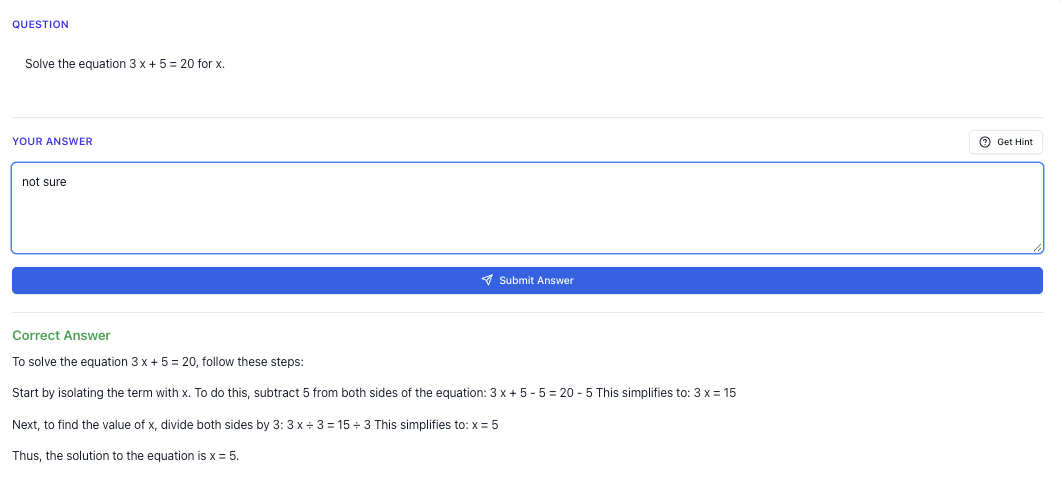
“Stuck on a question? See simple explanations that help you understand fast.”
👉 Give it a try and turn confusion into clarity in minutes.
What you need to know
A force is a push or pull acting on an object. It can make things move, stop, or change direction. Simple, right? Once you see forces this way, the rest becomes easier to understand.
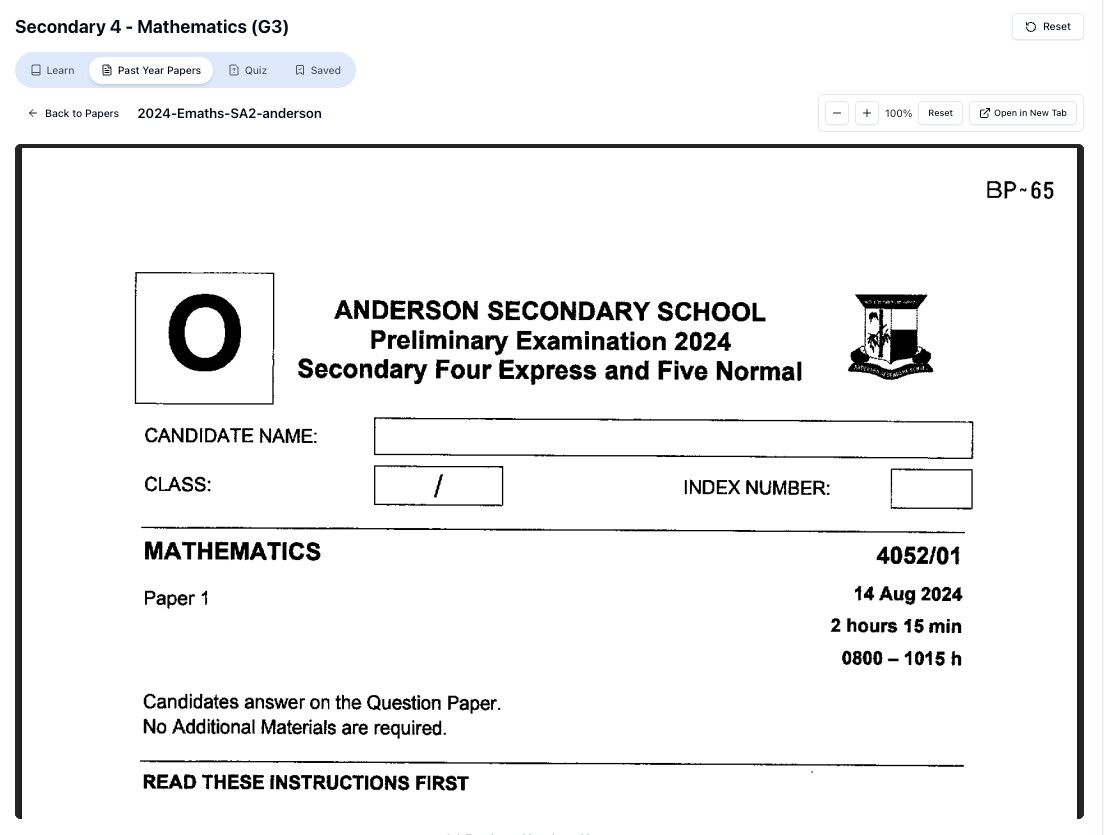
“Access more than 1000+ past year papers to practice”
👉 Start a paper today and test yourself like it’s the real exam.
How to make forces click
Visualise forces with stories
Imagine you're trying to move a heavy box across your HDB living room floor. You push it, but it doesn't move. That's because the force you're applying isn't strong enough to overcome the friction between the box and the floor. When you finally get help from your sibling, and the box starts to move, that's because the combined force is now greater than the friction. This story helps students see what's happening in real life.
Common forces in PSLE Science
- Friction: The force that slows things down. It happens when two surfaces rub against each other.
- Gravity: The force that pulls objects towards the Earth. It's why things fall when you drop them.
- Magnetism: The force that can attract or repel certain metals, like when you see magnets sticking to your fridge.
These are the forces you'll mostly encounter, and understanding them with simple examples can make a big difference.
Common mistakes students make
-
Confusing force types: Mixing up gravity and magnetism is common. Remember, gravity always pulls down, while magnets can push or pull.
-
Forgetting direction matters: Forces have direction. If you don't consider this, you might make mistakes in your answers.
-
Not drawing diagrams: Many students skip this, but drawing can help you see the problem better and avoid errors.
Exam tip
When tackling forces questions, always label your diagrams clearly. Marks are often lost because students forget to show the direction of the force with arrows. It also helps to write out the type of force you're dealing with next to your diagram.
Worked examples
Question
Why does a book stay still on a table?
Solution
Step 1: Identify the forces acting on the book.
Why: Knowing the forces helps us understand why the book isn't moving.
Step 2: Recognise gravity pulling the book down.
Why: Gravity is always present and acts downwards towards the Earth.
Step 3: Identify the force of the table pushing up on the book (normal force).
Why: This upward force balances gravity, keeping the book still.
Step 4: Conclude that the forces are balanced.
Why: Balanced forces mean no movement, which explains why the book stays in place.
Quick check
- What force pulls objects towards Earth?
- What happens when friction is greater than the force applied?
- Why is it important to draw arrows in force diagrams?
Quick summary
“Doing Secondary Science? Pick a topic and practise like it’s a real exam — with clear answers right after.”
👉 Try Tutorly now and start a Science topic in seconds.

- Forces are pushes or pulls.
- Gravity pulls down, while magnets can attract or repel.
- Friction slows things down.
- Always draw diagrams in force questions.
- Balanced forces mean no movement.
- Label force directions clearly for full marks.
FAQ
Q: Why do objects fall?
A: Objects fall because of gravity, which pulls them towards the Earth.
Q: How does friction affect movement?
A: Friction opposes movement, so it can slow down or stop objects from moving.
Q: What happens when forces are unbalanced?
A: Unbalanced forces cause objects to start moving, stop moving, or change direction.
Q: Why do we need to draw diagrams in exams?
A: Diagrams help you visualise the problem and ensure you account for all forces correctly.
Q: Can magnets push and pull?
A: Yes, magnets can attract (pull) or repel (push) certain metals.
Free on Tutorly.sg
Practise Forces with step-by-step help — free to start
On Tutorly.sg/app you can practise unlimited Singapore syllabus questions, get instant explanations when you are stuck, and use past-year papers — no sign-up needed to start.
- ✓ PSLE, O Level, A Level, and more
- ✓ Step-by-step working when you are stuck
- ✓ Works on phone and laptop
Free practice
Try it yourself
Practice similar questions with step-by-step help on Tutorly
- ✓ Unlimited similar questions
- ✓ Step-by-step help when you are stuck
- ✓ No sign-up needed to start
Practise with free question sets
Work through exam-style questions with answers and step-by-step solutions:
- 35+ PSLE Science Forces Questions for (Singapore MOE Syllabus) with Answers and Explanations
- Topic study hub
[Practise unlimited questions on Tutorly.sg/app](https://www.tutorly.sg/app)
Related Topics You Should Learn Next
- PSLE Science Forces: Simple Steps to Secure Your Marks
- How To Score Full Marks For PSLE Science Open Ended Questions In Singapore
- Mastering PSLE Science Keywords for Full-Mark Answers in Singapore
- PSLE Science Practice Questions in Singapore: How To Use Worksheet Practice To Actually Improve
Once you get the hang of forces, other topics will feel easier. Happy learning!
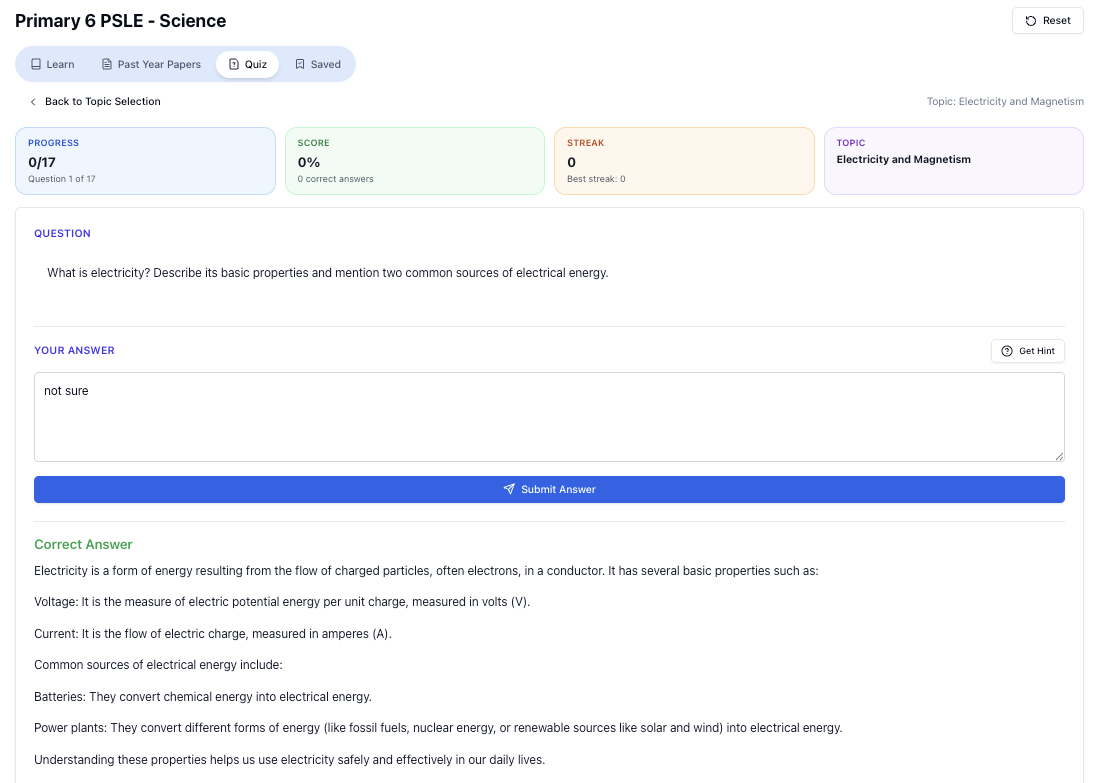
“Practice PSLE Science questions and get clear, step-by-step answers instantly.”
👉 Try a question now and see how fast you can improve.
Free on Tutorly.sg
Practise Forces with step-by-step help — free to start
On Tutorly.sg/app you can practise unlimited Singapore syllabus questions, get instant explanations when you are stuck, and use past-year papers — no sign-up needed to start.
- ✓ PSLE, O Level, A Level, and more
- ✓ Step-by-step working when you are stuck
- ✓ Works on phone and laptop