

Free on Tutorly.sg
Practise Periodic table and bonding with step-by-step help — free to start
On Tutorly.sg/app you can practise unlimited Singapore syllabus questions, get instant explanations when you are stuck, and use past-year papers — no sign-up needed to start.
- ✓ PSLE, O Level, A Level, and more
- ✓ Step-by-step working when you are stuck
- ✓ Works on phone and laptop
Quick answer
Feeling lost when you see a Periodic Table question in your O Level Chemistry exam? It's common to lose marks because of small slips or misunderstanding the question's phrasing. But don't worry, with a little guidance, you'll know exactly what to look for and how to answer them with confidence.
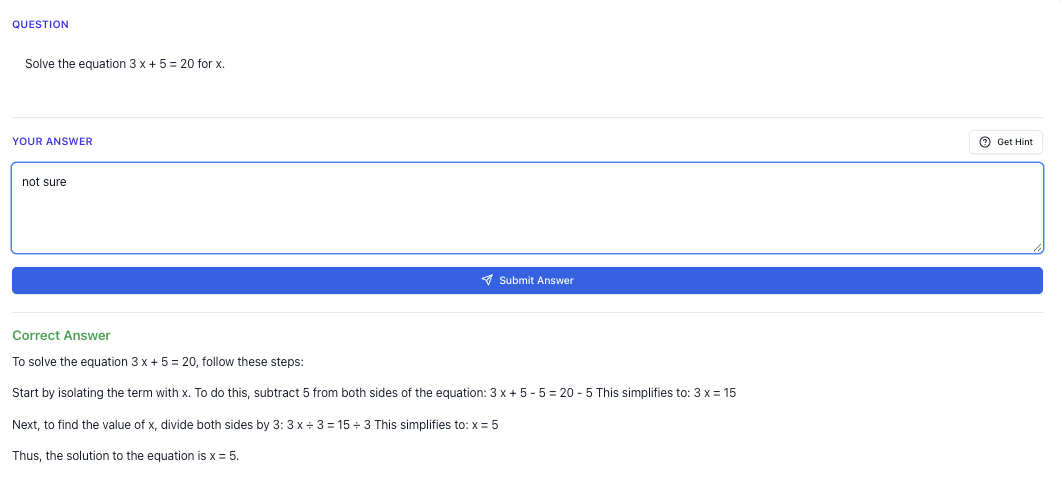
“Stuck on a question? See simple explanations that help you understand fast.”
👉 Give it a try and turn confusion into clarity in minutes.
What you need to know
The Periodic Table is a chart that organises all known elements by their properties. Bonding refers to how these elements connect with each other to form compounds. Understanding these concepts is crucial for answering questions on elements' properties and their interactions.
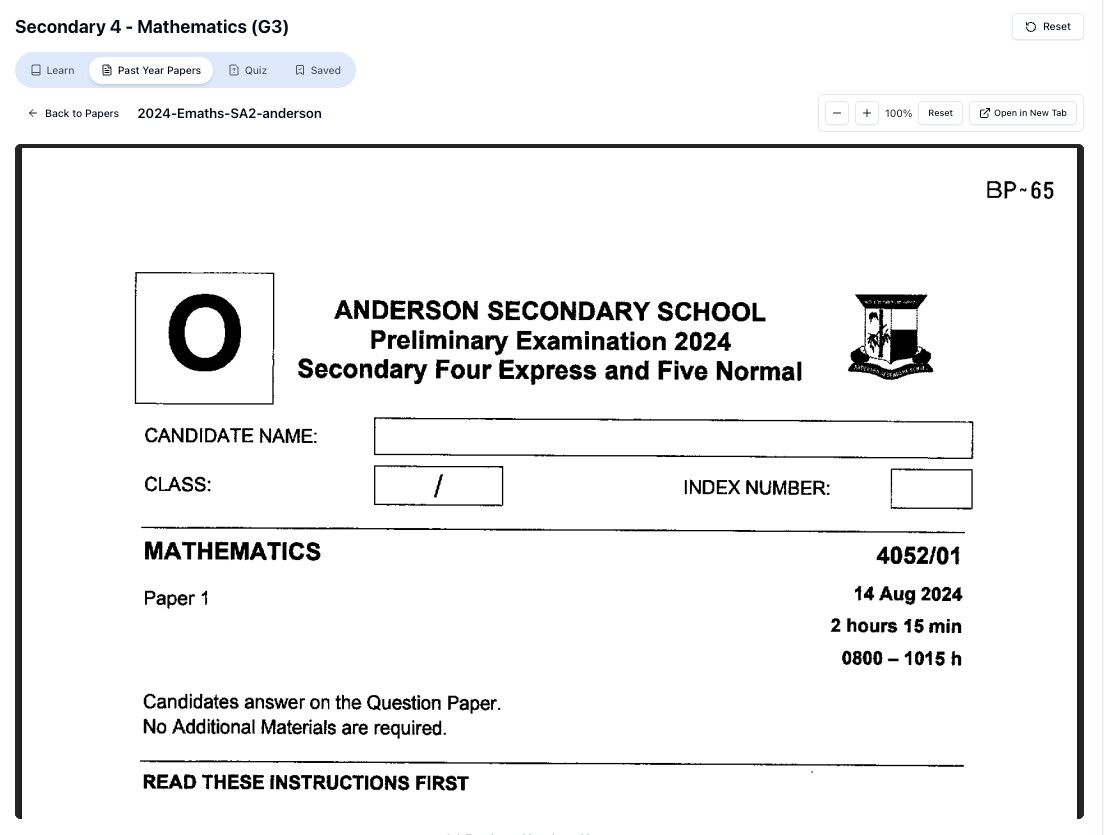
“Access more than 1000+ past year papers to practice”
👉 Start a paper today and test yourself like it’s the real exam.
Common Mistakes in Periodic Table and Bonding
Misunderstanding the Question
One mistake I repeatedly see among my Sec 4 students is misunderstanding how questions are phrased. A question might ask about "trends in the Periodic Table," but you may end up writing about properties of a single element instead.
Memorizing Without Understanding
Many students in Singapore focus too much on memorizing keywords. But, the examiner is testing whether you truly understand the process. For instance, knowing that "electronegativity decreases down a group" is great, but understanding why this happens is key.
Being Too General
Students often lose marks because they answer too generally. For example, if asked about "metallic bonding," just saying "it's strong" isn't enough. You need to explain that it's due to the sea of delocalized electrons.
Revision checklist
- Understand Trends: Know how atomic size, electronegativity, and ionization energy change across periods and down groups.
- Bonding Types: Be clear on the differences between ionic, covalent, and metallic bonding.
- Use Precise Language: Avoid vague terms. Be specific in your explanations.
- Question Phrasing: Practice with questions phrased differently from your notes.
- Apply Concepts: Relate properties to real-world examples, like the use of metals in hawker centre cutlery because of their durability.
Exam tip
In O-Level questions, precision matters more than length. A concise, accurate answer is better than a long, vague one. Focus on what the question asks and tailor your answer to fit that.
Worked examples
Question
Explain why sodium has a lower electronegativity than chlorine.
Solution
Step 1: Identify the trend.
Why: Electronegativity decreases as you go down a group and increases across a period.
Step 2: Locate sodium and chlorine on the Periodic Table.
Why: Sodium is in Group 1, and chlorine is in Group 17. They are also in the same period.
Step 3: Compare their positions.
Why: Sodium is to the left of chlorine in the same period, meaning chlorine has a higher electronegativity.
Step 4: Explain using atomic structure.
Why: Chlorine has more protons and a stronger pull on electrons compared to sodium.
“Doing Secondary Science? Pick a topic and practise like it’s a real exam — with clear answers right after.”
👉 Try Tutorly now and start a Science topic in seconds.

Quick check
- What is the trend in atomic size across a period?
- How does metallic bonding differ from ionic bonding?
- Why does ionization energy generally increase across a period?
Quick summary
- Electronegativity increases across a period, decreases down a group.
- Ionic bonding involves transfer of electrons; covalent involves sharing.
- Answer with precision: short and to the point.
- Practice different question phrasings.
- Understand, don't just memorize.
FAQ
Q: Why does atomic size decrease across a period?
A: As you move across a period, more protons are added to the nucleus, increasing the nuclear charge and pulling electrons closer, thus reducing atomic size.
Q: What is the difference between ionic and covalent bonds?
A: Ionic bonds form when electrons are transferred from one atom to another, while covalent bonds form when atoms share electrons.
Q: How can I improve my understanding of bonding?
A: Practice explaining bonding in your own words and relate it to everyday examples, like why metals conduct electricity.
Q: Why is precision important in Chemistry exams?
A: Chemistry questions often test specific concepts. General answers can miss out on key points that earn marks.
Free on Tutorly.sg
Practise Periodic table and bonding with step-by-step help — free to start
On Tutorly.sg/app you can practise unlimited Singapore syllabus questions, get instant explanations when you are stuck, and use past-year papers — no sign-up needed to start.
- ✓ PSLE, O Level, A Level, and more
- ✓ Step-by-step working when you are stuck
- ✓ Works on phone and laptop
Free practice
Try it yourself
Practise similar questions with step-by-step help on Tutorly
- ✓ Unlimited similar questions
- ✓ Step-by-step help when you are stuck
- ✓ No sign-up needed to start
Related Topics You Should Learn Next
- O Level Chemistry: Periodic Table and Bonding Step-by-Step Examples
- O Level Chemistry: Scoring High in Periodic Table and Bonding Questions
- O Level Chemistry: Mastering the Periodic Table and Bonding
- O Level Chemistry: Fixing Common Mistakes in Periodic Table and Bonding
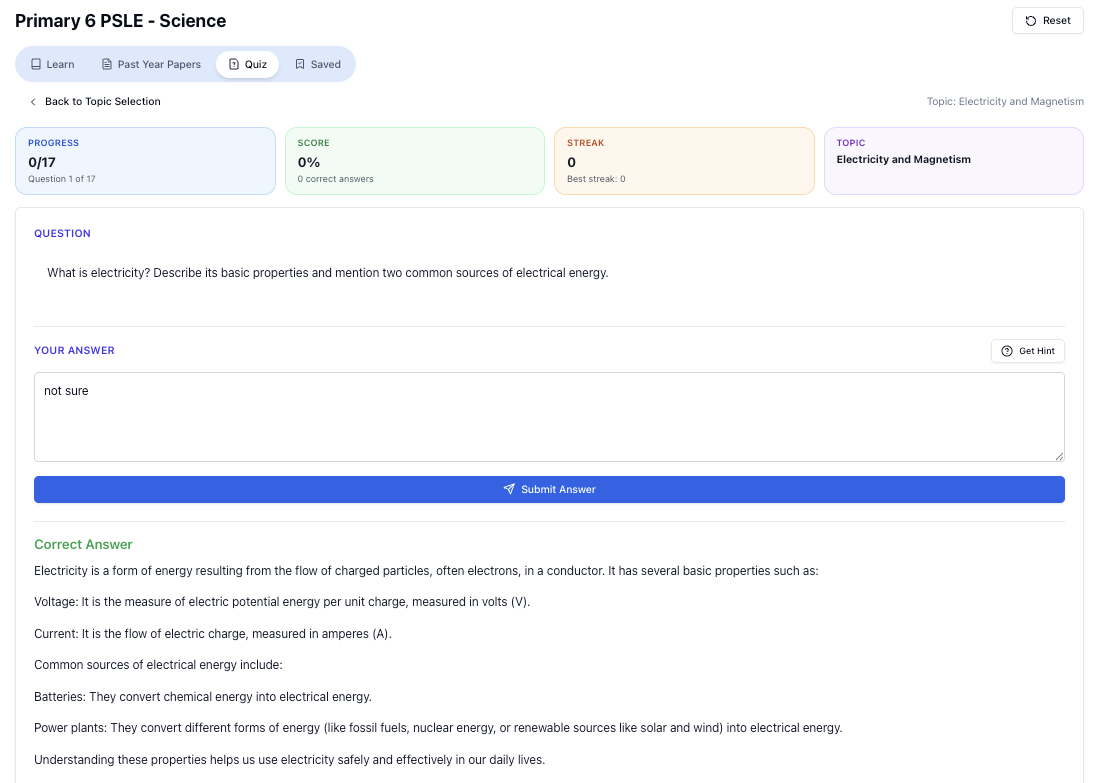
“Practice PSLE Science questions and get clear, step-by-step answers instantly.”
👉 Try a question now and see how fast you can improve.
Free on Tutorly.sg
Practise Periodic table and bonding with step-by-step help — free to start
On Tutorly.sg/app you can practise unlimited Singapore syllabus questions, get instant explanations when you are stuck, and use past-year papers — no sign-up needed to start.
- ✓ PSLE, O Level, A Level, and more
- ✓ Step-by-step working when you are stuck
- ✓ Works on phone and laptop