

Free on Tutorly.sg
Practise Periodic table and bonding with step-by-step help — free to start
On Tutorly.sg/app you can practise unlimited Singapore syllabus questions, get instant explanations when you are stuck, and use past-year papers — no sign-up needed to start.
- ✓ PSLE, O Level, A Level, and more
- ✓ Step-by-step working when you are stuck
- ✓ Works on phone and laptop
Quick answer
Feeling that heart-sinking moment when you see a periodic table question in your O Level Chemistry paper? You're not alone. After reading this, you'll understand how to tackle these questions with confidence, avoiding common mistakes and gaining those precious marks.
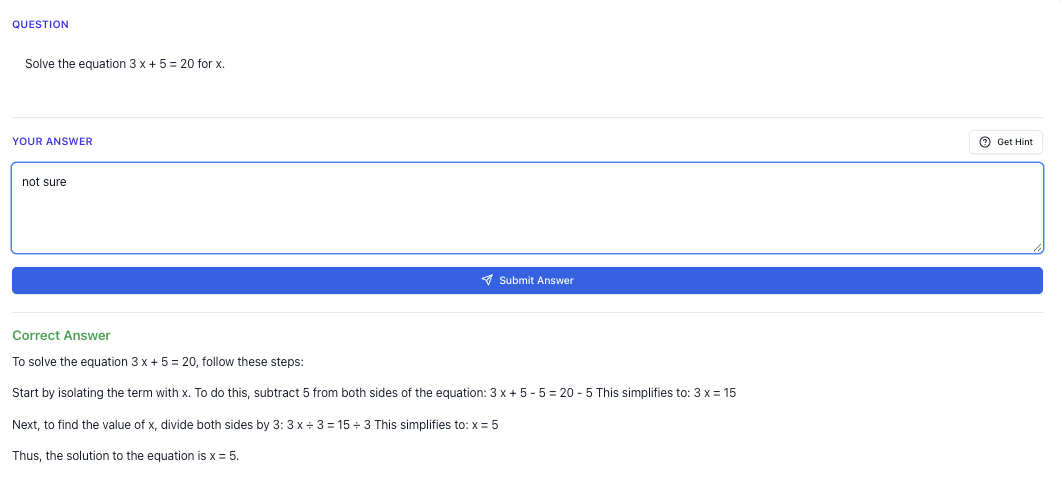
“Stuck on a question? See simple explanations that help you understand fast.”
👉 Give it a try and turn confusion into clarity in minutes.
What you need to know
The periodic table is a chart that shows all known chemical elements. Each element has a unique atomic number, which tells you how many protons are in its nucleus. Bonding refers to how atoms join together to form compounds. Understanding these basics helps you predict how elements will react with each other.
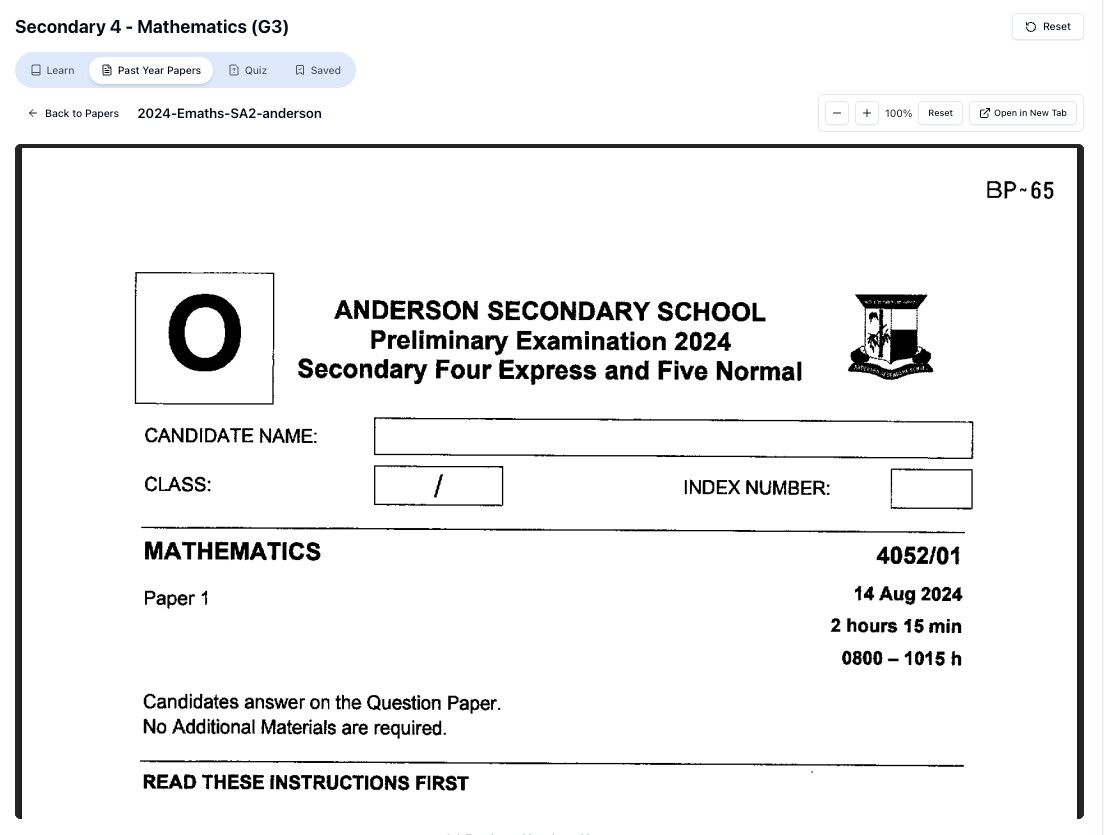
“Access more than 1000+ past year papers to practice”
👉 Start a paper today and test yourself like it’s the real exam.
Common mistakes students make
One mistake I repeatedly see among my Sec 4 students is trying to memorize keywords without really understanding them. For example, students often write answers that are too general or miss specific details the examiner is looking for. Precision matters more than length in O-Level exams.
Mistake 1: Memorizing without understanding
Many students memorize terms like "ionic bonding" and "covalent bonding" but can't explain what they mean. It's important to know that ionic bonding involves the transfer of electrons, while covalent bonding involves sharing electrons.
Fix: Try explaining these concepts in your own words, like how you would explain it to a friend at a hawker centre. This helps you truly understand the process.
Mistake 2: Answering too generally
Students usually panic when they see application questions like this. For example, a question might ask, "Explain why sodium chloride conducts electricity in solution but not as a solid." A general answer might say, "It conducts because of ions." But what the examiner wants is detail: "In solution, ions are free to move, allowing electricity to flow. In solid form, ions are fixed in place."
Fix: Always aim for specific answers. Think of the question as a crowded MRT train — each detail you add lets another person (or mark!) get on.
Mistake 3: Getting confused by different phrasing
Weaker students struggle most when the question is phrased differently from school notes. This happens a lot with bonding questions where the wording changes but the concept tested is the same.
Fix: Practice by rewriting questions in different ways and answering them. This builds flexibility in your understanding.
Exam tip
Remember, in O-Level Chemistry, clarity is more important than writing long answers. Make sure your answer directly addresses the question. If it asks for "how" something happens, describe the process step by step. If it asks for "why," explain the reason behind it. This direct approach can save you time and reduce panic during exams.
Worked examples
Question
Why does magnesium oxide have a higher melting point than sodium chloride?
Solution
Step 1: Identify the types of bonding in each compound.
Why: Magnesium oxide has ionic bonding, and so does sodium chloride. But we need to look closer at the ions involved.
Step 2: Compare the charge on the ions.
Why: Magnesium oxide has Mg²⁺ and O²⁻ ions, while sodium chloride has Na⁺ and Cl⁻ ions. Higher charges mean stronger attractions between ions.
Step 3: Explain the effect of ionic charge on melting point.
Why: The stronger the attraction between ions, the more energy required to break these bonds, resulting in a higher melting point for magnesium oxide.
Quick check
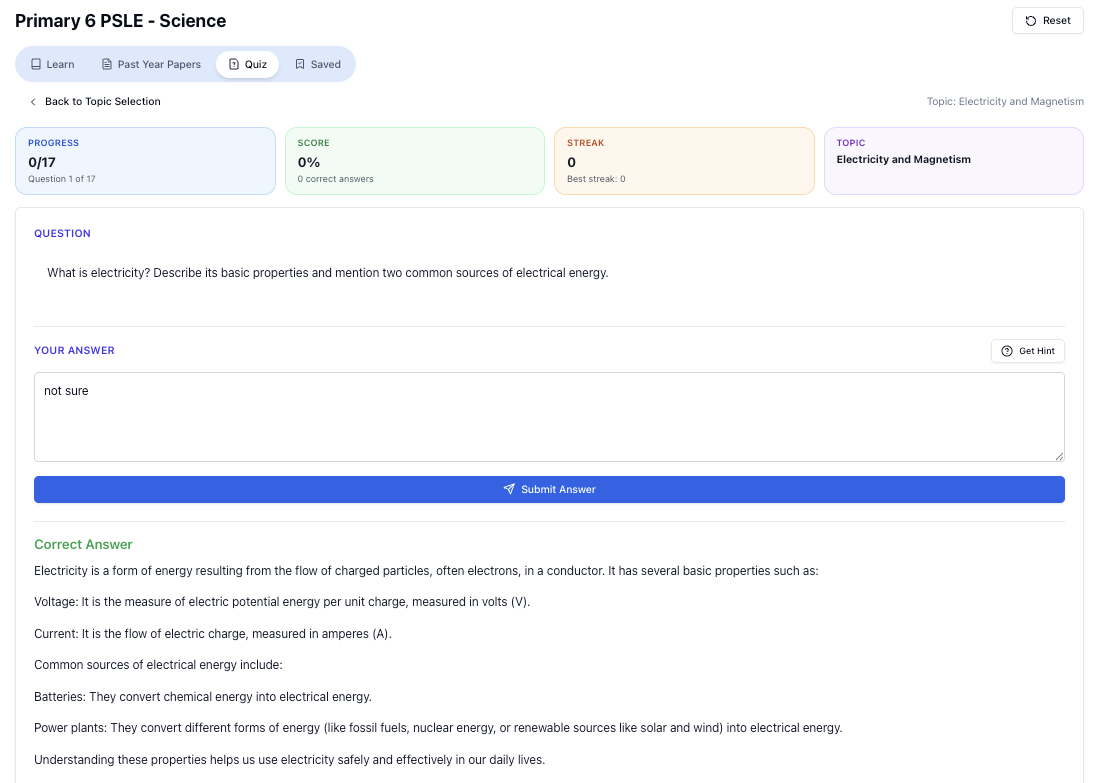
“Doing Secondary Science? Pick a topic and practise like it’s a real exam — with clear answers right after.”
👉 Try Tutorly now and start a Science topic in seconds.

- What type of bonding involves the transfer of electrons?
- Why does sodium chloride conduct electricity in solution but not as a solid?
- Explain why ionic compounds generally have high melting points.
Answers:
- Ionic bonding.
- In solution, ions are free to move, allowing electricity to flow. In solid form, ions are fixed in place.
- Strong electrostatic forces between oppositely charged ions require more energy to break.
Quick summary
- Understand the difference between ionic and covalent bonding.
- Don't just memorize; explain concepts in your own words.
- Be specific in your answers; details matter more than length.
- Practice with questions phrased differently from your notes.
- Focus on clarity and direct answers during exams.
FAQ
1. What is the periodic table?
The periodic table is a chart that organizes all known chemical elements by their atomic number, showing patterns in their properties.
2. Why is ionic bonding important?
Ionic bonding is important because it helps us understand how compounds like salts are formed and why they have high melting points.
3. How can I remember the periodic table?
Try breaking it into sections and using mnemonic devices to remember groups of elements.
4. What if I panic during the exam?
Okay, breathe first. Focus on one question at a time and remember to answer specifically, not generally.
5. How do I improve my Chemistry grades?
Practice past-year questions, understand the concepts behind the questions, and get feedback from teachers or tutors.
Free on Tutorly.sg
Practise Periodic table and bonding with step-by-step help — free to start
On Tutorly.sg/app you can practise unlimited Singapore syllabus questions, get instant explanations when you are stuck, and use past-year papers — no sign-up needed to start.
- ✓ PSLE, O Level, A Level, and more
- ✓ Step-by-step working when you are stuck
- ✓ Works on phone and laptop
Free practice
Try it yourself
Want to practice similar questions with step-by-step help? Visit Tutorly for past-year style questions with detailed explanations
- ✓ Unlimited similar questions
- ✓ Step-by-step help when you are stuck
- ✓ No sign-up needed to start
Related Topics You Should Learn Next
- O Level Chemistry: Periodic Table and Bonding Step-by-Step Examples
- O Level Chemistry: Mastering the Periodic Table and Bonding
- O Level Chemistry: Avoiding Common Mistakes in Periodic Table and Bonding
- Topic Cluster Hub
“Practice PSLE Science questions and get clear, step-by-step answers instantly.”
👉 Try a question now and see how fast you can improve.
Free on Tutorly.sg
Practise Periodic table and bonding with step-by-step help — free to start
On Tutorly.sg/app you can practise unlimited Singapore syllabus questions, get instant explanations when you are stuck, and use past-year papers — no sign-up needed to start.
- ✓ PSLE, O Level, A Level, and more
- ✓ Step-by-step working when you are stuck
- ✓ Works on phone and laptop