

Free on Tutorly.sg
Practise Stoichiometry with step-by-step help — free to start
On Tutorly.sg/app you can practise unlimited Singapore syllabus questions, get instant explanations when you are stuck, and use past-year papers — no sign-up needed to start.
- ✓ PSLE, O Level, A Level, and more
- ✓ Step-by-step working when you are stuck
- ✓ Works on phone and laptop
Quick answer
You know that sinking feeling when you see a stoichiometry question in your O Level Chemistry exam? You're not alone. Many students feel the same way, but the good news is that it's often just a few basics causing those marks to slip through your fingers. Once you grasp these key concepts, you'll find stoichiometry isn't as scary as it seems.
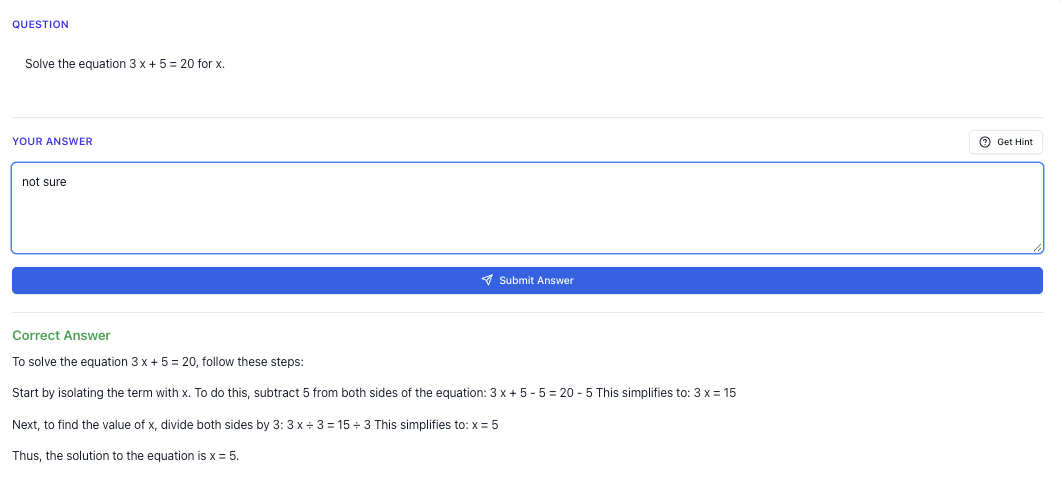
“Stuck on a question? See simple explanations that help you understand fast.”
👉 Give it a try and turn confusion into clarity in minutes.
What you need to know
Stoichiometry is all about the math of chemistry. It uses the balanced chemical equation to calculate the amounts of reactants and products involved. In simpler terms, it's like following a recipe to make sure you have the right ingredients in the right amounts.
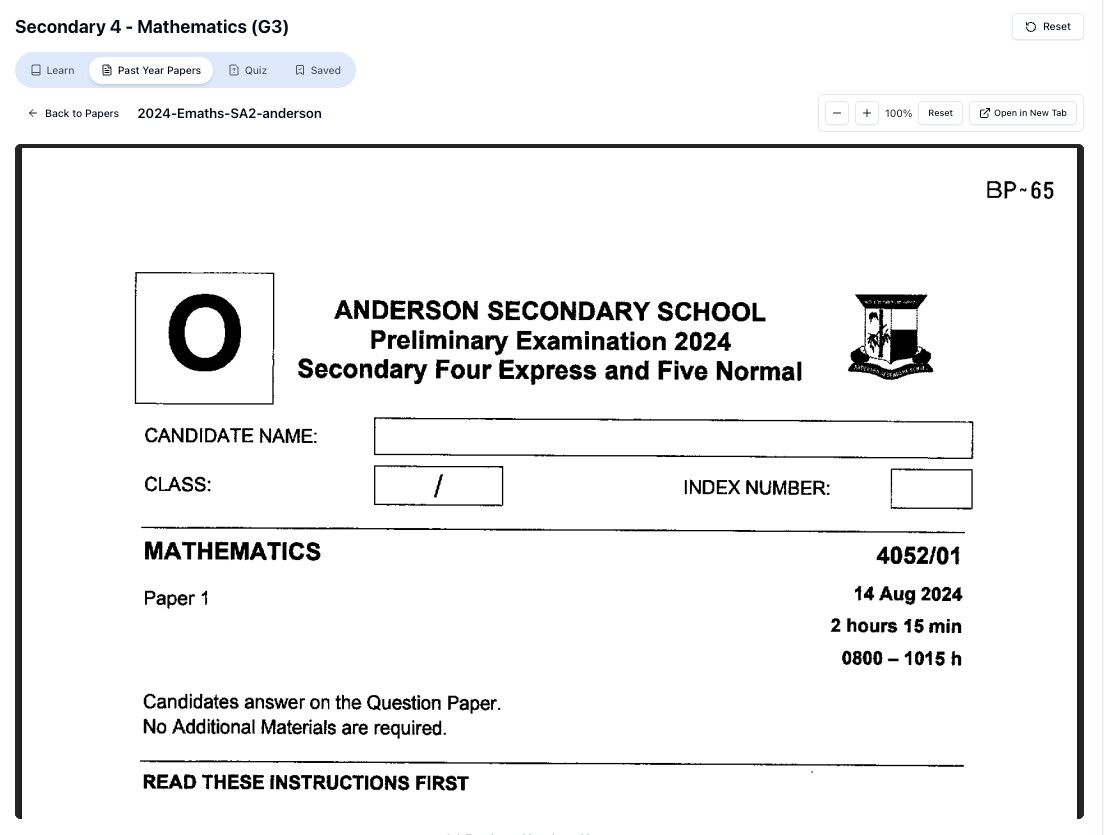
“Access more than 1000+ past year papers to practice”
👉 Start a paper today and test yourself like it’s the real exam.
Common mistakes students make
One mistake I repeatedly see among my Sec 4 students is memorizing keywords without truly understanding them. This leads to panic during exams, especially when questions are phrased differently from school notes. Here's how you can avoid common pitfalls:
-
Misreading the Question: Often, students don’t pay attention to details like units or specific substances mentioned. Always underline what the question is asking for.
-
Ignoring Balancing Equations: If the equation isn’t balanced, your calculations will be off. Balance the equation first.
-
Confusing Moles with Mass: Remember, moles and mass are not the same. Use the molar mass to convert between them.
-
Rushing Through Calculations: Precision is key. Double-check your calculations instead of rushing.
-
Generic Answers: Avoid giving answers that are too general. Be specific about which reactant or product you're referring to.
Exam tip
Precision is more important than the length of your answer. Always double-check if your units match the question, and ensure your final answer is clear and specific. This way, you won't lose marks for unnecessary errors.
Question
Calculate the amount of sodium chloride produced when 5 moles of sodium react with chlorine gas.
Solution
Step 1: Write the balanced chemical equation:
Why: The equation tells us the ratio of reactants to products. Here, 2 moles of sodium react with 1 mole of chlorine gas to produce 2 moles of sodium chloride.
Step 2: Determine the mole ratio from the balanced equation:
The ratio of Na to NaCl is 1:1.
Why: We use this ratio to find out how many moles of NaCl are produced from the given moles of Na.
Step 3: Calculate moles of NaCl produced:
Since the ratio is 1:1, 5 moles of Na will produce 5 moles of NaCl.
Why: Simple multiplication using the ratio gives us the number of moles of NaCl.
“Doing Secondary Science? Pick a topic and practise like it’s a real exam — with clear answers right after.”
👉 Try Tutorly now and start a Science topic in seconds.

Quick summary
- Stoichiometry involves using balanced chemical equations to calculate reactants and products.
- Avoid common mistakes like misreading questions and confusing moles with mass.
- Always balance the equation first.
- Precision in calculations and answers is crucial.
- Understand the mole concept and how to apply it to stoichiometry questions.
FAQ
Why is balancing equations important?
Balancing ensures the law of conservation of mass is followed, meaning the same number of each type of atom is on both sides of the equation.
How can I improve my stoichiometry skills?
Practice using different types of questions, and focus on understanding the mole concept and chemical equations.
What if I make a calculation error?
Always double-check your work. Practice helps you become faster and more accurate.
Is there a trick to identifying the limiting reactant?
Yes, compare the mole ratio of reactants used with the ratio in the balanced equation to find which one will run out first.
How do I handle tricky application questions?
Break them down into smaller steps. Identify what is given and what you need to find, then apply stoichiometry principles.
Free on Tutorly.sg
Practise Stoichiometry with step-by-step help — free to start
On Tutorly.sg/app you can practise unlimited Singapore syllabus questions, get instant explanations when you are stuck, and use past-year papers — no sign-up needed to start.
- ✓ PSLE, O Level, A Level, and more
- ✓ Step-by-step working when you are stuck
- ✓ Works on phone and laptop
Free practice
Try it yourself
Practice makes perfect. Try similar stoichiometry questions with step-by-step help on Tutorly
- ✓ Unlimited similar questions
- ✓ Step-by-step help when you are stuck
- ✓ No sign-up needed to start
Related Topics You Should Learn Next
- How to score O Level Stoichiometry questions Singapore Chemistry
- O Level Chemistry: Avoid These Stoichiometry Mistakes
- O Level Stoichiometry explained simply Singapore Chemistry
- O Level Chemistry: Stoichiometry Practice Questions to Nail the Exam
- O Level Stoichiometry revision notes summary Singapore
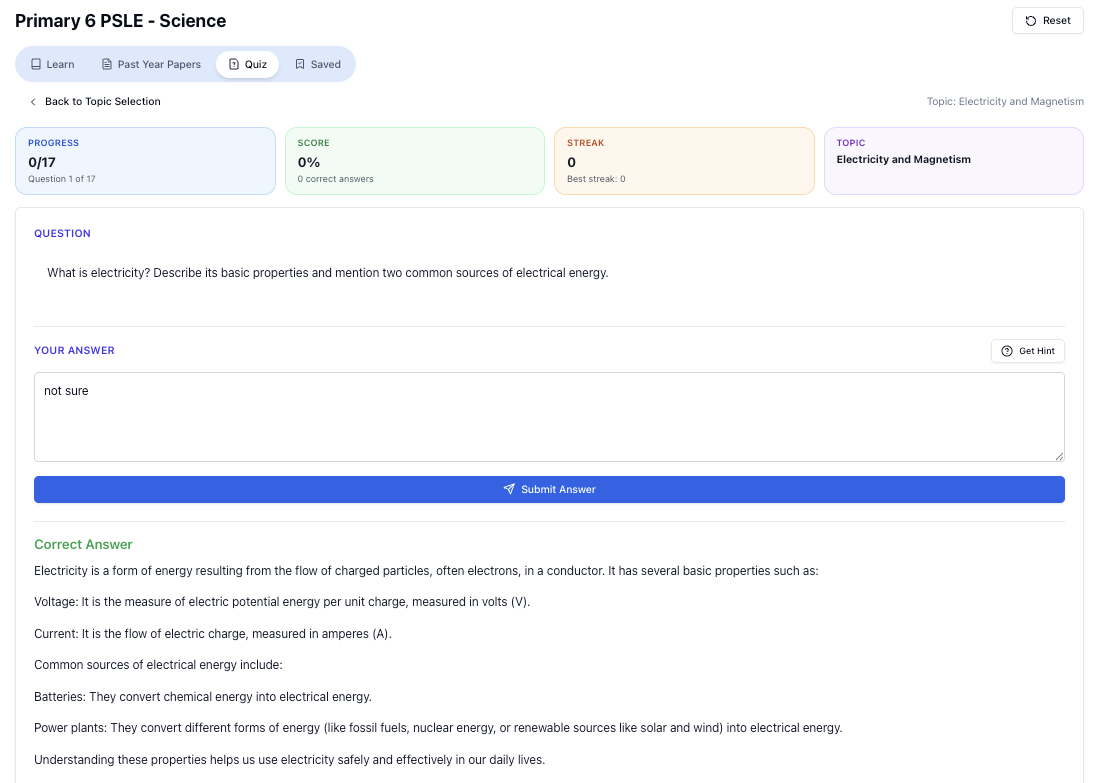
“Practice PSLE Science questions and get clear, step-by-step answers instantly.”
👉 Try a question now and see how fast you can improve.
Free on Tutorly.sg
Practise Stoichiometry with step-by-step help — free to start
On Tutorly.sg/app you can practise unlimited Singapore syllabus questions, get instant explanations when you are stuck, and use past-year papers — no sign-up needed to start.
- ✓ PSLE, O Level, A Level, and more
- ✓ Step-by-step working when you are stuck
- ✓ Works on phone and laptop