

Free on Tutorly.sg
Practise Stoichiometry with step-by-step help — free to start
On Tutorly.sg/app you can practise unlimited Singapore syllabus questions, get instant explanations when you are stuck, and use past-year papers — no sign-up needed to start.
- ✓ PSLE, O Level, A Level, and more
- ✓ Step-by-step working when you are stuck
- ✓ Works on phone and laptop
Quick answer
Ever felt your heart sink when you see stoichiometry questions in exams? You're not alone. Many students lose marks on questions they thought they knew because of common mistakes. By understanding these errors and learning how to avoid them, you'll gain confidence and improve your grades.
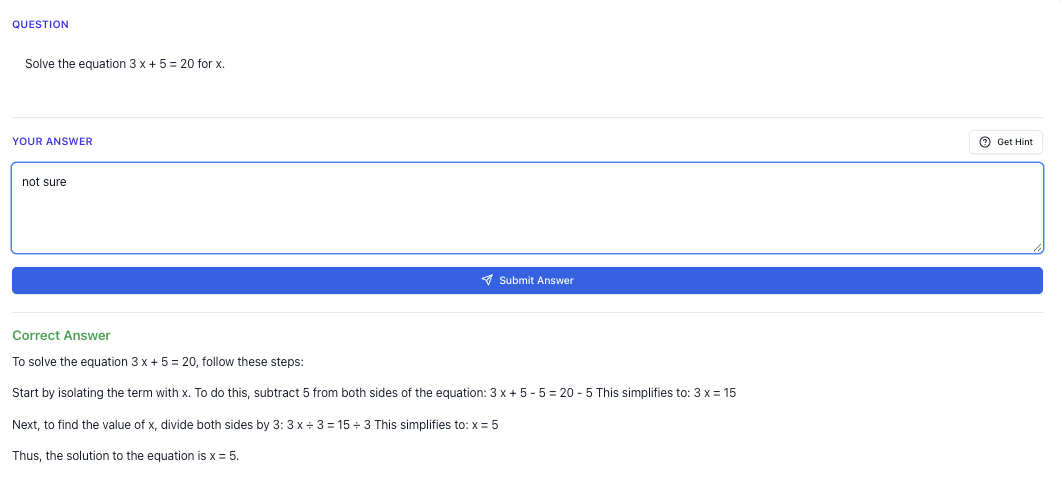
“Stuck on a question? See simple explanations that help you understand fast.”
👉 Give it a try and turn confusion into clarity in minutes.
What you need to know
Stoichiometry is about calculating the amounts of reactants and products in chemical reactions using balanced equations. It's like a recipe — if you don't measure correctly, the results won't be what you expect.
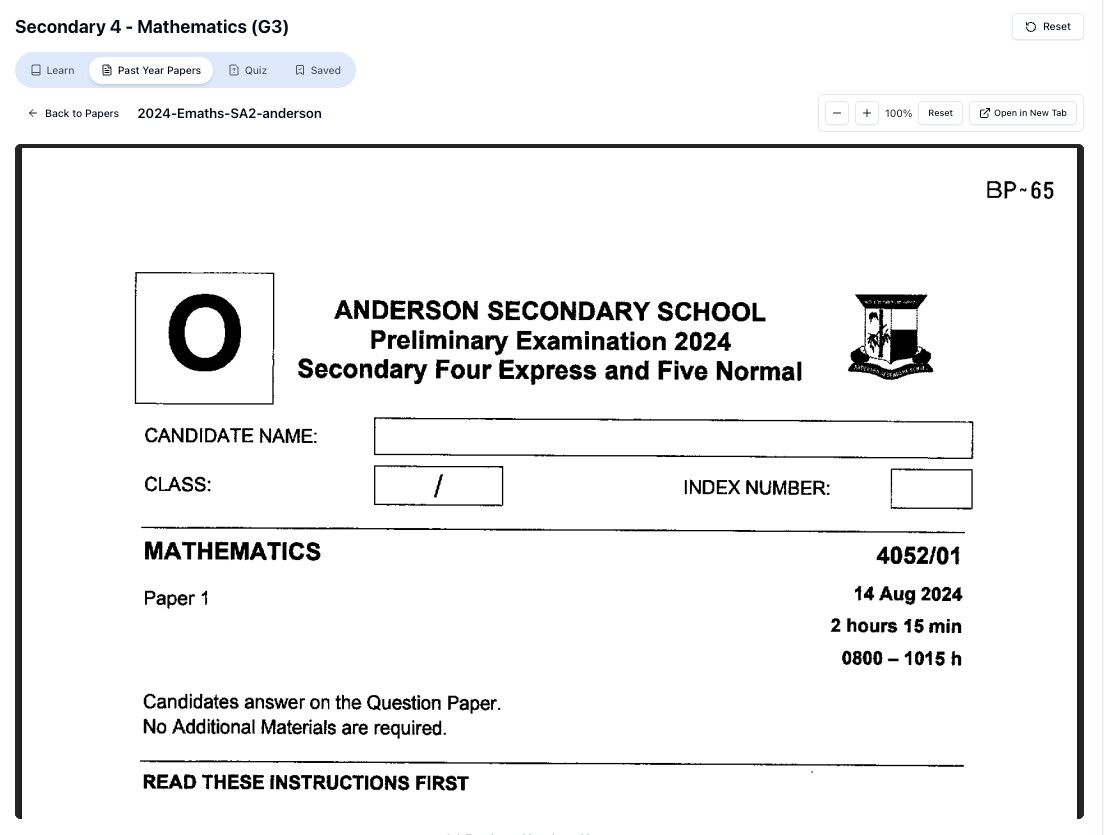
“Access more than 1000+ past year papers to practice”
👉 Start a paper today and test yourself like it’s the real exam.
Common mistakes students make
Misreading the Question
One mistake I repeatedly see among my Sec 4 students is misreading what the question asks for. Sometimes, you might focus on the wrong part of the question or miss out on key details.
Fix it:
- Read the question twice. Underline what is being asked.
- Look for keywords like "calculate", "excess", or "limiting reagent".
Using Incorrect Mole Ratios
Students usually panic when they see application questions like this. It's easy to apply the wrong mole ratio from the balanced equation.
Fix it:
- Always write the balanced equation first.
- Find the mole ratio between reactants and products before doing any calculations.
Forgetting Units
Another common slip is forgetting to convert units, especially when dealing with mass, volume, or concentration.
Fix it:
- Check units at every step.
- Convert all quantities to the same units before calculating.
Rounding Too Early
Rounding numbers too early can lead to inaccurate answers. This part always trips people up.
Fix it:
- Keep numbers in full form during calculations.
- Round only at the final answer.
Exam tip
Precision matters more than length in O-Level questions. Write your answers clearly and concisely, focusing on what the question asks. Always show your working steps — they can earn you marks even if the final answer is incorrect.
Question
Calculate the amount of magnesium oxide (MgO) produced when 10 g of magnesium (Mg) reacts with excess oxygen (O₂).
Solution
Step 1: Write the balanced chemical equation:
Why: You need to know the mole ratio between magnesium and magnesium oxide.
Step 2: Calculate the moles of magnesium:
Why: Use the molar mass of magnesium to convert grams to moles.
Step 3: Use the mole ratio to find moles of MgO:
Why: The balanced equation shows a 1:1 ratio between Mg and MgO.
“Doing Secondary Science? Pick a topic and practise like it’s a real exam — with clear answers right after.”
👉 Try Tutorly now and start a Science topic in seconds.

Step 4: Calculate the mass of MgO:
Why: Multiply by the molar mass of MgO to convert moles back to grams.
Quick check
- What is the first step in solving stoichiometry problems?
- Why is it important to use the correct mole ratio?
- How do you ensure units are consistent?
Answers:
- Write the balanced chemical equation.
- It ensures accurate calculations of reactants and products.
- Convert all measurements to the same units before calculations.
Quick summary
- Always read the question carefully and underline key parts.
- Balance the chemical equation first and use correct mole ratios.
- Check units at every step; convert if needed.
- Avoid rounding numbers until the final step.
- Show all your working steps for potential partial credit.
FAQ
Why do I keep making calculation errors?
Often, it's due to skipping steps or overlooking unit conversions. Double-check each step to ensure accuracy.
How can I improve my stoichiometry skills?
Practice regularly with past exam questions and focus on understanding the process, not just memorizing steps.
What if I forget the mole ratio?
Always write down the balanced equation first; it's your guide for finding the correct mole ratios.
Why do I lose marks even if my answer looks right?
Marks are often lost due to missing working steps or incorrect units. Make sure to show your full process clearly.
Free on Tutorly.sg
Practise Stoichiometry with step-by-step help — free to start
On Tutorly.sg/app you can practise unlimited Singapore syllabus questions, get instant explanations when you are stuck, and use past-year papers — no sign-up needed to start.
- ✓ PSLE, O Level, A Level, and more
- ✓ Step-by-step working when you are stuck
- ✓ Works on phone and laptop
Free practice
Try it yourself
Ready to practice? Try similar stoichiometry questions with step-by-step help on Tutorly
- ✓ Unlimited similar questions
- ✓ Step-by-step help when you are stuck
- ✓ No sign-up needed to start
Related Topics You Should Learn Next
- O Level Chemistry Stoichiometry complete guide Singapore
- O Level Stoichiometry explained simply Singapore Chemistry
- O Level Stoichiometry worked examples step by step Singapore
- Stoichiometry complete guide Singapore
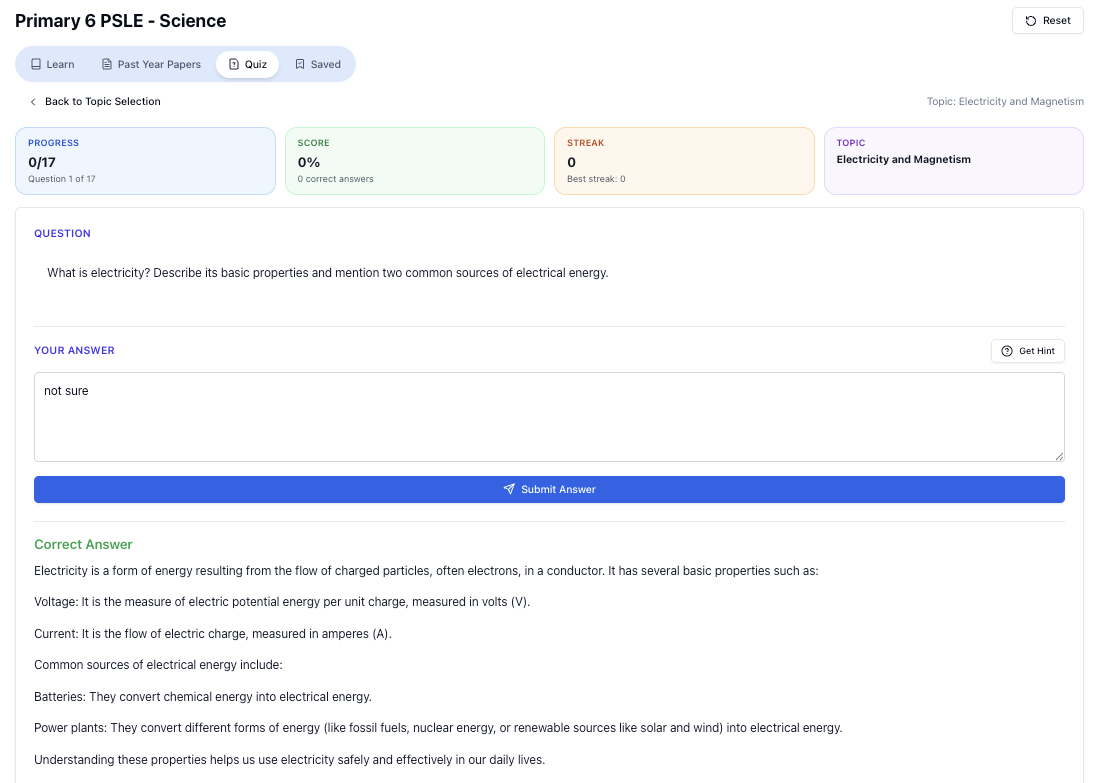
“Practice PSLE Science questions and get clear, step-by-step answers instantly.”
👉 Try a question now and see how fast you can improve.
Free on Tutorly.sg
Practise Stoichiometry with step-by-step help — free to start
On Tutorly.sg/app you can practise unlimited Singapore syllabus questions, get instant explanations when you are stuck, and use past-year papers — no sign-up needed to start.
- ✓ PSLE, O Level, A Level, and more
- ✓ Step-by-step working when you are stuck
- ✓ Works on phone and laptop