

Free on Tutorly.sg
Practise Mechanics with step-by-step help — free to start
On Tutorly.sg/app you can practise unlimited Singapore syllabus questions, get instant explanations when you are stuck, and use past-year papers — no sign-up needed to start.
- ✓ PSLE, O Level, A Level, and more
- ✓ Step-by-step working when you are stuck
- ✓ Works on phone and laptop
Quick answer
You know that sinking feeling when a mechanics question looks like it's in another language? You're not alone. The real issue often lies in gaps in the basics, not your ability. Once we fill those gaps, you'll see these questions aren't as impossible as they first seem.
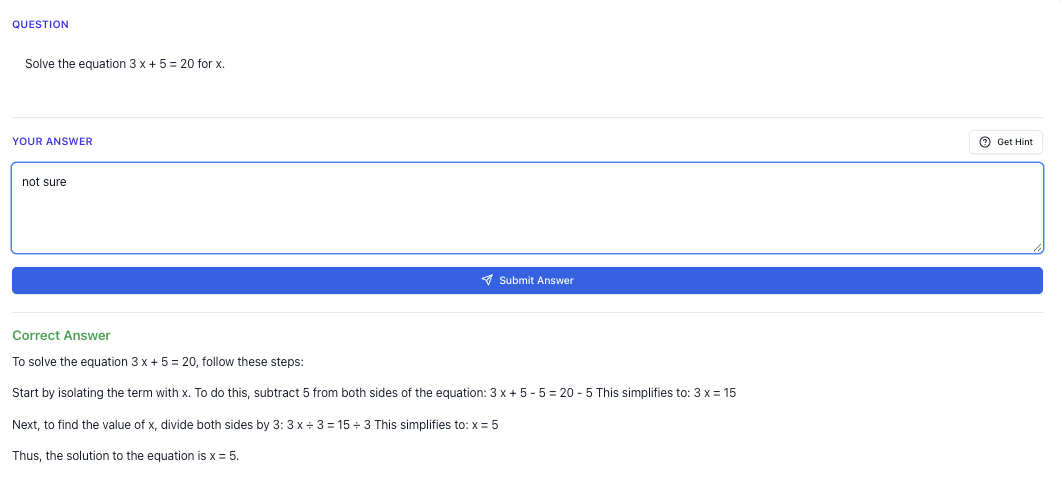
“Stuck on a question? See simple explanations that help you understand fast.”
👉 Give it a try and turn confusion into clarity in minutes.
What you need to know
Mechanics is a branch of physics that deals with motion and forces. It's about understanding how objects move and interact. This might sound straightforward, but the questions can twist the concepts in ways that are tricky if your basics aren't solid.
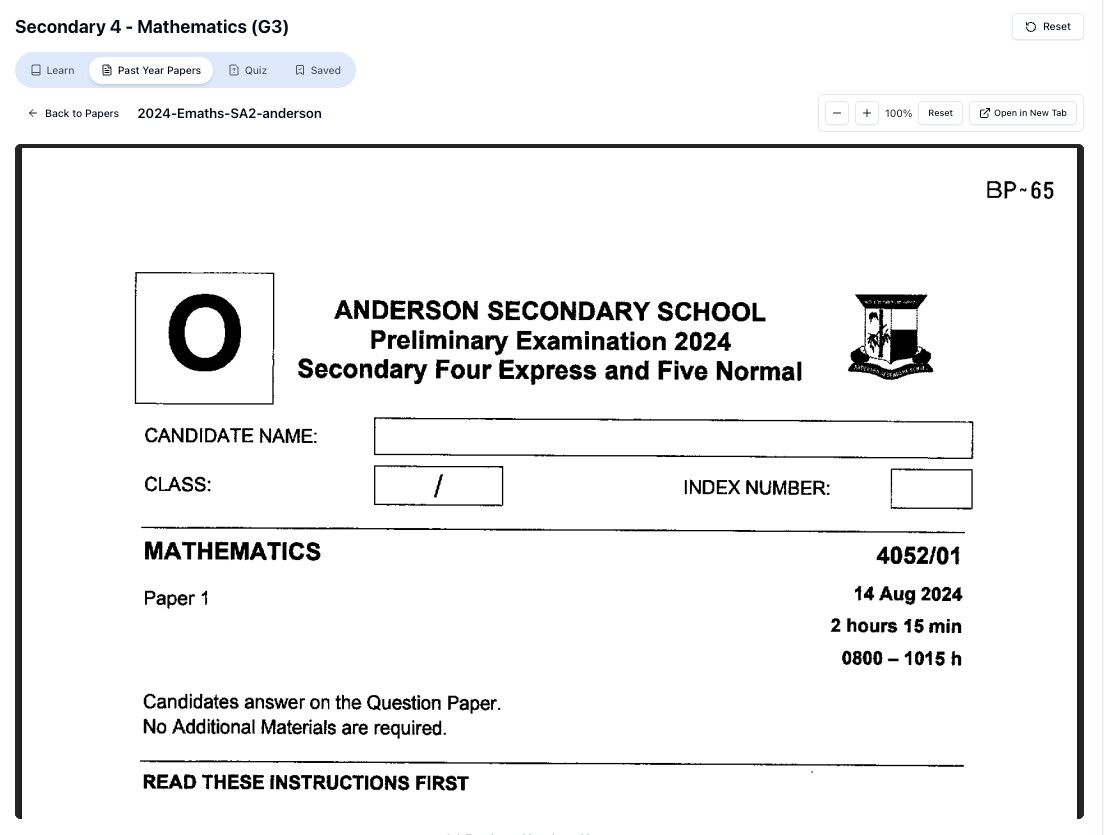
“Access more than 1000+ past year papers to practice”
👉 Start a paper today and test yourself like it’s the real exam.
Why mechanics feels tough
One mistake I repeatedly see among my Sec 4 students is focusing on memorizing formulas without understanding what they mean. You might see a question and panic because it's phrased differently from your notes. The examiner is testing whether you truly understand the process, not just the keywords.
Core concepts you need
- Forces and Motion: Know how forces affect the motion of an object. This includes understanding Newton's laws.
- Energy and Work: Grasp how energy is transferred and how work is done.
- Momentum: Understand how momentum is conserved and how it relates to force and motion.
Quick check
Question 1: What's the first step in solving a question about a block sliding down a slope?
Question 2: Why is it important to identify all forces acting on an object in mechanics problems?
Answers:
- Identify all forces acting on the block, including gravity and friction.
- Because it helps you apply Newton's laws correctly to predict motion.
Common mistakes students make
Mistake 1: Ignoring units
Students usually panic when they see application questions like this. Always check your units. Mixing them up can lead to wrong answers even if your calculations are correct.
Mistake 2: Misunderstanding vectors
Vectors show direction and magnitude. If you treat them like numbers, you'll often end up with the wrong direction or value.
Mistake 3: Overcomplicating simple problems
Sometimes, the simpler the question, the more we overthink. Stick to basics: identify forces, draw diagrams, and follow Newton's laws.
Exam tip
Be precise in your answers. Lengthy explanations won't earn extra marks if they're not to the point. Focus on clarity and directly answering the question.
Worked examples
Question
A 5 kg block is pushed up a 30° incline with a force of 40 N. Find the acceleration.
Solution
Step 1: Draw a free-body diagram of the block.
Why: Visualising forces helps you understand what's acting on the block.
Step 2: Identify forces: gravity, normal force, applied force, and friction (if any).
Why: Recognising all forces ensures you account for them in calculations.
“Doing Secondary Science? Pick a topic and practise like it’s a real exam — with clear answers right after.”
👉 Try Tutorly now and start a Science topic in seconds.

Step 3: Resolve the force of gravity into components parallel and perpendicular to the incline.
Why: This simplifies calculations, as forces along the incline are what cause motion.
Step 4: Apply Newton’s second law: . Calculate net force by subtracting the component of gravitational force from the applied force.
Why: This gives you the net force responsible for the block’s acceleration.
Step 5: Solve for acceleration: .
Why: You need the net force and mass to find acceleration.
Quick summary
- Mechanics is about understanding motion and forces, not just memorizing formulas.
- Always check units and understand vector directions.
- Break down problems into simpler parts using diagrams.
- Be precise and direct in exam answers.
- Practice with various question types to get comfortable with different phrasings.
FAQ
Q 1: Why do I struggle with mechanics despite knowing the formulas?
Because understanding the process is more important than memorizing formulas. Focus on why each formula is used.
Q 2: How can I improve at solving mechanics questions?
Practice identifying forces and drawing diagrams. This helps in visualizing the problem better.
Q 3: What should I do if I don't understand a question?
Break it down into smaller parts. Look for keywords that hint at which principles to apply.
Q 4: How important is it to practice past papers?
Very important. They help you get used to how questions are phrased and what examiners expect.
Free on Tutorly.sg
Practise Mechanics with step-by-step help — free to start
On Tutorly.sg/app you can practise unlimited Singapore syllabus questions, get instant explanations when you are stuck, and use past-year papers — no sign-up needed to start.
- ✓ PSLE, O Level, A Level, and more
- ✓ Step-by-step working when you are stuck
- ✓ Works on phone and laptop
Free practice
Try it yourself
Feeling more confident? Practise similar questions with step-by-step help on Tutorly
- ✓ Unlimited similar questions
- ✓ Step-by-step help when you are stuck
- ✓ No sign-up needed to start
Related Topics You Should Learn Next
- How To Master A Level Physics Mechanics Questions In Singapore
- A Level Physics: Mechanics Mistakes That Cost You Marks
- A Level Physics: Mechanics Practice Questions That Unlock Higher Marks
- A Level Physics Mechanics: Avoiding Common Exam Traps
Remember, mechanics might seem tough, but with practice and understanding, it becomes much more manageable. Don't rush, take it step by step, and you'll get there!
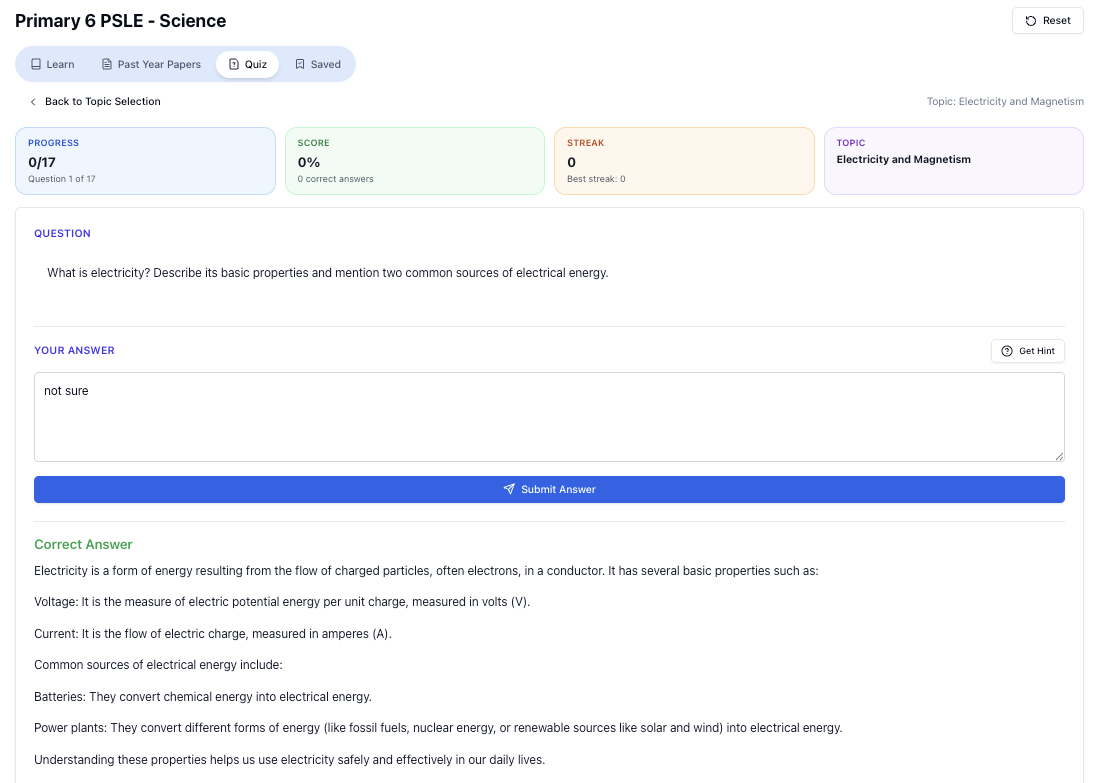
“Practice PSLE Science questions and get clear, step-by-step answers instantly.”
👉 Try a question now and see how fast you can improve.
Free on Tutorly.sg
Practise Mechanics with step-by-step help — free to start
On Tutorly.sg/app you can practise unlimited Singapore syllabus questions, get instant explanations when you are stuck, and use past-year papers — no sign-up needed to start.
- ✓ PSLE, O Level, A Level, and more
- ✓ Step-by-step working when you are stuck
- ✓ Works on phone and laptop