

Free on Tutorly.sg
Practise Mechanics with step-by-step help — free to start
On Tutorly.sg/app you can practise unlimited Singapore syllabus questions, get instant explanations when you are stuck, and use past-year papers — no sign-up needed to start.
- ✓ PSLE, O Level, A Level, and more
- ✓ Step-by-step working when you are stuck
- ✓ Works on phone and laptop
Quick answer
Heart sinking when you see a mechanics question? You’re not alone. Many students lose marks not because they don’t know the content, but because they fall into common traps. After reading this, you'll know the key mistakes to avoid and how to tackle these questions confidently.
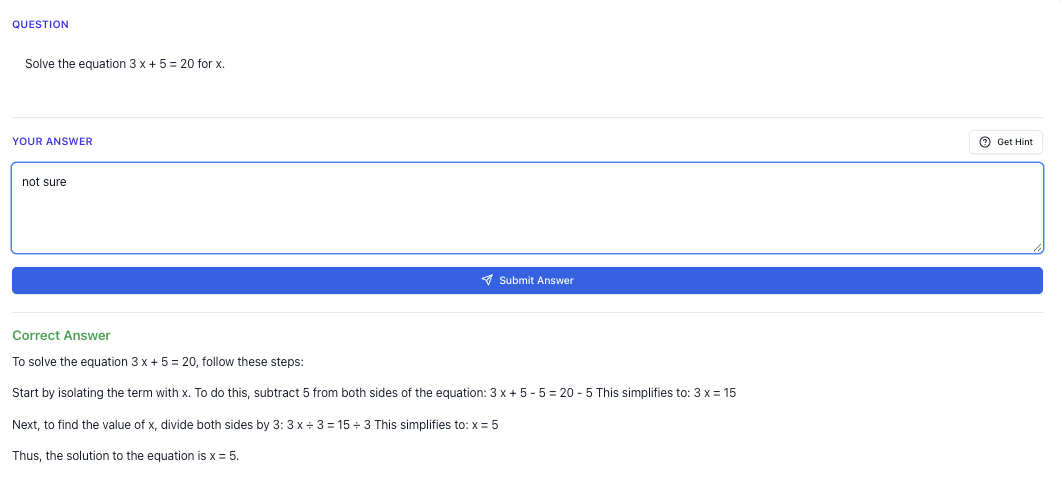
“Stuck on a question? See simple explanations that help you understand fast.”
👉 Give it a try and turn confusion into clarity in minutes.
What you need to know
Mechanics, in simple words, is all about how objects move and the forces that act on them. You deal with concepts like velocity, acceleration, and forces. These are the building blocks of physics that help you understand real-world movements — like why MRT trains slow down before a station.
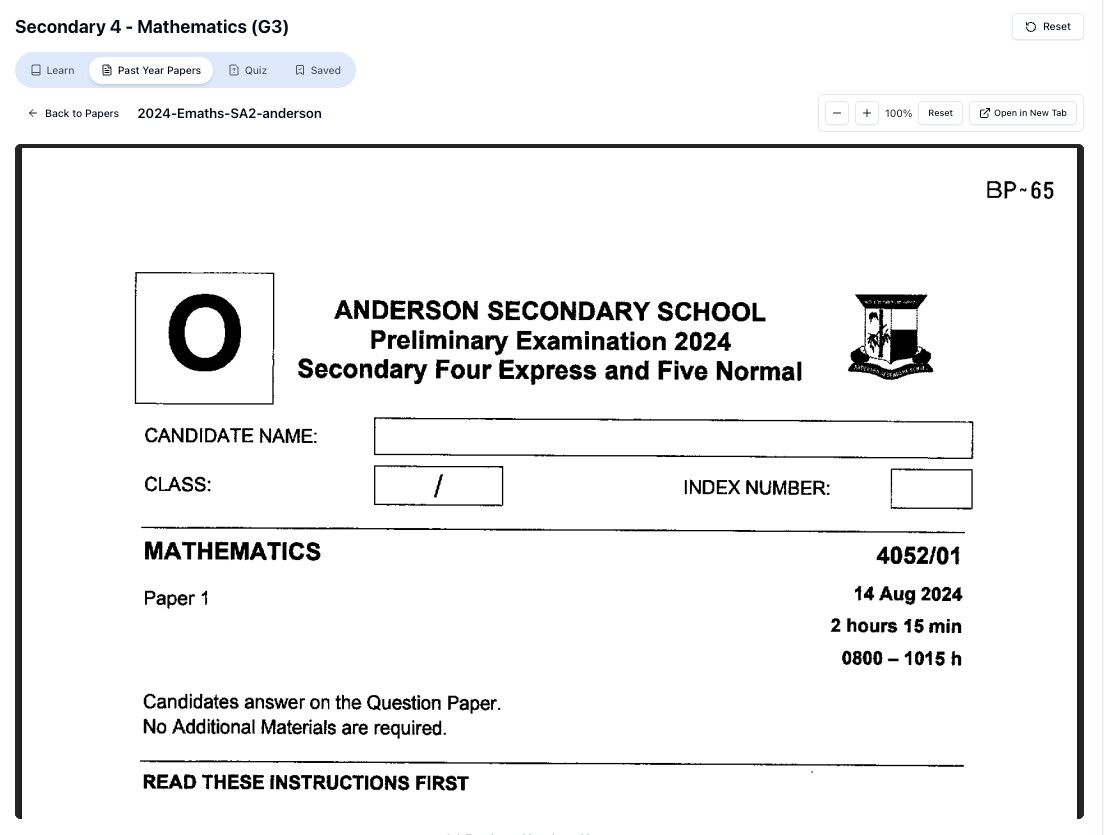
“Access more than 1000+ past year papers to practice”
👉 Start a paper today and test yourself like it’s the real exam.
Common Traps in Mechanics
Misunderstanding Key Concepts
One mistake I repeatedly see among my Sec 4 students is memorizing formulas without understanding what they mean. For example, knowing is not enough if you don't understand that it means force is what changes how fast something moves.
Being Too General in Answers
Students often lose marks because they answer too generally. For instance, if asked about forces acting on a block, saying "gravity" isn't enough. Specify it: "The gravitational force acting downwards on the block."
Phrasing Differences
Students usually panic when they see application questions like this: "A car accelerates uniformly. What is the net force?" If it's phrased differently from your notes, break it down. Understand "accelerates uniformly" means constant acceleration, so use .
Quick Check
-
What does "uniform motion" mean?
- Answer: Constant speed and direction.
-
When do you use ?
- Answer: When calculating force with given mass and acceleration.
-
How does friction affect moving objects?
- Answer: It opposes motion, reducing speed.
Revision checklist
- Understand, don’t memorize: Don’t just memorize formulas; know what each part means.
- Be specific: Use precise terms. Describe forces with direction and magnitude.
- Recognize phrasing: Practice with differently phrased questions to get comfortable.
Exam tip
Marks often hinge on how you present your answers. Clear, step-by-step explanations are better than long, jumbled responses. And always keep an eye on units!
Worked examples
Question
A 5 kg block slides down a 30° incline. Find the acceleration, assuming no friction.
Solution
Step 1: Identify forces acting on the block.
Why: Understanding forces helps us set up the equations correctly.
Step 2: Calculate gravitational force component down the incline: .
Why: This component is what causes the block to accelerate down the slope.
“Doing Secondary Science? Pick a topic and practise like it’s a real exam — with clear answers right after.”
👉 Try Tutorly now and start a Science topic in seconds.

Step 3: Use to find acceleration: .
Why: This formula links force, mass, and acceleration, allowing us to solve for 𝑎.
Step 4: Substitute values: .
Why: Substituting ensures you get a numerical answer.
Quick summary
- Mechanics deals with motion and forces.
- Be specific in your answers to avoid losing marks.
- Understand the meaning behind formulas.
- Practice with different question phrasings.
- Present answers clearly in steps.
FAQ
Q 1: What does "uniform acceleration" mean?
It means acceleration is constant over time — like how a train smoothly picks up speed.
Q 2: How can I avoid confusing similar terms?
Make a quick glossary of terms with definitions in your own words.
Q 3: Why are units important in physics?
Units ensure your calculations make sense and communicate the right physical quantities.
Q 4: How do I know which formula to use?
Look at what the question asks for. Identify knowns and unknowns, then pick the formula that fits.
Q 5: What if I get stuck on a question?
Breathe first. Break it into smaller parts and tackle each bit one at a time.
Free on Tutorly.sg
Practise Mechanics with step-by-step help — free to start
On Tutorly.sg/app you can practise unlimited Singapore syllabus questions, get instant explanations when you are stuck, and use past-year papers — no sign-up needed to start.
- ✓ PSLE, O Level, A Level, and more
- ✓ Step-by-step working when you are stuck
- ✓ Works on phone and laptop
Free practice
Try it yourself
Practice similar A-Level mechanics questions with step-by-step help on Tutorly
- ✓ Unlimited similar questions
- ✓ Step-by-step help when you are stuck
- ✓ No sign-up needed to start
Related Topics You Should Learn Next
- How To Master A Level Physics Mechanics Questions In Singapore
- A Level Physics: Mechanics Mistakes That Cost You Marks
- A Level Physics Mechanics: Exam Techniques to Score More Marks
- [JC H 2 Physics Mechanics Guide](https://tutorly.sg/learn/jc-h 2-physics-mechanics)
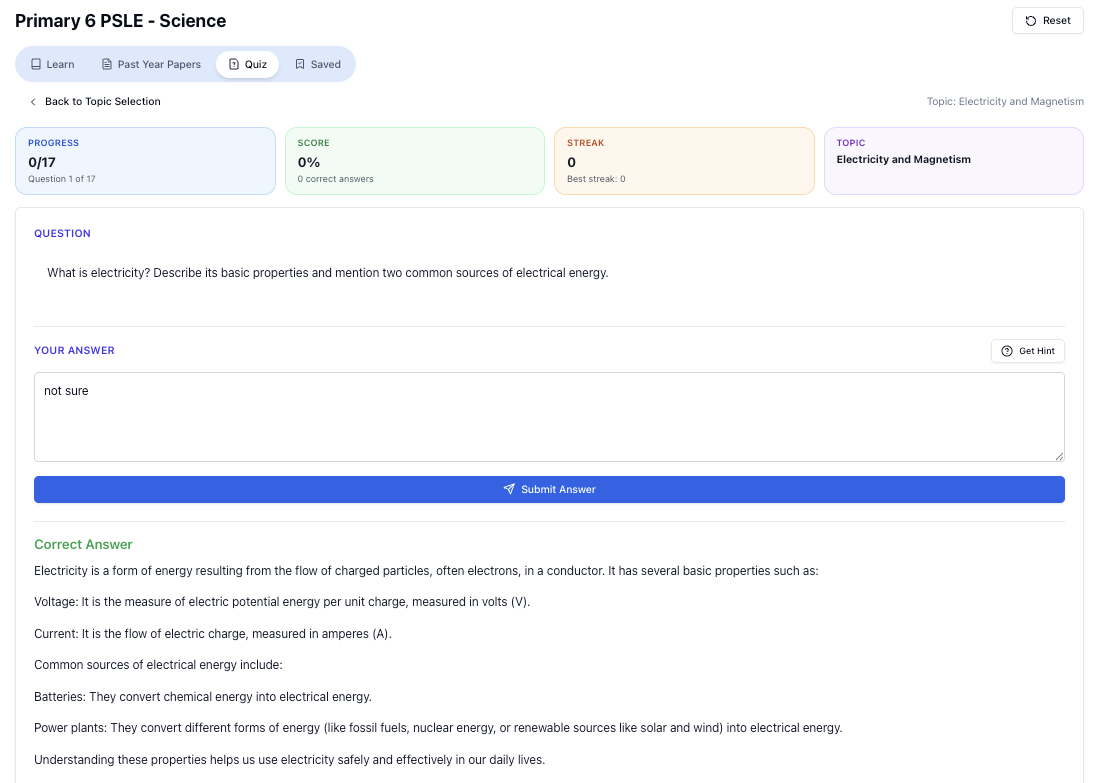
“Practice PSLE Science questions and get clear, step-by-step answers instantly.”
👉 Try a question now and see how fast you can improve.
Free on Tutorly.sg
Practise Mechanics with step-by-step help — free to start
On Tutorly.sg/app you can practise unlimited Singapore syllabus questions, get instant explanations when you are stuck, and use past-year papers — no sign-up needed to start.
- ✓ PSLE, O Level, A Level, and more
- ✓ Step-by-step working when you are stuck
- ✓ Works on phone and laptop