

Free on Tutorly.sg
Practise Geometry and measurement with step-by-step help — free to start
On Tutorly.sg/app you can practise unlimited Singapore syllabus questions, get instant explanations when you are stuck, and use past-year papers — no sign-up needed to start.
- ✓ PSLE, O Level, A Level, and more
- ✓ Step-by-step working when you are stuck
- ✓ Works on phone and laptop
Quick answer
Ever felt your heart sink when those geometry questions appear in PSLE? Many students lose marks because they miss out on basic concepts. But don’t worry, once you understand these basics, those shapes and angles will start making sense.
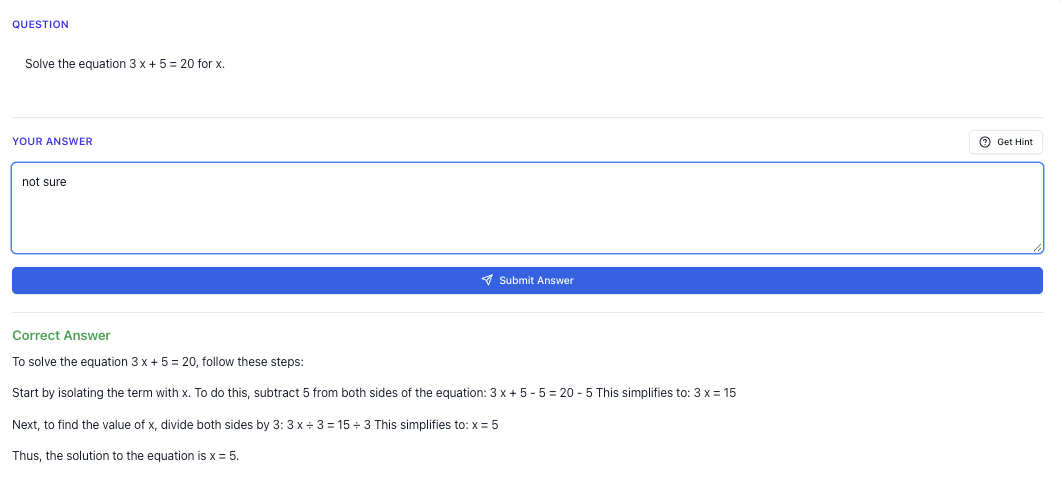
“Stuck on a question? See simple explanations that help you understand fast.”
👉 Give it a try and turn confusion into clarity in minutes.
What you need to know
Geometry and measurement in PSLE Maths involve understanding shapes, angles, and how to measure them. It's about knowing the properties of different shapes and how to use formulas to find areas and perimeters.
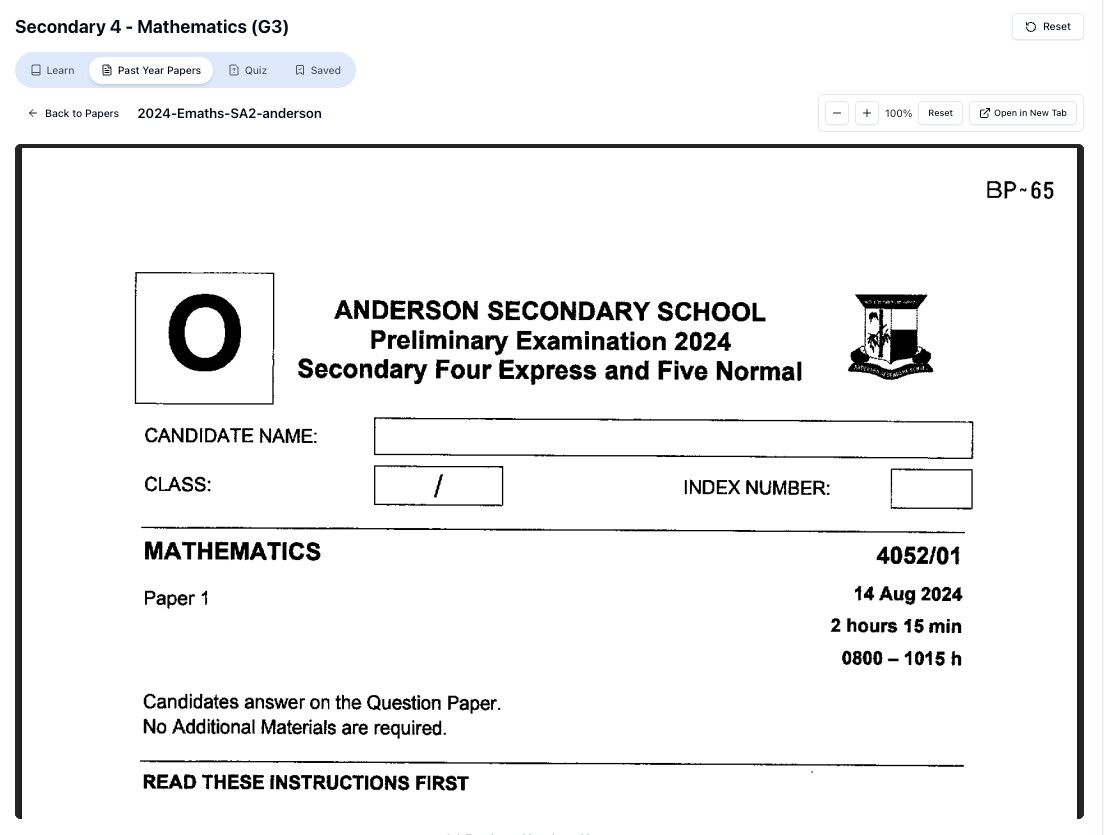
“Access more than 1000+ past year papers to practice”
👉 Start a paper today and test yourself like it’s the real exam.
Why Students Struggle with Geometry and Measurement
Visualising the Concepts
Many students find it tough to picture what’s happening with shapes and angles. I’ve seen this in my classes — when students can’t "see" the shapes, they get stuck. A simple trick I teach my students is to draw everything out. Visualising the problem is often half the battle won.
Gaps in Basic Understanding
Sometimes, the struggle isn’t that you’re bad at maths. It’s just a small gap in understanding. For instance, knowing that the angles in a triangle add up to 180 degrees is crucial. Without this, no amount of practice will help. Parents are often surprised that focusing on basics rather than just assessment books can make such a difference.
Overloading with Assessment Books
I’ve noticed that many parents rely heavily on assessment books. While they are useful, they might not always address the specific gaps your child has. Short daily revisions, focusing on what’s unclear, can be much more effective.
Common Mistakes Students Make
Mistake 1: Miscalculating Angles
Students often forget that angles in a triangle must add up to 180 degrees. This part trips everyone up, especially when the question is lengthy.
Fix: Break down the problem. Write out what you know first, then solve step by step.
Mistake 2: Confusing Perimeter and Area
I often see students mix up perimeter (the distance around a shape) and area (the space inside a shape).
Fix: Use stories or images. Imagine walking around a park (perimeter) versus covering the park with a picnic blanket (area).
Mistake 3: Ignoring Units
Sometimes, students forget to write the units, like cm or m². This can cost marks.
Fix: Always double-check the units at the end of your answer.
Exam Tip
Keep an eye on your time during the exam. Geometry questions can be time-consuming. Practice under timed conditions to get used to the pressure. Remember, neatness counts too. Clear drawings and organised workings make it easier for you and the marker.
Worked Examples
Question 1
A triangle has angles 45°, 60°, and x°. Find the value of x.
Solution
Step 1: Add the known angles: $45° + 60° = 105°$
Why: We add these to find out how much of the 180° is already used.
Step 2: Subtract the sum from 180°: $180° - 105° = 75°$
Why: The total of all angles in a triangle must be 180°, so the remaining angle is 75°.
“Doing Secondary Science? Pick a topic and practise like it’s a real exam — with clear answers right after.”
👉 Try Tutorly now and start a Science topic in seconds.

Question 2
Find the area of a rectangle with a length of 8 cm and a width of 5 cm.
Solution
Step 1: Multiply length by width:
Why: The formula for the area of a rectangle is length times width.
Quick Summary
- Geometry involves understanding shapes and angles.
- Visualising problems helps solve them.
- Angles in triangles add up to 180°.
- Perimeter is the distance around; area is the space inside.
- Always check units in your final answer.
FAQ
Q 1: Why do I always get triangles wrong?
A: It might be that you’re not adding the angles correctly. Remember, they must total 180°.
Q 2: How can I remember the difference between area and perimeter?
A: Think of perimeter as walking around a shape and area as covering it with a mat.
Q 3: What if I forget to write the units?
A: Practice makes perfect. Make it a habit to check your units at the end of each question.
Q 4: How do I manage my time better in the exam?
A: Try practicing under timed conditions at home. This will help you get used to the pace required.
Free on Tutorly.sg
Practise Geometry and measurement with step-by-step help — free to start
On Tutorly.sg/app you can practise unlimited Singapore syllabus questions, get instant explanations when you are stuck, and use past-year papers — no sign-up needed to start.
- ✓ PSLE, O Level, A Level, and more
- ✓ Step-by-step working when you are stuck
- ✓ Works on phone and laptop
Free practice
Try it yourself
Practise similar questions with step-by-step help on Tutorly.
- ✓ Unlimited similar questions
- ✓ Step-by-step help when you are stuck
- ✓ No sign-up needed to start
Related Topics You Should Learn Next
- PSLE Mathematics: Geometry and Measurement Exam Techniques for Better Scores
- PSLE Mathematics: Geometry and Measurement Made Simple
- PSLE Math: Geometry and Measurement Practice Questions That Boost Your Confidence
- PSLE Mathematics: Geometry and Measurement Revision Made Simple
Remember, once these basics click, the rest of geometry becomes much easier!
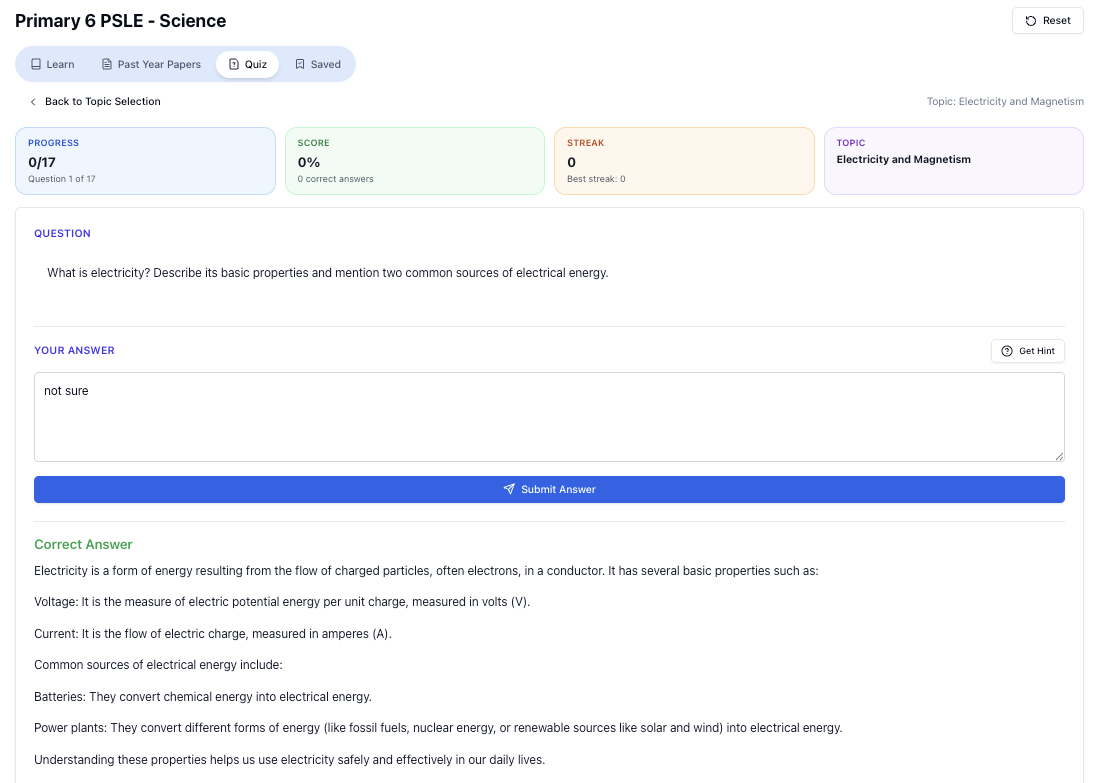
“Practice PSLE Science questions and get clear, step-by-step answers instantly.”
👉 Try a question now and see how fast you can improve.
Free on Tutorly.sg
Practise Geometry and measurement with step-by-step help — free to start
On Tutorly.sg/app you can practise unlimited Singapore syllabus questions, get instant explanations when you are stuck, and use past-year papers — no sign-up needed to start.
- ✓ PSLE, O Level, A Level, and more
- ✓ Step-by-step working when you are stuck
- ✓ Works on phone and laptop