

Free on Tutorly.sg
Practise Mole Concept with step-by-step help — free to start
On Tutorly.sg/app you can practise unlimited Singapore syllabus questions, get instant explanations when you are stuck, and use past-year papers — no sign-up needed to start.
- ✓ PSLE, O Level, A Level, and more
- ✓ Step-by-step working when you are stuck
- ✓ Works on phone and laptop
Quick answer
Many students find the mole concept confusing because they focus on memorizing keywords instead of understanding the basics. This leads to mistakes in applying formulas and understanding questions, especially when phrased differently from school notes. Once you grasp the fundamentals, like what a mole truly represents, the rest becomes much easier.
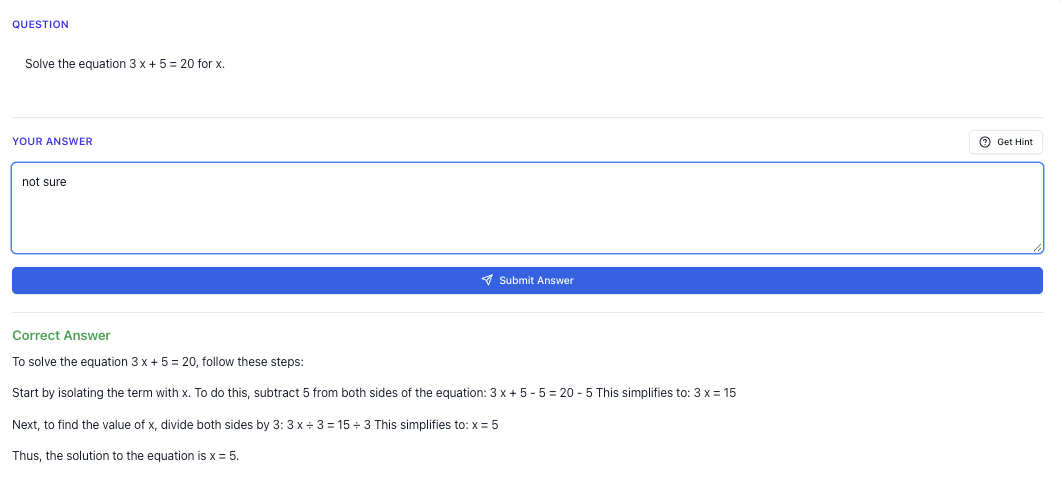
“Stuck on a question? See simple explanations that help you understand fast.”
👉 Give it a try and turn confusion into clarity in minutes.
What you need to know
The mole concept in chemistry is a way of counting particles like atoms and molecules, similar to how we count eggs in dozens. One mole equals particles, known as Avogadro's number. This concept helps us convert between the mass of a substance and the number of particles it contains.
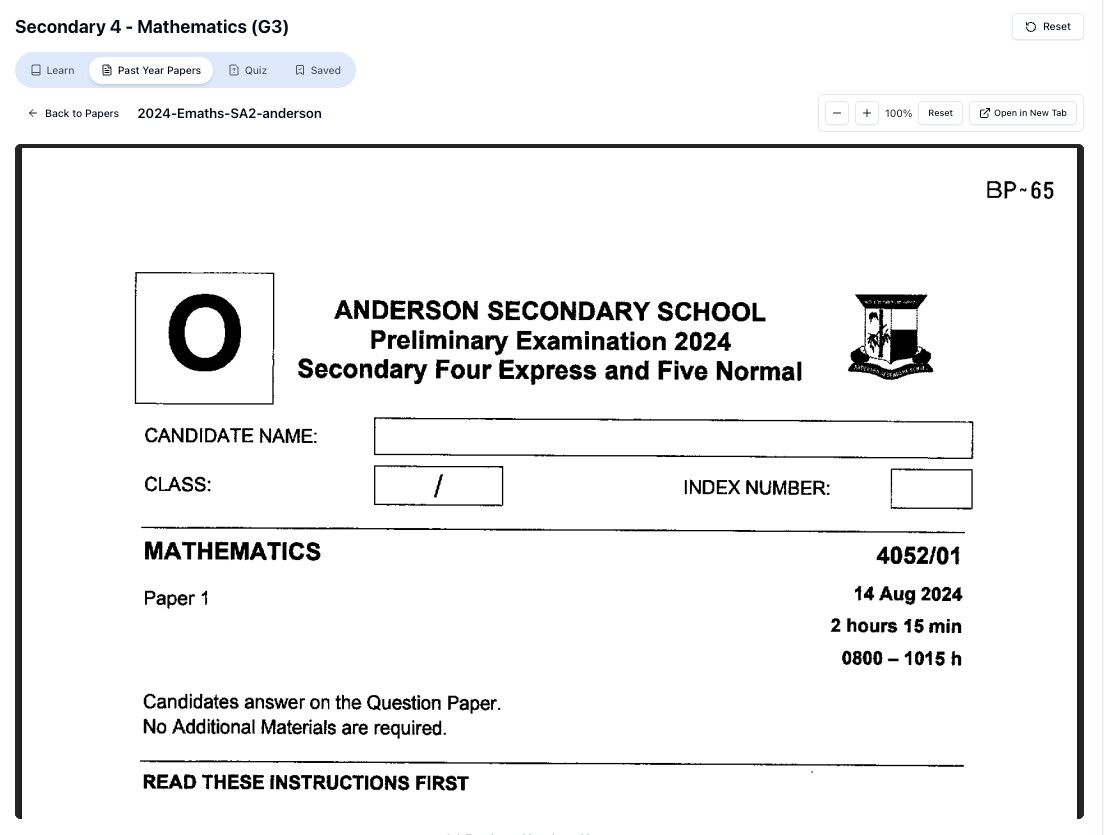
“Access more than 1000+ past year papers to practice”
👉 Start a paper today and test yourself like it’s the real exam.
Why students find mole concept confusing
One mistake I repeatedly see among my Sec 4 students is trying to memorize formulas without understanding what they mean. The mole concept isn't just about plugging numbers into equations. It's about understanding the relationship between mass, moles, and particles. Students usually panic when they see application questions like this, especially when the questions are worded differently from what they've memorized.
Understanding the basics
Think of a mole like counting people on an MRT train. You wouldn't count each person one by one during peak hour, right? Instead, you estimate based on the train's capacity. Similarly, a mole helps us count a large number of tiny particles efficiently.
Quick check
- What does one mole of carbon atoms weigh in grams?
- How many molecules are in 2 moles of water?
- If you have 10 grams of sodium chloride, how many moles do you have?
Answers:
- 12 grams (since the atomic mass of carbon is 12).
- molecules.
- About 0.17 moles (using the molar mass of NaCl, 58.5 g/mol).
Common mistakes students make
-
Memorizing without understanding: Many students remember formulas but can't explain the steps. For example, they know (moles = mass/molar mass) but don't understand why it works.
-
Being too general in answers: In exams, saying "amount of substance" without specifying moles loses marks. The examiner is testing whether you truly understand the process.
-
Confusion with units: Forgetting units or mixing them up can lead to wrong answers. Always double-check your units.
Exam tip
Precision matters more than length in O-Level questions. Be clear and specific. For example, if asked about the number of particles in a mole, mention Avogadro's number directly. This shows the examiner you understand the concept deeply.
Worked examples
Question
How many moles of water are in 36 grams?
Solution
Step 1: Find the molar mass of water, .
Why: Knowing the molar mass helps us convert between mass and moles.
Step 2: Calculate: .
Why: The atomic mass of hydrogen is 1, and oxygen is 16.
Step 3: Use the formula to find moles.
Why: This formula links mass (m) and molar mass (M) to moles (n).
“Doing Secondary Science? Pick a topic and practise like it’s a real exam — with clear answers right after.”
👉 Try Tutorly now and start a Science topic in seconds.

Step 4: Substitute the values: .
Why: Dividing gives us the number of moles, showing how much substance we have.
Quick summary
- One mole equals particles.
- Understand, don't memorize: know why formulas work.
- Be precise in exams; clarity over length.
- Check units to avoid simple errors.
- Practice with structured questions to build confidence.
FAQ
1. What is Avogadro's number?
It's , the number of particles in one mole of a substance.
2. Why do I need to learn the mole concept?
It's essential for converting between mass and particles, a key skill in chemistry.
3. How can I remember the formulas better?
Focus on understanding the steps and why they work, not just memorizing them.
4. Why do I lose marks even when my answers are long?
Examiners value precision and understanding over lengthy, vague responses.
Free on Tutorly.sg
Practise Mole Concept with step-by-step help — free to start
On Tutorly.sg/app you can practise unlimited Singapore syllabus questions, get instant explanations when you are stuck, and use past-year papers — no sign-up needed to start.
- ✓ PSLE, O Level, A Level, and more
- ✓ Step-by-step working when you are stuck
- ✓ Works on phone and laptop
Free practice
Try it yourself
Practise similar questions with step-by-step help on Tutorly
- ✓ Unlimited similar questions
- ✓ Step-by-step help when you are stuck
- ✓ No sign-up needed to start
Related Topics You Should Learn Next
- O Level Chemistry Mole Concept Questions: Singapore Secondary Level Worksheet Practice Guide
- O Level Chemistry: Mastering the Mole Concept Easily
- How To Calculate Molar Mass In Singapore: A Clear Tutorial For O-Level Chemistry
- O Level Chemistry: Understanding the Mole Concept
Remember, once the basics click, everything else becomes so much easier. Don't worry, you're not alone in this struggle.
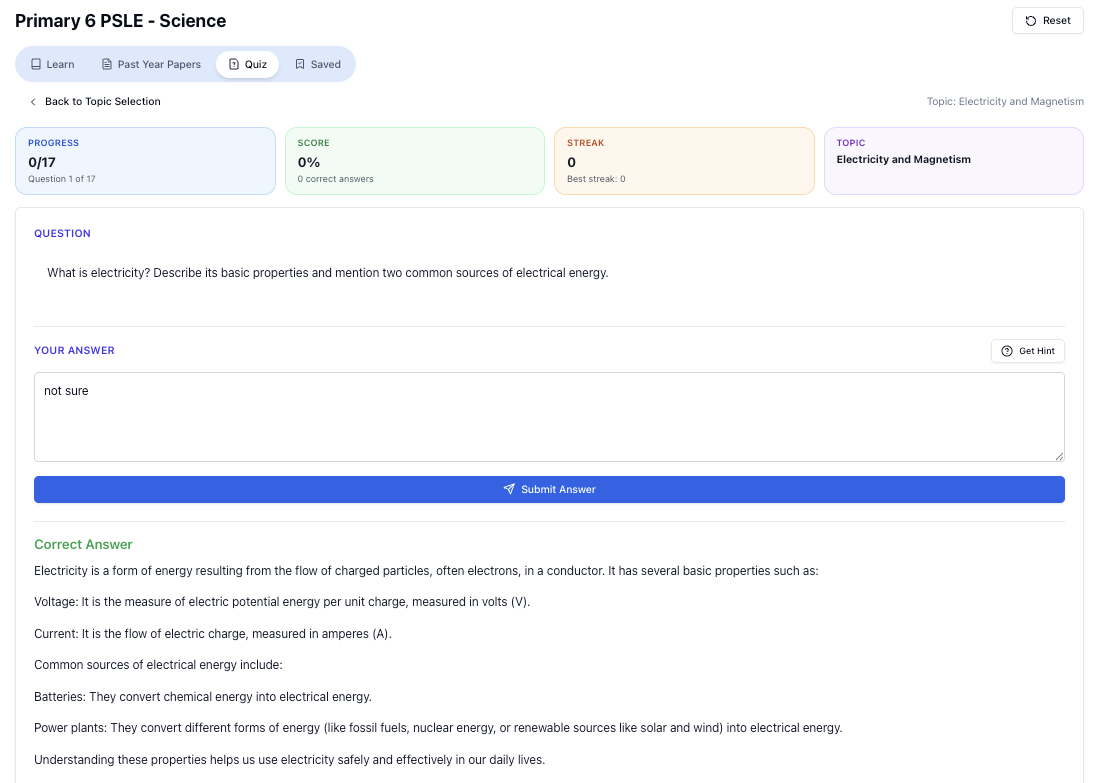
“Practice PSLE Science questions and get clear, step-by-step answers instantly.”
👉 Try a question now and see how fast you can improve.
Free on Tutorly.sg
Practise Mole Concept with step-by-step help — free to start
On Tutorly.sg/app you can practise unlimited Singapore syllabus questions, get instant explanations when you are stuck, and use past-year papers — no sign-up needed to start.
- ✓ PSLE, O Level, A Level, and more
- ✓ Step-by-step working when you are stuck
- ✓ Works on phone and laptop