

Free on Tutorly.sg
Practise Mole Concept with step-by-step help — free to start
On Tutorly.sg/app you can practise unlimited Singapore syllabus questions, get instant explanations when you are stuck, and use past-year papers — no sign-up needed to start.
- ✓ PSLE, O Level, A Level, and more
- ✓ Step-by-step working when you are stuck
- ✓ Works on phone and laptop
Quick answer
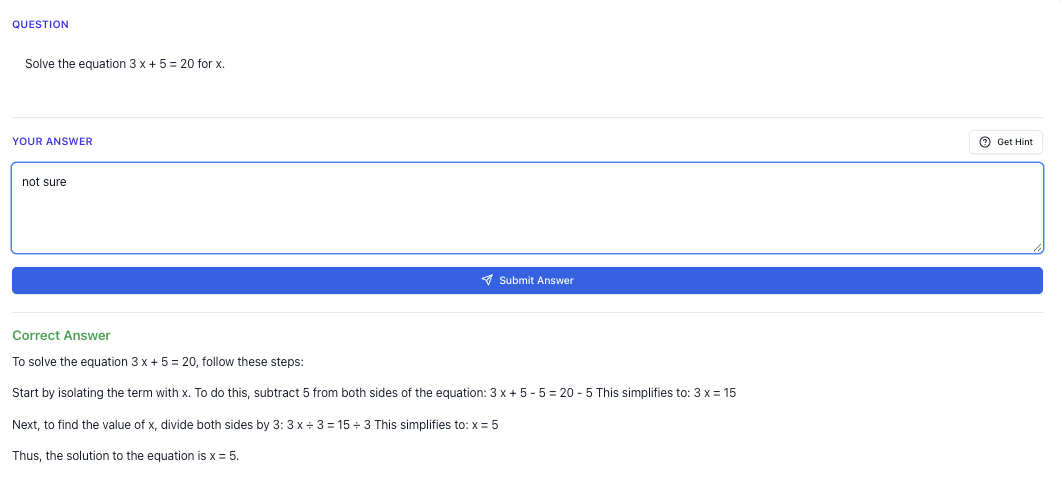
Feeling lost when tackling mole concept questions at O Level? You're not alone. Many students struggle with understanding rather than just memorizing. By learning the right steps and focusing on understanding the processes, you can confidently solve these questions and gain the marks you deserve.
“Stuck on a question? See simple explanations that help you understand fast.”
👉 Give it a try and turn confusion into clarity in minutes.
What you need to know
The mole concept in chemistry is a method to express amounts of a chemical substance. One mole is a quantity that contains exactly particles, like atoms or molecules. Understanding this concept helps you convert between mass, volume, and number of particles.
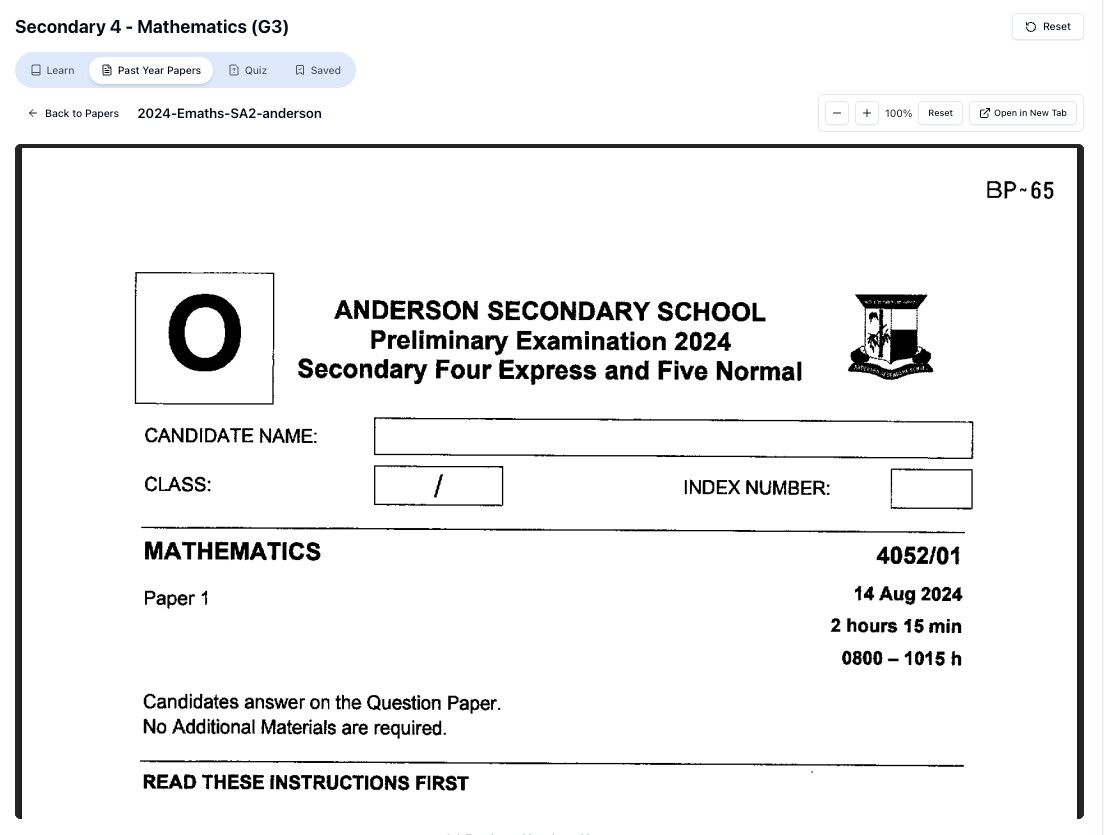
“Access more than 1000+ past year papers to practice”
👉 Start a paper today and test yourself like it’s the real exam.
Why Understanding the Mole Concept Matters
One mistake I repeatedly see among my Sec 4 students is memorizing keywords without understanding what they mean. The mole concept is about conversions and relationships, not just definitions. In exams, the examiner is testing whether you truly understand the process. So, let's break it down simply.
Key Formulas and When to Use Them
-
Moles = Mass / Molar Mass
Use this when you have the mass of a substance and need to find the number of moles. -
Moles = Volume of Gas / 24 dm³
For gases at room temperature and pressure, use this formula. -
Number of Particles = Moles × Avogadro's Number
This helps you find how many atoms or molecules are in a sample.
Quick Check
- Convert 12 grams of carbon (C) to moles.
- How many molecules are in 2 moles of water (H₂O)?
Common mistakes students make
-
Memorizing without Understanding: Many students memorize formulas but don't know when to apply them. Always ask yourself what the question is really about.
-
Mixing Up Units: Ensure you convert units accurately, especially when dealing with gases.
-
Overcomplicating Answers: Precision matters more than the length of your answer. Be clear and direct.
Exam tip
Present your answers neatly and label each step. Use the correct units and double-check calculations. Remember, in O-Level exams, time management is crucial, so practice solving questions under timed conditions.
Worked examples
Question 1
Calculate the number of moles in 50 grams of water (H₂O).
Solution 1
Step 1: Find the molar mass of water.
Why: Molar mass is the mass of one mole of a substance. For H₂O, it's (2×1 for H + 16 for O).
Step 2: Use the formula: Moles = Mass / Molar Mass.
Why: This step converts grams into moles using the molar mass.
Step 3: Calculate.
Why: This gives the number of moles in 50 grams of water.
“Doing Secondary Science? Pick a topic and practise like it’s a real exam — with clear answers right after.”
👉 Try Tutorly now and start a Science topic in seconds.

Quick summary
- Moles relate mass, volume, and particles.
- Understand the formulas and when to use them.
- Avoid memorizing blindly; focus on understanding.
- Check units and present calculations clearly.
- Practice under exam conditions to manage time well.
FAQ
Q 1: Why is the mole concept important?
The mole concept helps you connect the macroscopic world (grams, liters) with the microscopic world (atoms, molecules).
Q 2: How do you find molar mass?
Add the atomic masses of all elements in a compound. For example, H₂O = 2(1) + 16 = 18 g/mol.
Q 3: What's Avogadro's number?
It’s , used to count particles in one mole of substance.
Q 4: How can I avoid common errors in exams?
Practice questions regularly, focus on understanding, and always double-check units and calculations.
Free on Tutorly.sg
Practise Mole Concept with step-by-step help — free to start
On Tutorly.sg/app you can practise unlimited Singapore syllabus questions, get instant explanations when you are stuck, and use past-year papers — no sign-up needed to start.
- ✓ PSLE, O Level, A Level, and more
- ✓ Step-by-step working when you are stuck
- ✓ Works on phone and laptop
Free practice
Try it yourself
Practise similar questions with step-by-step help on Tutorly
- ✓ Unlimited similar questions
- ✓ Step-by-step help when you are stuck
- ✓ No sign-up needed to start
Practise with free question sets
Work through exam-style questions with answers and step-by-step solutions:
- 35+ O Level Mole Concept Questions for (Singapore MOE Syllabus) with Step-by-Step Solutions
- Topic study hub
[Practise unlimited questions on Tutorly.sg/app](https://www.tutorly.sg/app)
Related Topics You Should Learn Next
- O Level Chemistry Mole Concept Questions: Singapore Secondary Level Worksheet Practice Guide
- O Level Chemistry: Understanding the Mole Concept
- How To Calculate Molar Mass In Singapore: A Clear Tutorial For O-Level Chemistry
- Mole Concept Learning Hub
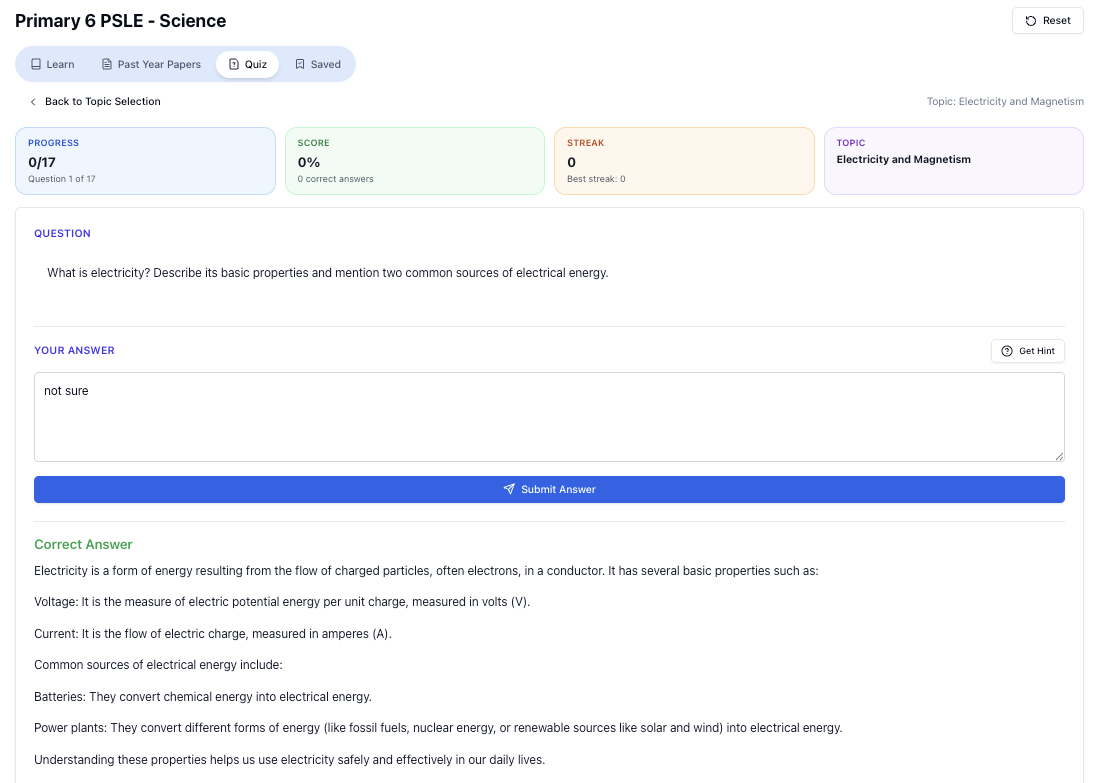
“Practice PSLE Science questions and get clear, step-by-step answers instantly.”
👉 Try a question now and see how fast you can improve.
Free on Tutorly.sg
Practise Mole Concept with step-by-step help — free to start
On Tutorly.sg/app you can practise unlimited Singapore syllabus questions, get instant explanations when you are stuck, and use past-year papers — no sign-up needed to start.
- ✓ PSLE, O Level, A Level, and more
- ✓ Step-by-step working when you are stuck
- ✓ Works on phone and laptop