

Free on Tutorly.sg
Practise Fractions and Ratios with step-by-step help — free to start
On Tutorly.sg/app you can practise unlimited Singapore syllabus questions, get instant explanations when you are stuck, and use past-year papers — no sign-up needed to start.
- ✓ PSLE, O Level, A Level, and more
- ✓ Step-by-step working when you are stuck
- ✓ Works on phone and laptop
Quick answer
Feeling stuck on fractions and ratios? You're not alone. Many students lose marks because they rush and miss simple steps. I'll show you how to break down the questions so you can solve them with confidence.
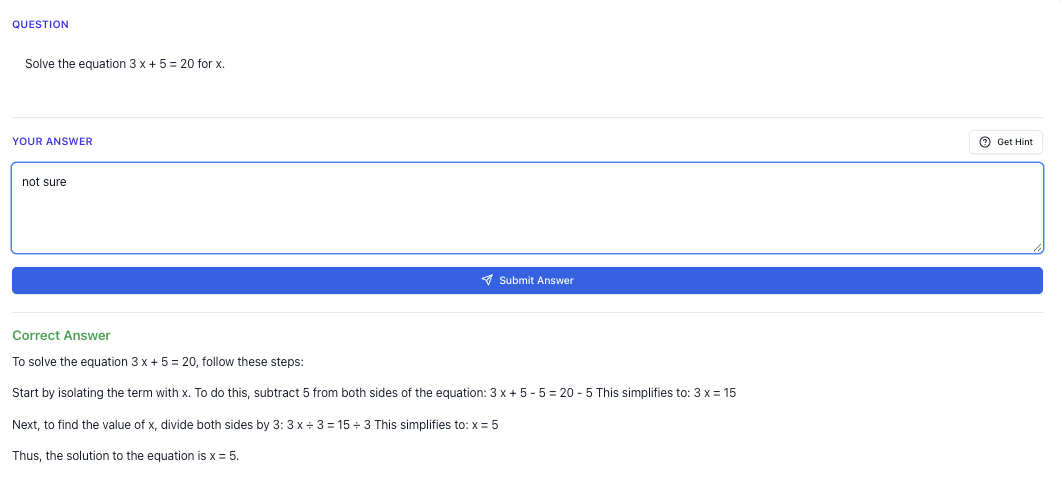
“Stuck on a question? See simple explanations that help you understand fast.”
👉 Give it a try and turn confusion into clarity in minutes.
What you need to know
Fractions and ratios might seem tricky, but they're just ways to show parts of a whole. A fraction tells you how many parts of something you have. A ratio compares two amounts to show how much more or less one is than the other.
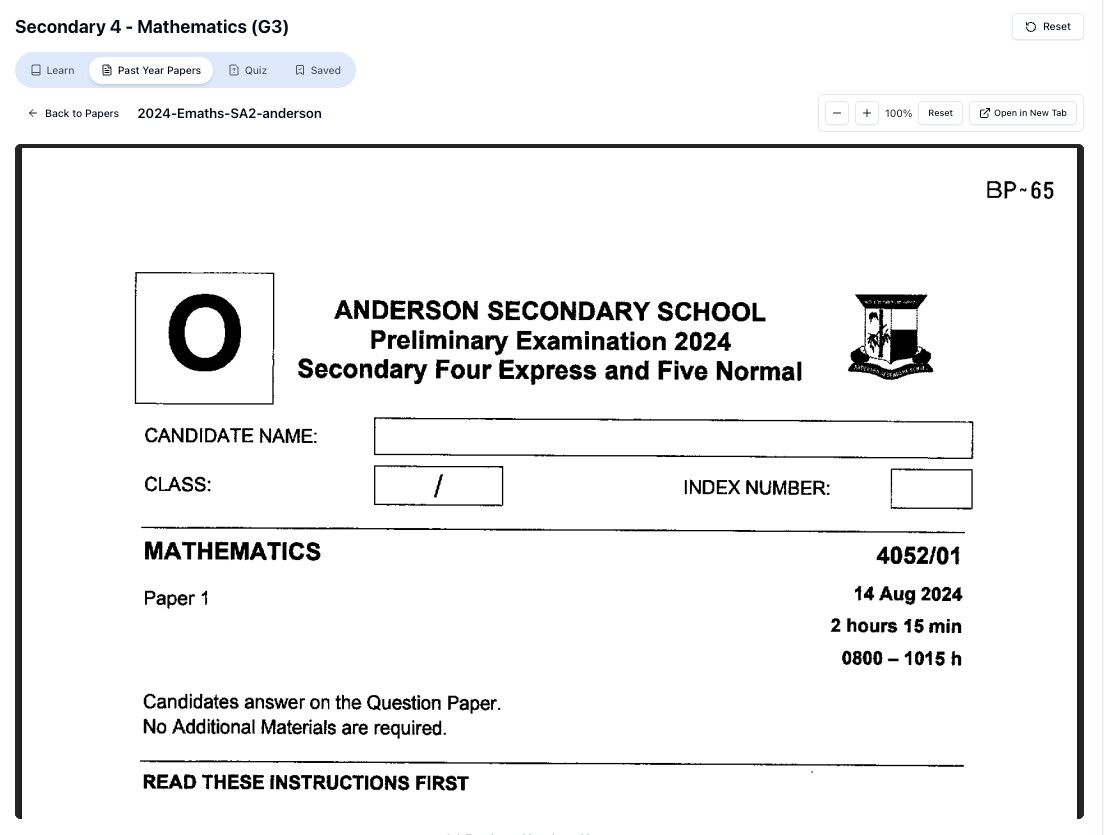
“Access more than 1000+ past year papers to practice”
👉 Start a paper today and test yourself like it’s the real exam.
Common Mistakes in Fractions and Ratios
Mistake 1: Confusing Numerator and Denominator
The numerator is the top number; it shows how many parts you have. The denominator is the bottom number; it shows the total number of parts. Mixing them up changes the value.
Mistake 2: Forgetting to Simplify
Always simplify fractions. This means making them as simple as possible by dividing the top and bottom by the same number until you can't anymore.
Mistake 3: Misunderstanding Ratios
Ratios must be compared in the same units. If you're looking at apples and oranges, make sure you're comparing the same thing, like both in dozens.
Mistake 4: Rushing Through Word Problems
Word problems need careful reading. Sometimes, students rush and miss key details. Slow down and underline important parts.
Mistake 5: Ignoring Units in Ratios
Always make sure the units are the same when dealing with ratios. If not, convert them so they match.
Revision checklist
- Numerator vs Denominator: Double-check which is which.
- Simplification: Always simplify fractions before finalizing your answer.
- Word Problems: Underline key numbers and words.
- Unit Consistency: Ensure ratios compare the same units.
- Practice: Do a little every day, not all at once.
Exam tip
Presentation is key. Write neatly and align your work to avoid mistakes. Always double-check your units and simplify your fractions. Time management is crucial, so practice under timed conditions.
Worked examples
Question 1
You have 3 red marbles and 9 blue marbles. What is the ratio of red to blue marbles?
Solution
Step 1: Count the number of red marbles: 3.
Why: We need to know how many red marbles we have to form the ratio.
Step 2: Count the number of blue marbles: 9.
Why: We need to know how many blue marbles we have to form the ratio.
Step 3: Write the ratio as 3:9.
Why: Ratios show the relationship between two numbers.
Step 4: Simplify the ratio by dividing both numbers by their greatest common factor, 3.
Why: Simplifying makes the ratio easier to understand. 3:9 becomes 1:3.
Question 2
If of a class are girls, what fraction of the class are boys?
Solution
Step 1: Start with the whole class, which is 1.
Why: Fractions are parts of a whole, and the whole is 1.
“Doing Secondary Science? Pick a topic and practise like it’s a real exam — with clear answers right after.”
👉 Try Tutorly now and start a Science topic in seconds.

Step 2: Subtract the fraction of girls from the whole: .
Why: This gives us the fraction that represents the boys.
Step 3: Calculate: .
Why: We subtract fractions by finding a common denominator.
Quick summary
- Fractions and ratios are about parts and comparisons.
- Always simplify fractions.
- Ratios need the same units.
- Read word problems carefully; underline key parts.
- Practice a little every day to avoid cramming stress.
FAQ
1. What's the difference between a fraction and a ratio?
A fraction shows parts of a whole, while a ratio compares two quantities.
2. How do I simplify a fraction?
Divide the numerator and the denominator by their greatest common factor.
3. Why is it important to read word problems carefully?
Because missing details can lead to wrong answers, it's important to spot key information.
4. How do I compare ratios?
Make sure they have the same units. Convert if necessary.
5. What if I forget the steps during the exam?
Stay calm, take a deep breath, and try to remember to break it down into smaller steps.
Free on Tutorly.sg
Practise Fractions and Ratios with step-by-step help — free to start
On Tutorly.sg/app you can practise unlimited Singapore syllabus questions, get instant explanations when you are stuck, and use past-year papers — no sign-up needed to start.
- ✓ PSLE, O Level, A Level, and more
- ✓ Step-by-step working when you are stuck
- ✓ Works on phone and laptop
Free practice
Try it yourself
Practice similar questions and get step-by-step help on Tutorly
- ✓ Unlimited similar questions
- ✓ Step-by-step help when you are stuck
- ✓ No sign-up needed to start
Practise with free question sets
Work through exam-style questions with answers and step-by-step solutions:
- 35+ PSLE Math Heuristics Questions for (Singapore MOE Syllabus) Every Student Should Know
- [40+ P 5 Math Fractions Questions for (Singapore MOE Syllabus)](/questions/p 5-fractions-questions)
- [35+ PSLE Ratio Questions for (Singapore MOE Syllabus) with Step-by-Step Solutions](/questions/p 6-ratio-questions)
- Topic study hub
[Practise unlimited questions on Tutorly.sg/app](https://www.tutorly.sg/app)
Related Topics You Should Learn Next
- PSLE Mathematics: Fractions and Ratios Complete Guide
- PSLE Math: How to Score in Fractions and Ratios Without Panicking
- PSLE Math Fractions & Ratios: Clear Steps to Stop Losing Marks
- PSLE Math: Fractions and Ratios Explained Simply
- Topic cluster hub
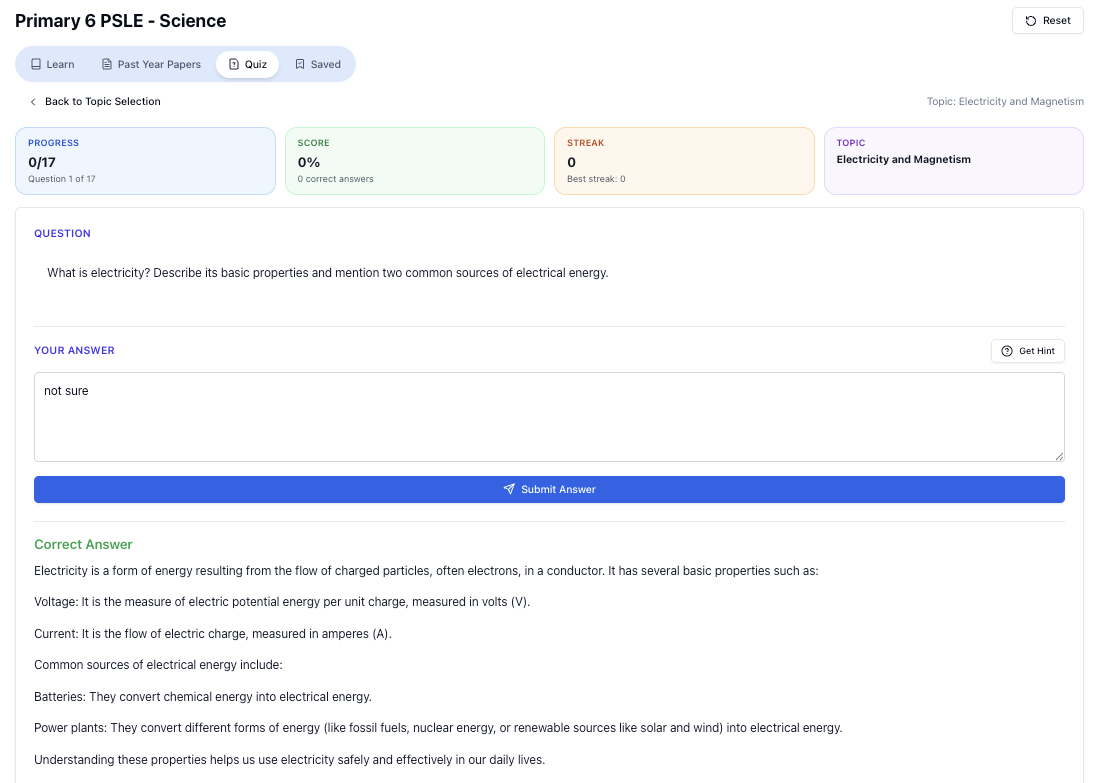
“Practice PSLE Science questions and get clear, step-by-step answers instantly.”
👉 Try a question now and see how fast you can improve.
Free on Tutorly.sg
Practise Fractions and Ratios with step-by-step help — free to start
On Tutorly.sg/app you can practise unlimited Singapore syllabus questions, get instant explanations when you are stuck, and use past-year papers — no sign-up needed to start.
- ✓ PSLE, O Level, A Level, and more
- ✓ Step-by-step working when you are stuck
- ✓ Works on phone and laptop