

Free on Tutorly.sg
Practise Fractions and Ratios with step-by-step help — free to start
On Tutorly.sg/app you can practise unlimited Singapore syllabus questions, get instant explanations when you are stuck, and use past-year papers — no sign-up needed to start.
- ✓ PSLE, O Level, A Level, and more
- ✓ Step-by-step working when you are stuck
- ✓ Works on phone and laptop
Quick answer
Fractions and ratios often confuse because they seem like two different topics. They both compare parts of a whole. Think of fractions as parts of a pizza and ratios as comparing different pizzas. Once you see this connection, solving problems becomes much easier.
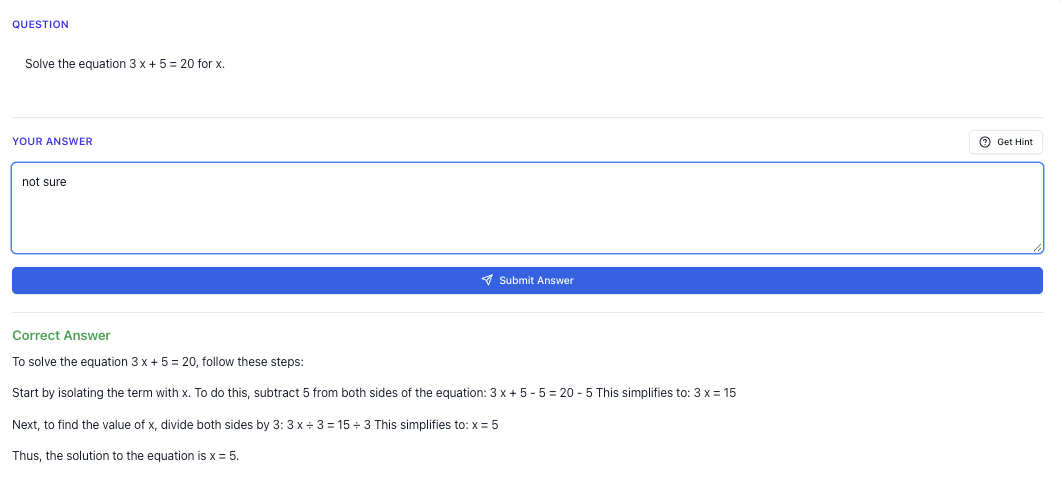
“Stuck on a question? See simple explanations that help you understand fast.”
👉 Give it a try and turn confusion into clarity in minutes.
What you need to know
Fractions represent parts of a whole. Imagine a pizza cut into 8 equal slices — if you eat 3 slices, you've eaten of the pizza. Ratios compare two quantities. If you have 3 apples and 2 oranges, the ratio of apples to oranges is 3:2. These concepts are about comparing and sharing, not just numbers.
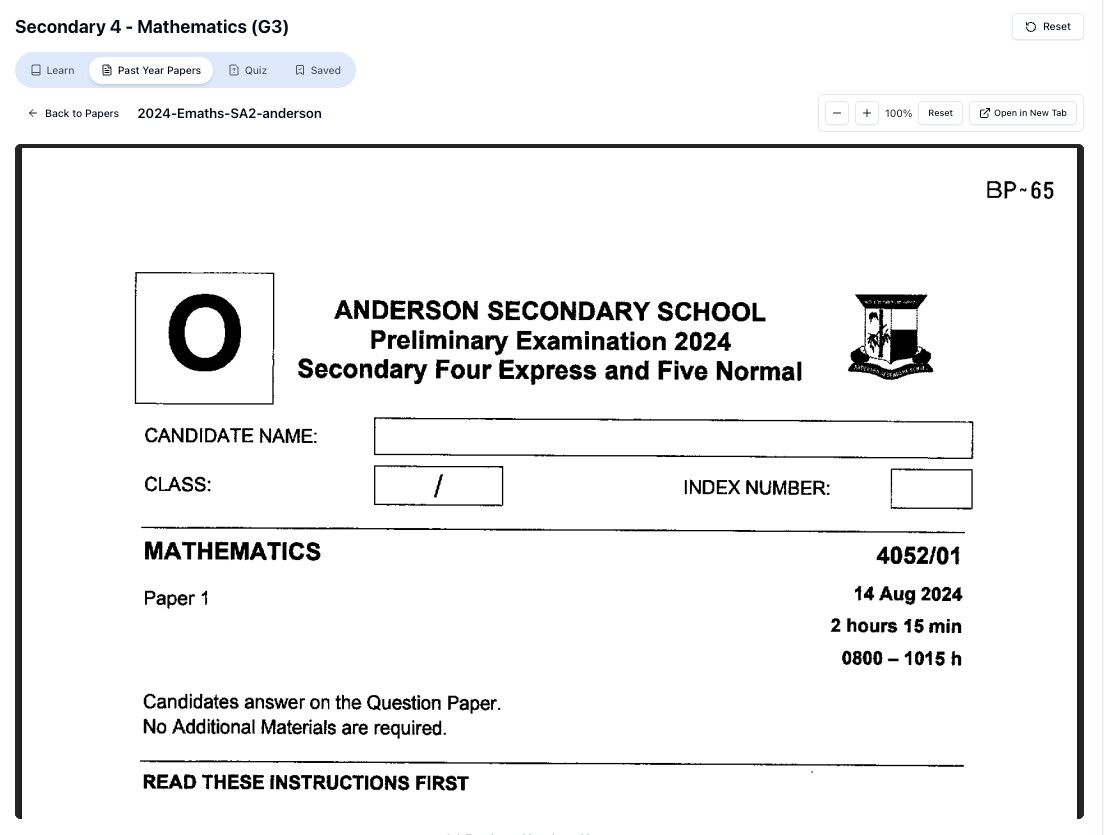
“Access more than 1000+ past year papers to practice”
👉 Start a paper today and test yourself like it’s the real exam.
Understanding Fractions and Ratios
Why Fractions and Ratios Seem Confusing
Many students struggle because they can't picture these concepts, especially under PSLE stress. Parents are often surprised that short daily revision with stories or images can help more than thick assessment books. Most Primary 5 students struggle with this transition from simple numbers to comparing parts.
How to Visualise Fractions
A simple trick I teach my students is to use real-life objects, like Lego blocks or slices of bread, to see fractions. This topic becomes easier when broken into smaller steps.
Quick check
- If you have a cake and you give away half, what fraction is left?
- You have 4 blue balloons and 3 red balloons. What is the ratio of blue to red balloons?
- If a pizza has 8 slices and you eat 3, what fraction of the pizza did you eat?
Answers:
- 4:3
Common mistakes students make
-
Mixing up numerators and denominators: The numerator is the top number (part), and the denominator is the bottom number (whole). Students often flip them by mistake.
-
Forgetting to simplify ratios: Ratios should be in the simplest form. If you have 6:4, simplify it to 3:2 by dividing both numbers by their greatest common factor.
-
Overcomplicating problems: Many students try to use complex methods when simple steps work. Remember, breathe first, and take it one step at a time.
Exam tip
In PSLE, clear and neat presentation of fractions and ratios can save precious marks. Always show your working clearly. If you make a mistake, it’s easier to spot and correct.
Worked examples
Question 1
A pizza is cut into 8 slices. You eat 3 slices. What fraction of the pizza have you eaten?
Solution
Step 1: Identify the total number of slices: 8.
Why: This is your whole or denominator.
Step 2: Count the number of slices eaten: 3.
Why: This is your part or numerator.
Step 3: Write the fraction: .
Why: Fractions are written as part/whole, so 3 out of 8 slices is .
Question 2
You have 5 pens and 10 pencils. What is the ratio of pens to pencils?
Solution
Step 1: Count the number of pens: 5.
Why: This is the first quantity in the ratio.
Step 2: Count the number of pencils: 10.
Why: This is the second quantity in the ratio.
Step 3: Write the ratio: 5:10.
Why: Ratios compare two quantities directly.
Step 4: Simplify the ratio: 1:2.
“Doing Secondary Science? Pick a topic and practise like it’s a real exam — with clear answers right after.”
👉 Try Tutorly now and start a Science topic in seconds.

Why: Divide both numbers by the greatest common factor, which is 5.
Quick summary
- Fractions are parts of a whole, like slices of pizza.
- Ratios compare two different things, like numbers of apples to oranges.
- Keep numerators and denominators clear: numerator is part, denominator is whole.
- Simplify ratios to their simplest form.
- Show clear working to avoid losing marks.
- Short daily practice can make these concepts click.
FAQ
Q 1: What's the difference between fractions and ratios?
Fractions show parts of a whole. Ratios compare two different quantities. Both involve comparing, but fractions focus on one item split into parts, while ratios involve two distinct items.
Q 2: Why do I need to simplify ratios?
Simplifying ratios makes them easier to understand and compare. It’s like reducing a fraction; it shows the simplest form.
Q 3: How can I practice fractions and ratios effectively?
Practice with real-life objects like food or toys. This helps you see and understand the concepts better. Short, regular revision is more effective than long, tiring sessions.
Q 4: Are fractions and ratios in PSLE difficult?
They can be tricky if not understood well, but with simple steps and practice, they become manageable. Remember, the key is to understand the why behind each step.
Q 5: What if I make a mistake in my exam?
Don't panic. Check your working step by step. Often, a small slip in calculation is the culprit. If your steps are clear, it's easier to find and fix errors.
Free on Tutorly.sg
Practise Fractions and Ratios with step-by-step help — free to start
On Tutorly.sg/app you can practise unlimited Singapore syllabus questions, get instant explanations when you are stuck, and use past-year papers — no sign-up needed to start.
- ✓ PSLE, O Level, A Level, and more
- ✓ Step-by-step working when you are stuck
- ✓ Works on phone and laptop
Free practice
Try it yourself
Practice similar questions with step-by-step help on Tutorly. This will give you the confidence to tackle any PSLE fraction or ratio problem.
- ✓ Unlimited similar questions
- ✓ Step-by-step help when you are stuck
- ✓ No sign-up needed to start
Practise with free question sets
Work through exam-style questions with answers and step-by-step solutions:
- 35+ PSLE Math Heuristics Questions for (Singapore MOE Syllabus) Every Student Should Know
- [40+ P 5 Math Fractions Questions for (Singapore MOE Syllabus)](/questions/p 5-fractions-questions)
- [35+ PSLE Ratio Questions for (Singapore MOE Syllabus) with Step-by-Step Solutions](/questions/p 6-ratio-questions)
- Topic study hub
[Practise unlimited questions on Tutorly.sg/app](https://www.tutorly.sg/app)
Related Topics You Should Learn Next
- PSLE Math: Fractions and Ratios Made Simple
- How to Solve PSLE Math Word Problems: Step-by-Step Guide
- How To Solve Word Problems In Math (Singapore Primary Level Tutorial)
- PSLE Math Problem Sums Tips Singapore Students Really Need
Remember, fractions and ratios may seem challenging, but with practice and understanding, you'll find them much easier. Keep practicing, and soon, these will be just another part of your math toolkit!
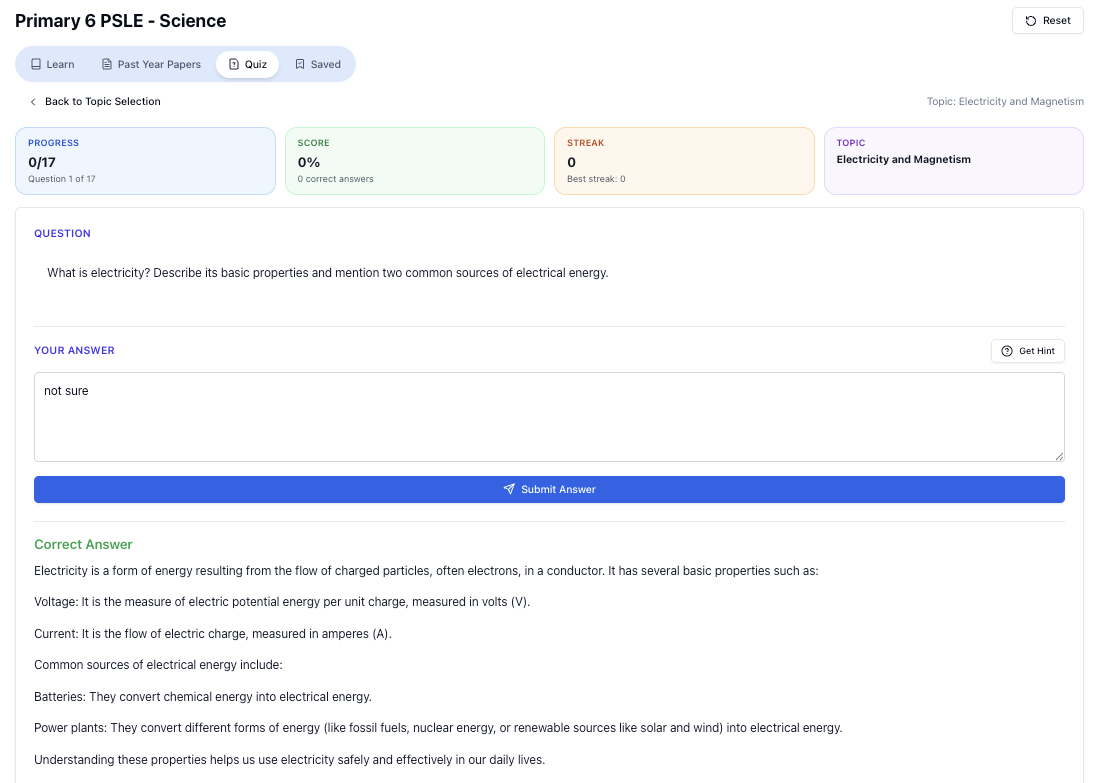
“Practice PSLE Science questions and get clear, step-by-step answers instantly.”
👉 Try a question now and see how fast you can improve.
Free on Tutorly.sg
Practise Fractions and Ratios with step-by-step help — free to start
On Tutorly.sg/app you can practise unlimited Singapore syllabus questions, get instant explanations when you are stuck, and use past-year papers — no sign-up needed to start.
- ✓ PSLE, O Level, A Level, and more
- ✓ Step-by-step working when you are stuck
- ✓ Works on phone and laptop