

Free on Tutorly.sg
Practise Life cycles with step-by-step help — free to start
On Tutorly.sg/app you can practise unlimited Singapore syllabus questions, get instant explanations when you are stuck, and use past-year papers — no sign-up needed to start.
- ✓ PSLE, O Level, A Level, and more
- ✓ Step-by-step working when you are stuck
- ✓ Works on phone and laptop
Quick answer
Your heart sinks when you see a question on life cycles, right? Don't worry. After this, you'll know exactly what to focus on to avoid common mistakes in your exams. Let's make sure you get those marks you deserve.
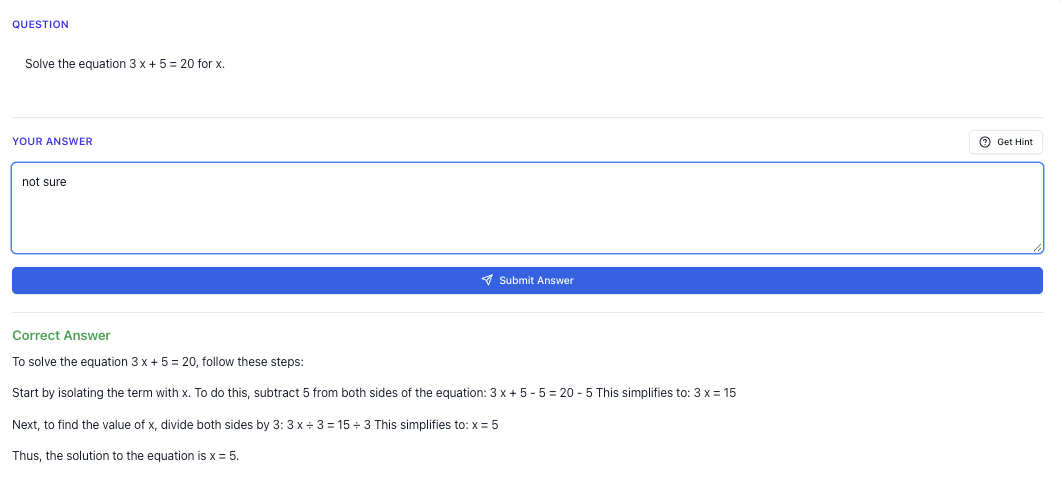
“Stuck on a question? See simple explanations that help you understand fast.”
👉 Give it a try and turn confusion into clarity in minutes.
What you need to know
Life cycles describe how living things grow, change, and produce more of their kind. Each stage in a life cycle has its own name and purpose. Understanding these stages is key to scoring well in your exams.
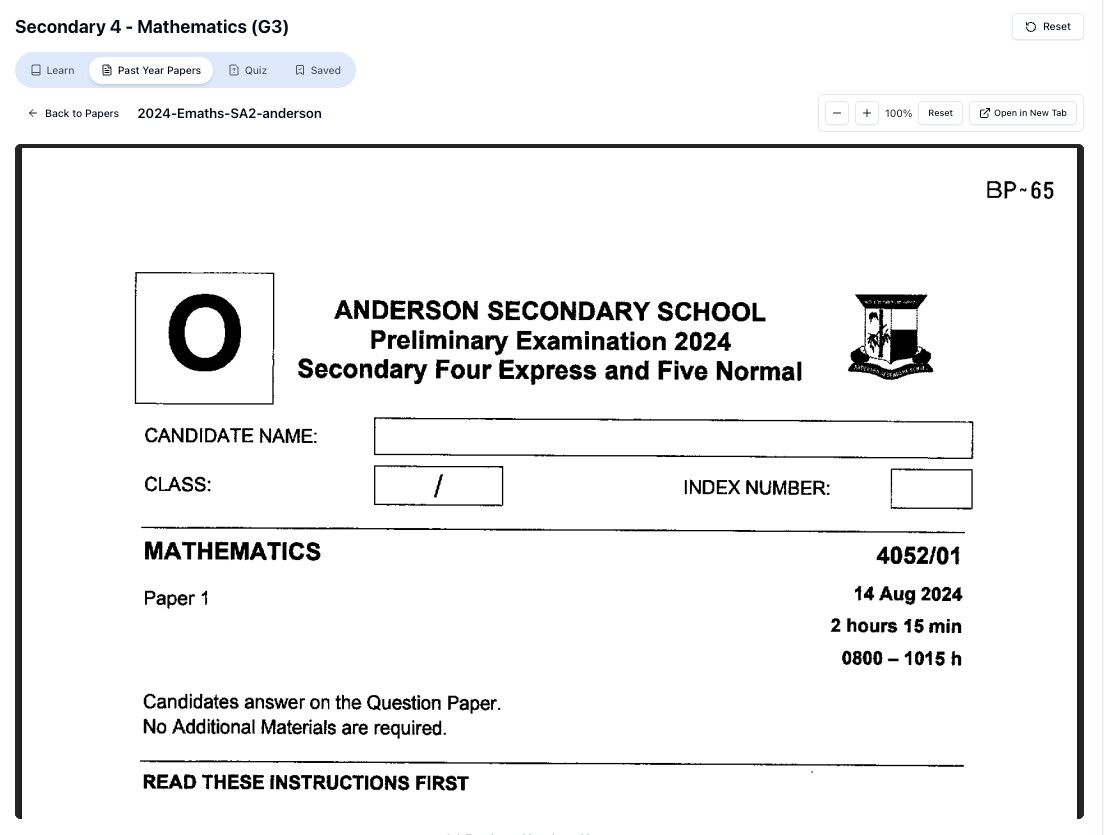
“Access more than 1000+ past year papers to practice”
👉 Start a paper today and test yourself like it’s the real exam.
Common Mistakes in Life Cycles
Most students lose marks on life cycles because they can't visualize the stages clearly. Parents are often surprised that drawing out the cycles can make such a big difference. So, let's break it down.
Mistake 1: Mixing Up Stages
Many students confuse the stages of a life cycle, like mixing up a pupa with a larva. This part always trips people up.
Step 1: Draw the life cycle diagram.
Why: Visualizing the stages helps you remember the order.
Step 2: Label each stage clearly. For example, egg, larva, pupa, adult.
Why: Labels ensure you don't mix up the stages.
Mistake 2: Forgetting Key Characteristics
Another common slip is forgetting what happens at each stage. Like, what does a larva do?
Step 1: Write down one key feature of each stage.
Why: Knowing what happens at each stage helps you answer questions more accurately.
Mistake 3: Not Practicing Enough
Cramming the night before won’t help. Short daily revision works better.
Step 1: Spend 5 minutes each day drawing and labelling life cycles.
Why: Daily practice helps information stick in your mind.
Mistake 4: Over-reliance on Assessment Books
Using only assessment books can make you miss out on understanding the topic.
Step 1: Try explaining the life cycle to someone else.
Why: Teaching someone else forces you to understand the topic better.
Revision checklist
- Draw diagrams: Visualize the cycle to lock it in memory.
- Label stages: Prevents mixing up order.
- Key features: Know what happens at each stage.
- Daily practice: Reinforces understanding.
- Explain to others: Clarifies your own understanding.
Exam tip
Always read the question carefully. Look out for words like "describe" or "explain", which tell you how much detail you need to include. Proper labels and clear diagrams can earn you easy marks.
Worked examples
Question
Describe the life cycle of a butterfly.
Solution
Step 1: Draw a circle and divide it into four parts.
Why: This helps you visualize the continuous cycle.
“Doing Secondary Science? Pick a topic and practise like it’s a real exam — with clear answers right after.”
👉 Try Tutorly now and start a Science topic in seconds.

Step 2: Label each part: Egg, Larva (Caterpillar), Pupa (Chrysalis), Adult (Butterfly).
Why: Labels make sure you don't confuse the stages.
Step 3: Write down one key feature for each stage. For example, "Eggs are laid on leaves."
Why: Key features help you answer more detailed questions.
Step 4: Practice explaining this to a friend or family member.
Why: Teaching it helps reinforce your understanding.
Quick check
- What are the four stages of a butterfly's life cycle?
- Why is labelling important in diagrams?
- How does daily practice help you remember life cycles better?
Quick summary
- Life cycles show stages of growth and reproduction.
- Common mistakes include mixing up stages and forgetting key features.
- Draw and label diagrams to avoid confusion.
- Daily practice and teaching others reinforce learning.
- Always read exam questions carefully for clues on how to answer.
FAQ
1. What is a life cycle?
A life cycle is the series of stages that a living thing goes through from the beginning of its life until it reproduces.
2. Why do I need to draw diagrams?
Drawing diagrams helps you visualize and remember the stages, which makes it easier to answer questions correctly.
3. How can I avoid mixing up stages?
Label each stage clearly and practice drawing the cycle regularly.
4. Is daily revision really better than cramming?
Yes, short daily revision helps information stick better than long sessions the night before.
Free on Tutorly.sg
Practise Life cycles with step-by-step help — free to start
On Tutorly.sg/app you can practise unlimited Singapore syllabus questions, get instant explanations when you are stuck, and use past-year papers — no sign-up needed to start.
- ✓ PSLE, O Level, A Level, and more
- ✓ Step-by-step working when you are stuck
- ✓ Works on phone and laptop
Free practice
Try it yourself
Practise similar questions with step-by-step help on Tutorly
- ✓ Unlimited similar questions
- ✓ Step-by-step help when you are stuck
- ✓ No sign-up needed to start
Related Topics You Should Learn Next
- Primary Science Life Cycles: Complete Guide to Ace Your Exams
- Primary Science Life Cycles: Avoid These Common Mistakes
- Primary Science Life Cycles: Why Students Struggle and How to Improve
- Primary Life Cycles: Step-by-Step Solutions to Common PSLE Questions
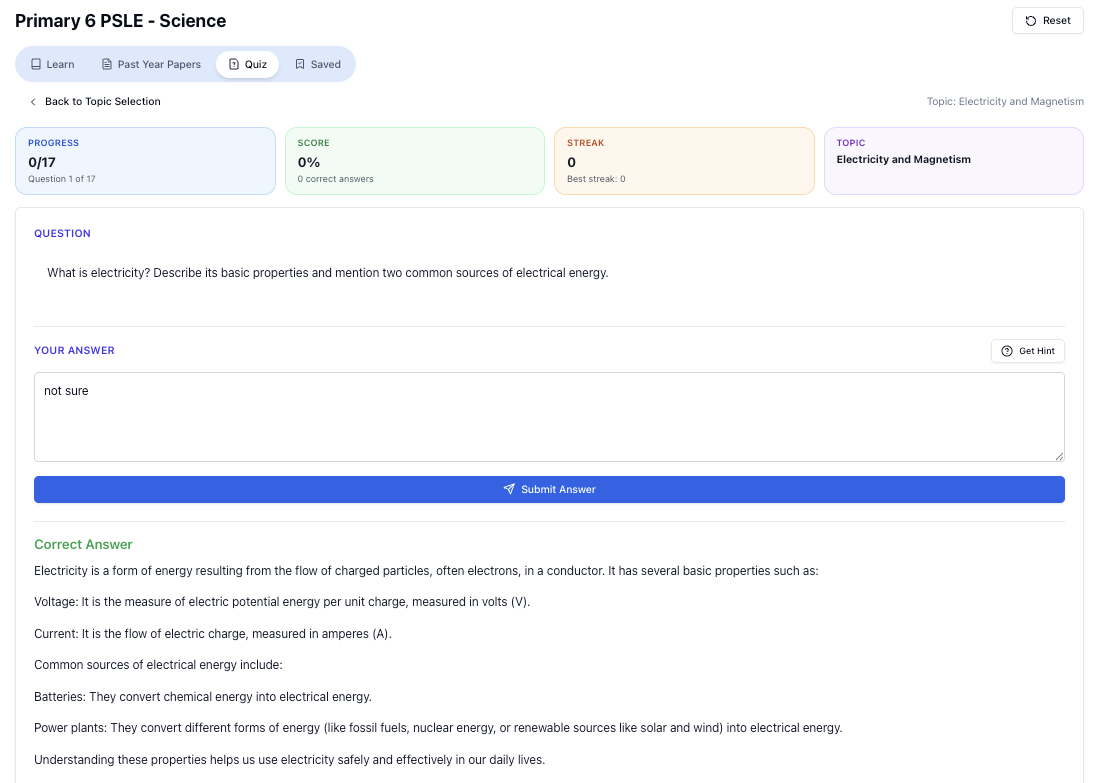
“Practice PSLE Science questions and get clear, step-by-step answers instantly.”
👉 Try a question now and see how fast you can improve.
Free on Tutorly.sg
Practise Life cycles with step-by-step help — free to start
On Tutorly.sg/app you can practise unlimited Singapore syllabus questions, get instant explanations when you are stuck, and use past-year papers — no sign-up needed to start.
- ✓ PSLE, O Level, A Level, and more
- ✓ Step-by-step working when you are stuck
- ✓ Works on phone and laptop