

Free on Tutorly.sg
Practise Life cycles with step-by-step help — free to start
On Tutorly.sg/app you can practise unlimited Singapore syllabus questions, get instant explanations when you are stuck, and use past-year papers — no sign-up needed to start.
- ✓ PSLE, O Level, A Level, and more
- ✓ Step-by-step working when you are stuck
- ✓ Works on phone and laptop
Quick answer
Ever felt your heart sink when you see a life cycle question in the exam? Don't worry, you're not alone. I'll show you how to avoid common mistakes and understand the topic with clear examples.
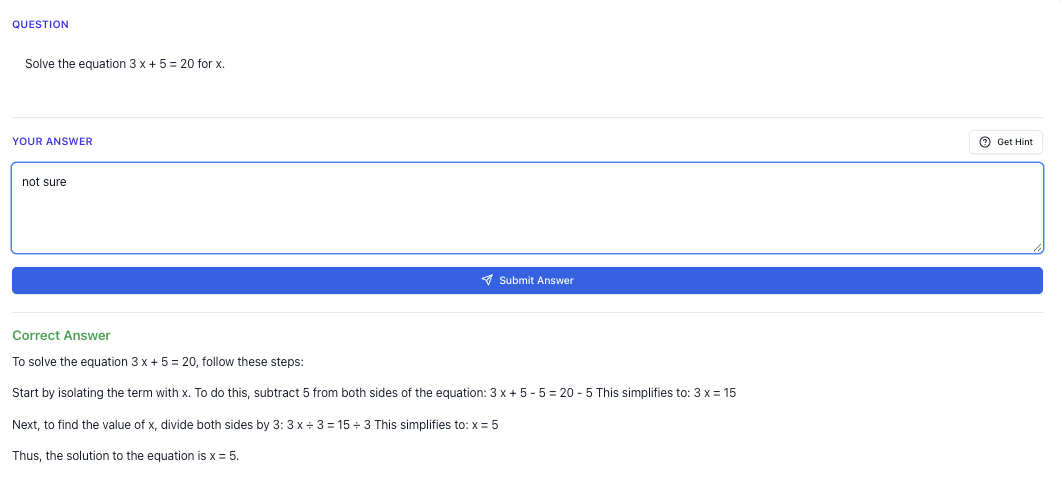
“Stuck on a question? See simple explanations that help you understand fast.”
👉 Give it a try and turn confusion into clarity in minutes.
What you need to know
A life cycle is the series of stages that living things go through from birth to adult form. You need to know how animals and plants change as they grow. It sounds tricky, but once you see it step by step, it becomes clearer.
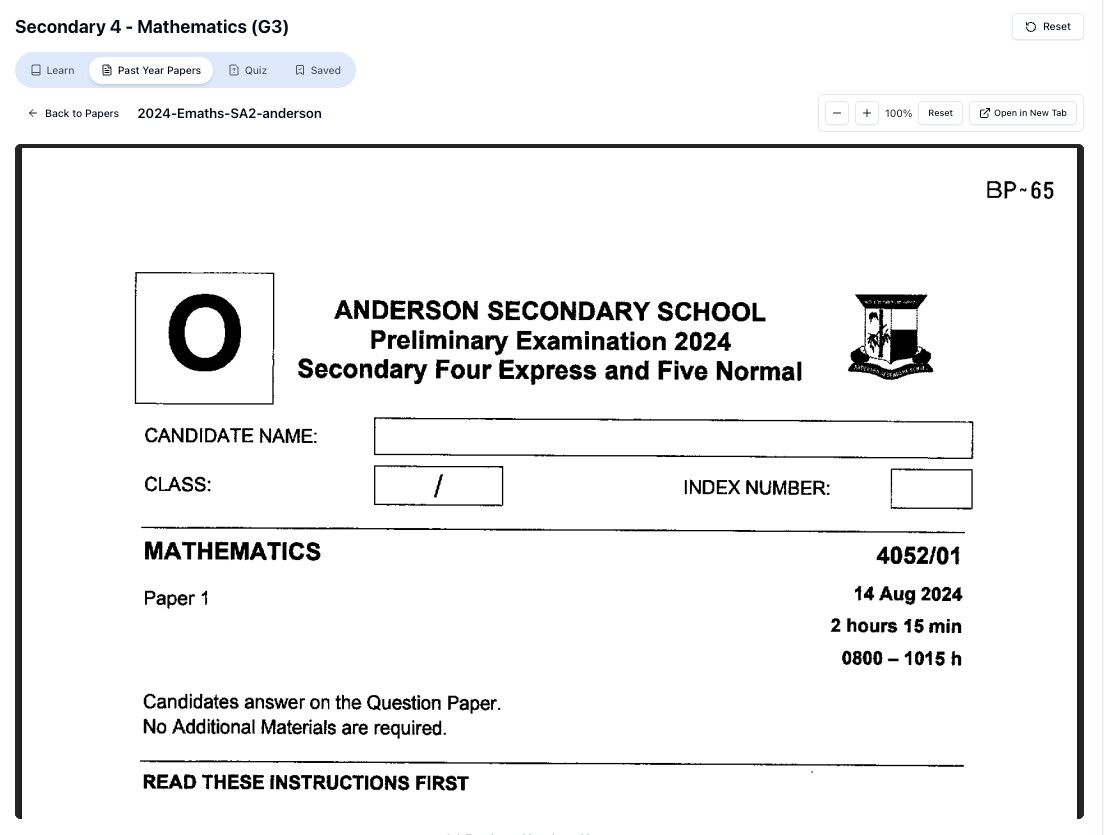
“Access more than 1000+ past year papers to practice”
👉 Start a paper today and test yourself like it’s the real exam.
Understanding Life Cycles
Animal Life Cycles
Animals have different life cycles, but they all involve being born, growing, reproducing, and dying. For example, a frog starts as an egg, becomes a tadpole, and then an adult frog.
Plant Life Cycles
Plants also have life cycles. They start as seeds, grow into seedlings, and mature into adult plants. Understanding these stages helps you know what each part of the plant does.
Quick check
- What is the first stage of a butterfly's life cycle?
- Name one difference between the life cycle of a plant and an animal.
- What stage comes after the tadpole in a frog's life cycle?
Answers: 1. Egg; 2. Plants start from seeds, animals from eggs or live birth; 3. Adult frog.
Common mistakes students make
-
Mixing up stages: Students often confuse the order of stages, especially in animals like frogs and butterflies.
Fix: Use drawings or diagrams to visualize the stages. -
Skipping stages: Some students forget to mention all the stages in their answers.
Fix: Break down the life cycle into smaller steps and list them. -
Mislabeling diagrams: Labeling parts incorrectly can cost you marks.
Fix: Practice labeling with past exam papers to get familiar.
Exam tip
When answering life cycle questions, always use diagrams. They are easier to remember and help you explain your answer clearly. Remember to label the stages correctly.
Worked examples
Question
Describe the life cycle of a butterfly.
Solution
Step 1: Start with the first stage, which is the egg.
Why: You need to begin from the beginning to show the complete cycle.
Step 2: Explain the second stage, which is the larva or caterpillar.
Why: This stage is where the butterfly eats and grows.
“Doing Secondary Science? Pick a topic and practise like it’s a real exam — with clear answers right after.”
👉 Try Tutorly now and start a Science topic in seconds.

Step 3: Describe the third stage, the pupa or chrysalis.
Why: This is the transformation stage where the caterpillar changes into a butterfly.
Step 4: Finish with the adult butterfly stage.
Why: This is the final stage where the butterfly can reproduce.
Quick summary
- Life cycles show how living things grow and change.
- Animals and plants have different life cycles.
- Common mistakes: mixing up, skipping stages, and mislabeling.
- Use diagrams for clear answers.
- Practice helps remember stages better.
FAQ
Q 1: Why is it important to know life cycles?
Understanding life cycles helps us know how living things grow and change in nature.
Q 2: How can I remember the stages better?
Try drawing the stages or using flashcards to test yourself.
Q 3: What should I do if I forget a stage in an exam?
Don't panic. Write down what you remember and draw a diagram if you can.
Q 4: How are life cycles tested in exams?
You might be asked to describe, label diagrams, or compare life cycles.
Q 5: How often should I revise life cycles?
Short daily revisions are better than long study sessions.
Free on Tutorly.sg
Practise Life cycles with step-by-step help — free to start
On Tutorly.sg/app you can practise unlimited Singapore syllabus questions, get instant explanations when you are stuck, and use past-year papers — no sign-up needed to start.
- ✓ PSLE, O Level, A Level, and more
- ✓ Step-by-step working when you are stuck
- ✓ Works on phone and laptop
Free practice
Try it yourself
Practice similar questions with step-by-step help on Tutorly
- ✓ Unlimited similar questions
- ✓ Step-by-step help when you are stuck
- ✓ No sign-up needed to start
Related Topics You Should Learn Next
- Primary Science Life Cycles: Complete Guide to Ace Your Exams
- Primary Science Life Cycles: Avoid These Common Mistakes
- Primary Life Cycles: Step-by-Step Solutions to Common PSLE Questions
- Primary Science Life Cycles: Why Students Struggle and How to Improve
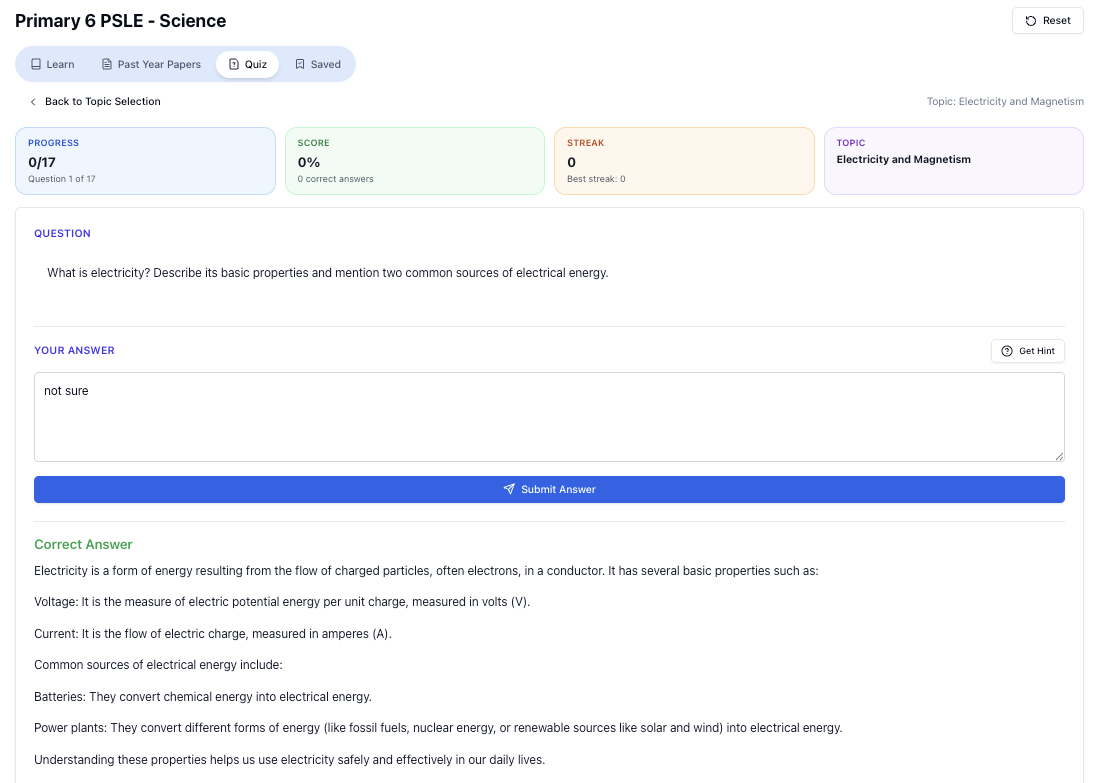
“Practice PSLE Science questions and get clear, step-by-step answers instantly.”
👉 Try a question now and see how fast you can improve.
Free on Tutorly.sg
Practise Life cycles with step-by-step help — free to start
On Tutorly.sg/app you can practise unlimited Singapore syllabus questions, get instant explanations when you are stuck, and use past-year papers — no sign-up needed to start.
- ✓ PSLE, O Level, A Level, and more
- ✓ Step-by-step working when you are stuck
- ✓ Works on phone and laptop