

Free on Tutorly.sg
Practise Fractions with step-by-step help — free to start
On Tutorly.sg/app you can practise unlimited Singapore syllabus questions, get instant explanations when you are stuck, and use past-year papers — no sign-up needed to start.
- ✓ PSLE, O Level, A Level, and more
- ✓ Step-by-step working when you are stuck
- ✓ Works on phone and laptop
Quick answer
Feeling stuck when the fraction question in your exam looks different from what you've practiced? Don't worry. By understanding the steps and knowing why you do them, you'll find the answers come more easily. Let's break down fraction problems into simple steps so you can tackle any question with confidence.
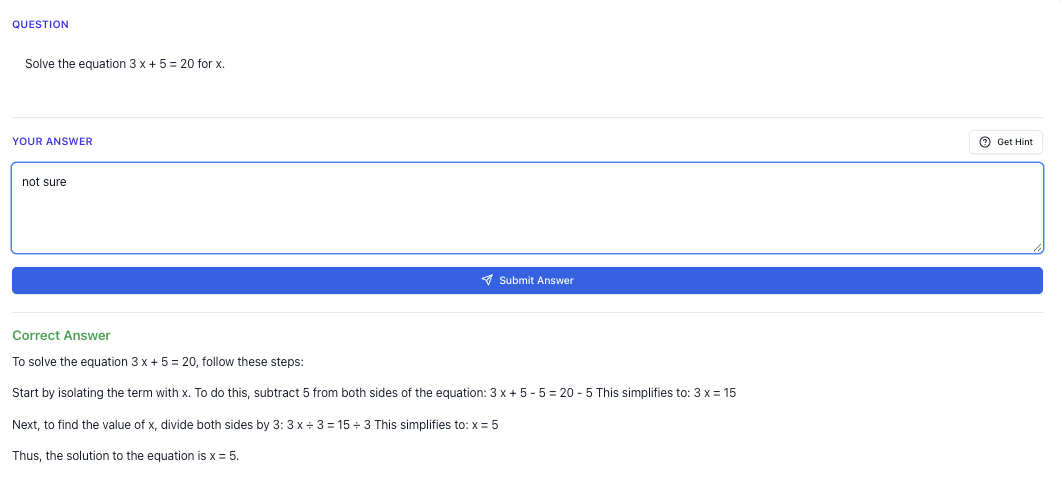
“Stuck on a question? See simple explanations that help you understand fast.”
👉 Give it a try and turn confusion into clarity in minutes.
What you need to know
Fractions represent parts of a whole. They have two parts: a numerator (the top number) and a denominator (the bottom number). The numerator tells you how many parts you have, and the denominator tells you how many parts make up a whole.
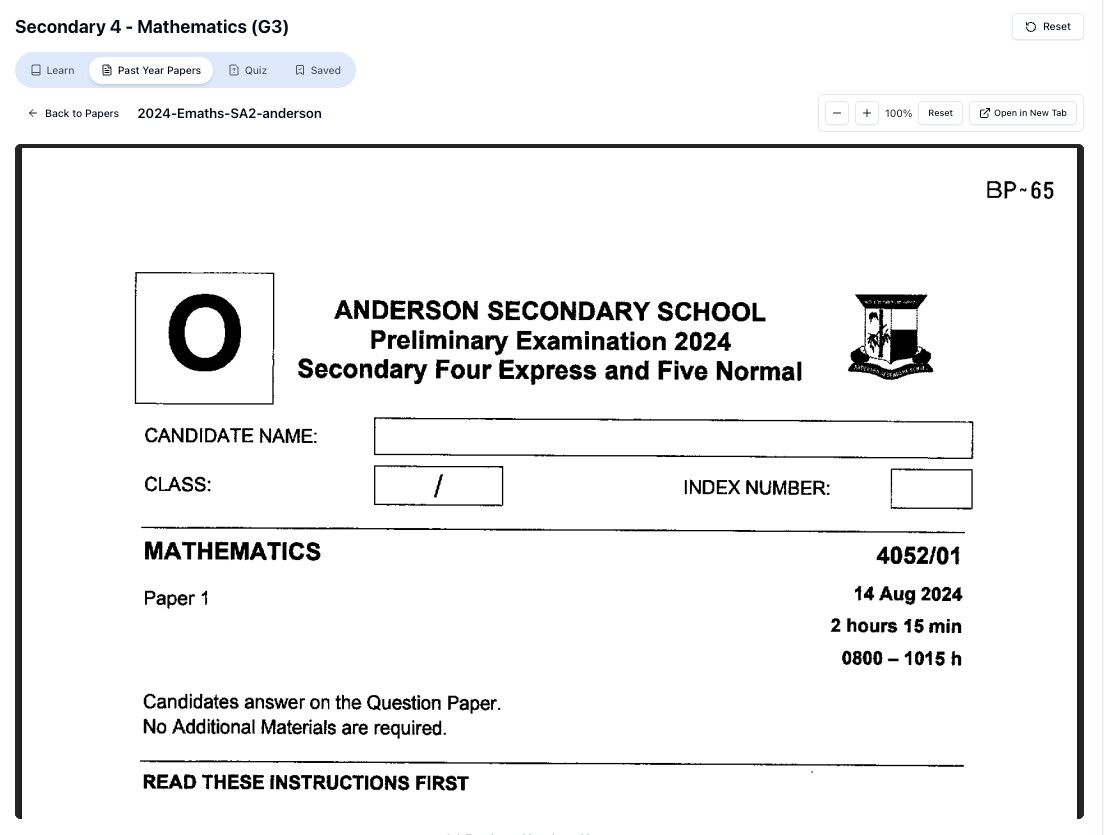
“Access more than 1000+ past year papers to practice”
👉 Start a paper today and test yourself like it’s the real exam.
Understanding Fractions
Visualising Fractions
Many students struggle because they can't see what a fraction really means. Imagine a pizza. If you cut it into 4 slices and eat 3, you've eaten of the pizza. This is the same concept with any fractions — parts of a whole.
Common Mistakes Students Make
- Adding without a common denominator: Fractions must have the same bottom number to be added or subtracted.
- Forgetting to simplify: Always reduce fractions to their simplest form.
- Confusing numerators and denominators: Remember, the numerator is on top, and the denominator is below.
Exam tip
Always double-check if your fractions are in their simplest form. Simplifying fractions can earn you easy marks and prevent careless mistakes.
Worked examples
Question 1
Add and .
Solution
Step 1: Find a common denominator for the fractions.
Why: You need a common denominator to add fractions.
Step 2: The common denominator for 3 and 6 is 6. Convert to (since and ).
Why: Both fractions must have the same denominator to be added.
Step 3: Add the fractions: .
Why: Now that the fractions have the same denominator, you can add the numerators.
Step 4: Simplify to .
Why: Simplifying fractions helps ensure your answer is in its simplest form.
Question 2
Subtract from .
Solution
Step 1: Check if the denominators are the same.
Why: You can only subtract fractions directly if they have the same denominator.
Step 2: Subtract the numerators: 4 - 2 = 2. So, .
Why: With the same denominators, you just subtract the top numbers.
Step 3: Check if the fraction can be simplified. In this case, is already in simplest form.
Why: Simplification ensures the answer is correct and tidy.
“Doing Secondary Science? Pick a topic and practise like it’s a real exam — with clear answers right after.”
👉 Try Tutorly now and start a Science topic in seconds.

Quick check
- Add and .
- Subtract from .
- Simplify .
Answers:
Quick summary
- Fractions have a numerator (top) and a denominator (bottom).
- To add or subtract, find a common denominator.
- Simplify fractions whenever possible.
- Visualise fractions with real-world examples like pizza slices.
- Practice breaking down problems into steps to avoid freezing.
FAQ
Q: How do I find a common denominator?
A: Look for the smallest number that both denominators can divide into evenly. It's like finding a common friend for both fractions.
Q: Why do I need to simplify fractions?
A: Simplifying makes fractions easier to understand and ensures your answer is correct and neat.
Q: What if I forget the steps during an exam?
A: Breathe and break it down. Start by finding a common denominator, then add or subtract. Simplify at the end.
Q: Can I use a calculator for fractions?
A: While calculators can help, understanding the steps is crucial for exams and helps you avoid mistakes.
Free on Tutorly.sg
Practise Fractions with step-by-step help — free to start
On Tutorly.sg/app you can practise unlimited Singapore syllabus questions, get instant explanations when you are stuck, and use past-year papers — no sign-up needed to start.
- ✓ PSLE, O Level, A Level, and more
- ✓ Step-by-step working when you are stuck
- ✓ Works on phone and laptop
Free practice
Try it yourself
Practise similar questions with step-by-step help on . With interactive learning, you'll master fractions quickly.
- ✓ Unlimited similar questions
- ✓ Step-by-step help when you are stuck
- ✓ No sign-up needed to start
Related Topics You Should Learn Next
- Primary Mathematics Fractions: Your Complete Guide to Avoiding Common Mistakes
- Primary Mathematics: Scoring High in Fractions Without Running Out of Time
- PSLE Math: How to Score in Fractions and Ratios Without Panicking
- Primary Mathematics: Fractions Explained Simply for Singapore Students
Remember, once this clicks, the rest becomes so much easier. Happy learning!
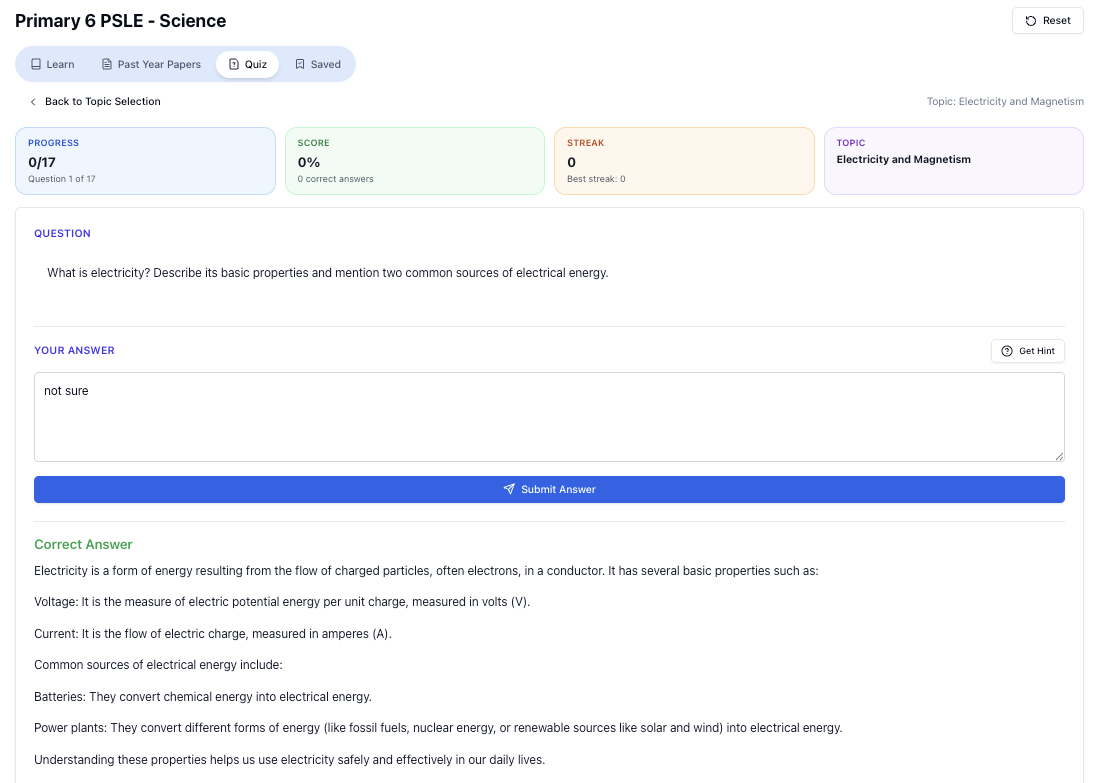
“Practice PSLE Science questions and get clear, step-by-step answers instantly.”
👉 Try a question now and see how fast you can improve.
Free on Tutorly.sg
Practise Fractions with step-by-step help — free to start
On Tutorly.sg/app you can practise unlimited Singapore syllabus questions, get instant explanations when you are stuck, and use past-year papers — no sign-up needed to start.
- ✓ PSLE, O Level, A Level, and more
- ✓ Step-by-step working when you are stuck
- ✓ Works on phone and laptop