

Free on Tutorly.sg
Practise Mole Concept with step-by-step help — free to start
On Tutorly.sg/app you can practise unlimited Singapore syllabus questions, get instant explanations when you are stuck, and use past-year papers — no sign-up needed to start.
- ✓ PSLE, O Level, A Level, and more
- ✓ Step-by-step working when you are stuck
- ✓ Works on phone and laptop
Quick answer
Ever felt your heart sink when you see a mole calculation question that looks nothing like your notes? You're not alone. By the end of this guide, you'll understand how to tackle these questions step-by-step, even when they seem unfamiliar.
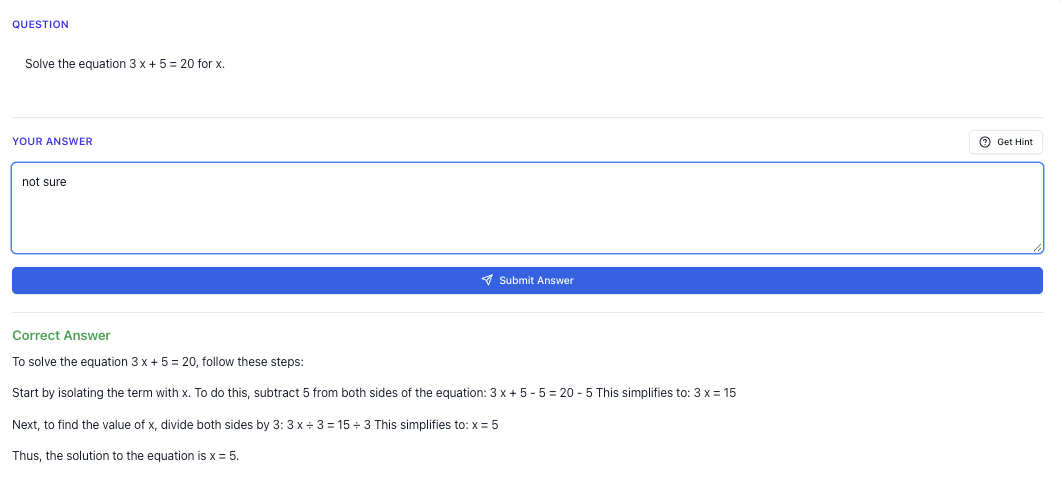
“Stuck on a question? See simple explanations that help you understand fast.”
👉 Give it a try and turn confusion into clarity in minutes.
What you need to know
The mole concept is all about counting particles in a substance using a unit called the mole. It's like counting packets of nasi lemak at a hawker centre — each packet has the same amount of rice and sambal, just like each mole has the same number of particles.
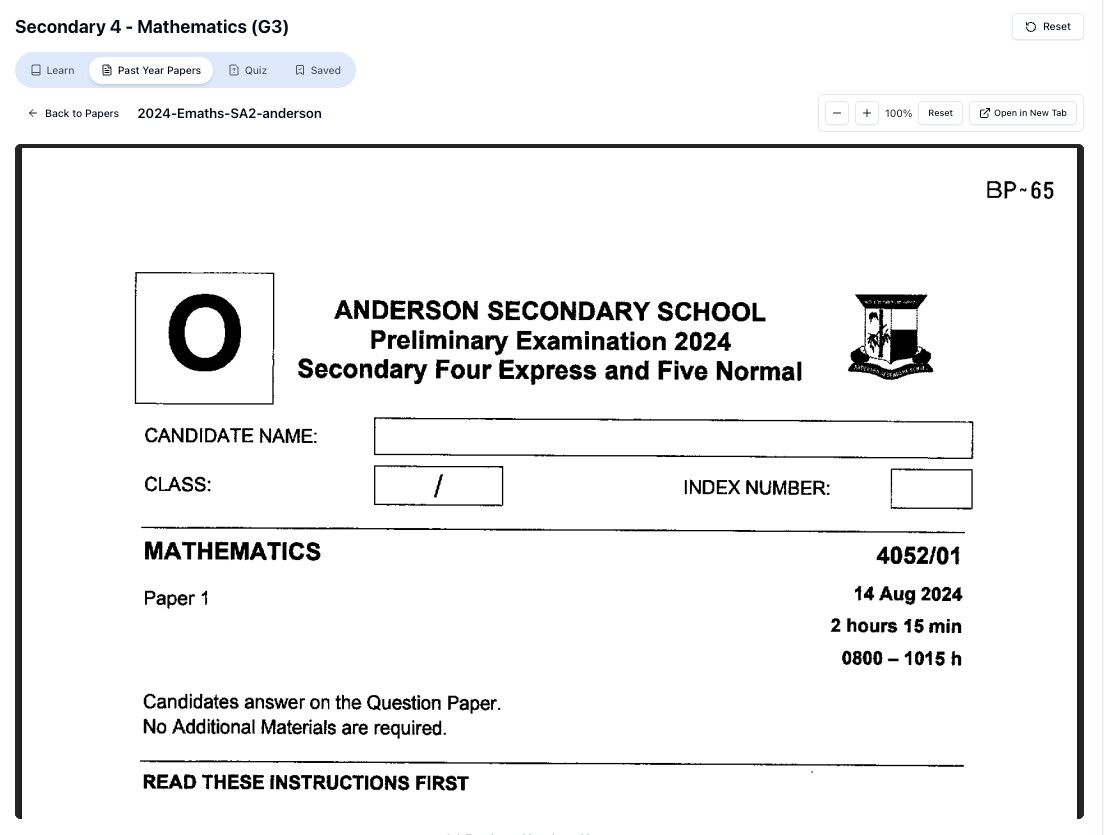
“Access more than 1000+ past year papers to practice”
👉 Start a paper today and test yourself like it’s the real exam.
Understanding Mole Calculations
When it comes to mole calculations, precision is key. Many students lose marks because they answer too generally or memorize keywords without understanding them. Let's go through some common types of mole calculation questions you'll face in your O Levels.
Quick check
Try these questions to see if you've got the basics down:
- How many moles are in 24 g of carbon? (Atomic mass of carbon = 12)
- What is the mass of 2 moles of water? (Molar mass of water = 18 g/mol)
Common mistakes students make
One mistake I repeatedly see among my Sec 4 students is mixing up the formulas. Remember, for moles, the formula is:
How to fix it
- Memorize with understanding: Don't just memorize the formula. Understand why we use it. Moles relate mass to the number of particles.
- Check your units: Always ensure your mass is in grams and your molar mass in g/mol before calculating.
Exam tip
Precision matters more than length. In O-Level questions, show every step clearly. Use clear units and don't skip the "why" — it shows the examiner you truly understand the process.
Worked examples
Let's work through some examples. Keep your notes handy, and remember to breathe — this part trips everyone up initially, but once this clicks, the rest is easier.
Question 1: Calculating moles from mass
Question: How many moles are there in 50 g of NaCl? (Molar mass of NaCl = 58.5 g/mol)
Solution:
Step 1: Write down the formula:
Why: This formula connects mass to moles, which is what we need to find.
Step 2: Substitute the known values:
Why: You substitute the mass of NaCl and its molar mass into the formula.
Step 3: Calculate the answer:
Why: This gives you the number of moles in the sample. Always round to three significant figures unless instructed otherwise.
Question 2: Converting moles to particles
Question: How many molecules are in 0.5 moles of CO₂? (Use Avogadro's number: )
Solution:
Step 1: Use the formula:
Why: Avogadro's number tells us how many particles are in one mole.
Step 2: Substitute the values:
Why: You're converting moles to particles using the given number.
Step 3: Calculate:
Why: This is the number of molecules in your sample.
Question 3: Calculating mass from moles
Question: What is the mass of 2 moles of H₂O? (Molar mass of H₂O = 18 g/mol)
Solution:
Step 1: Use the formula:
Why: This formula helps find the mass if you know the number of moles.
Step 2: Substitute the values:
Why: You multiply the number of moles by the molar mass to get the mass.
“Doing Secondary Science? Pick a topic and practise like it’s a real exam — with clear answers right after.”
👉 Try Tutorly now and start a Science topic in seconds.

Step 3: Calculate:
Why: This is the total mass of the water in grams.
Question 4: Using molar volume at RTP
Question: Find the volume of 3 moles of oxygen gas at room temperature and pressure (RTP). (Molar volume at RTP = 24dm³)
Solution:
Step 1: Use the formula:
Why: Molar volume allows us to convert moles to volume for gases.
Step 2: Substitute the values:
Why: You're converting moles to volume using the molar volume.
Step 3: Calculate:
Why: This gives you the volume of gas at RTP.
Quick summary
- Moles formula: Number of moles = Mass / Molar Mass
- Conversion: Use Avogadro's number for particles.
- Mass from moles: Multiply by molar mass.
- Volume for gases: Multiply by molar volume at RTP.
- Precision: Show all steps clearly in exams.
- Check units: Consistency in units matters.
- Common mistake: Mixing up formulas — practice helps.
- Understand: Don't just memorize, grasp why.
FAQ
1. What is a mole?
A mole is a unit used to count particles in a substance, like atoms or molecules. It’s similar to how you count a dozen eggs.
2. How do I find molar mass?
Add the atomic masses of all atoms in a molecule. For example, H₂O has a molar mass of 18 g/mol because H is 1 g/mol (2 H atoms) and O is 16 g/mol.
3. Why is the mole concept important?
It helps relate mass to the number of particles, which is crucial for chemical reactions and equations.
4. What's Avogadro's number?
It’s , the number of particles in one mole. It’s like saying there are 12 items in a dozen.
5. How do I handle different question formats?
Focus on understanding the process, not just memorizing. Practice with different question types, and you’ll be ready for anything.
Free on Tutorly.sg
Practise Mole Concept with step-by-step help — free to start
On Tutorly.sg/app you can practise unlimited Singapore syllabus questions, get instant explanations when you are stuck, and use past-year papers — no sign-up needed to start.
- ✓ PSLE, O Level, A Level, and more
- ✓ Step-by-step working when you are stuck
- ✓ Works on phone and laptop
Free practice
Try it yourself
Ready to practice more mole calculations? Head over to Tutorly for step-by-step guided questions and answers
- ✓ Unlimited similar questions
- ✓ Step-by-step help when you are stuck
- ✓ No sign-up needed to start
Practise with free question sets
Work through more exam-style questions with answers and step-by-step solutions:
- 35+ O Level Mole concept Practice Questions for 2026 (based on Singapore MOE Syllabus)
- Topic study hub
Want unlimited similar questions with AI marking? Practise on Tutorly.sg/app
Related Topics You Should Learn Next
- O Level Chemistry Mole Concept Questions: Singapore Secondary Level Worksheet Practice Guide
- How To Calculate Molar Mass In Singapore: A Clear Tutorial For O-Level Chemistry
- O Level Chemistry: Understanding the Mole Concept
- O Level Chemistry: Mastering the Mole Concept Easily
- Topic cluster hub
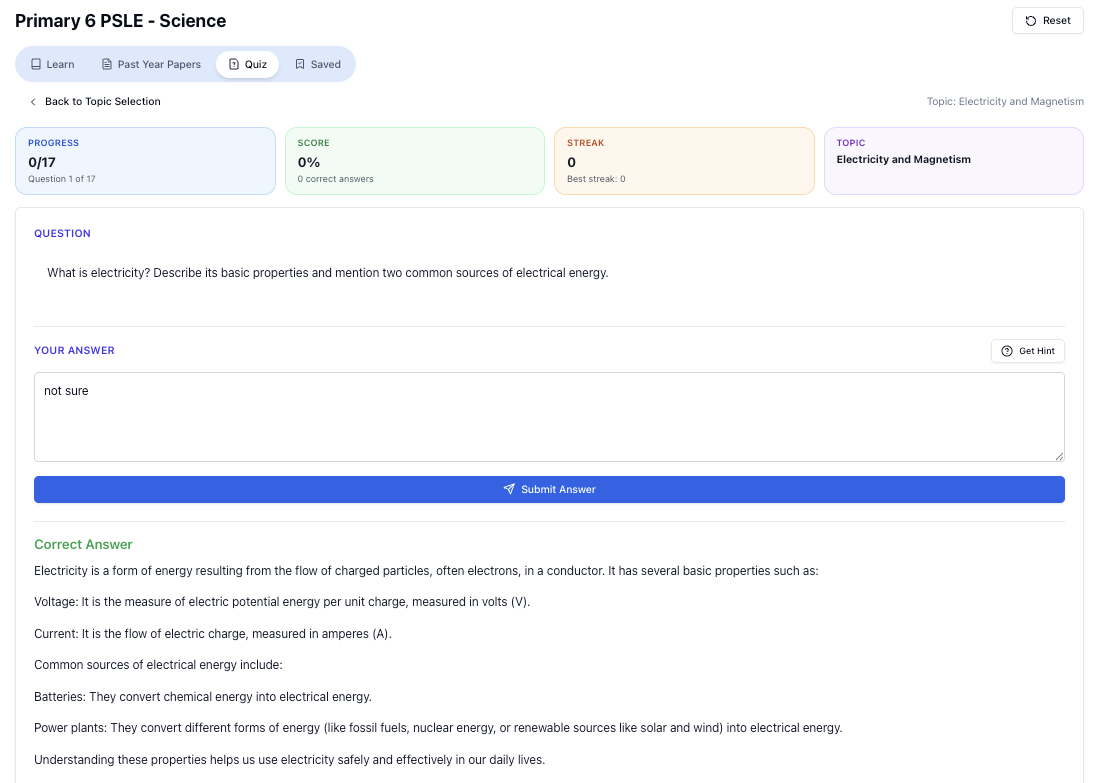
“Practice PSLE Science questions and get clear, step-by-step answers instantly.”
👉 Try a question now and see how fast you can improve.
Free on Tutorly.sg
Practise Mole Concept with step-by-step help — free to start
On Tutorly.sg/app you can practise unlimited Singapore syllabus questions, get instant explanations when you are stuck, and use past-year papers — no sign-up needed to start.
- ✓ PSLE, O Level, A Level, and more
- ✓ Step-by-step working when you are stuck
- ✓ Works on phone and laptop