

Free on Tutorly.sg
Practise Acids bases and salts with step-by-step help — free to start
On Tutorly.sg/app you can practise unlimited Singapore syllabus questions, get instant explanations when you are stuck, and use past-year papers — no sign-up needed to start.
- ✓ PSLE, O Level, A Level, and more
- ✓ Step-by-step working when you are stuck
- ✓ Works on phone and laptop
Quick answer
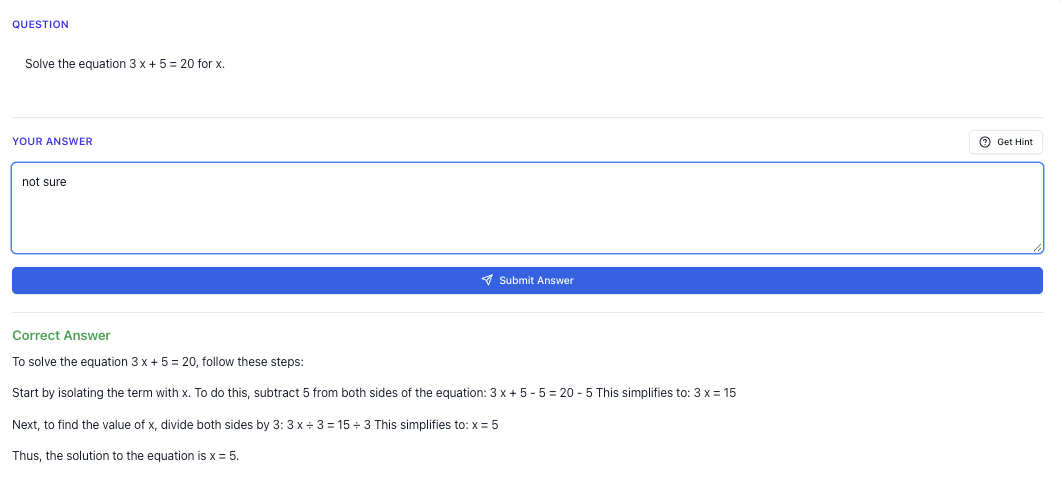
Ever felt your heart sink during an exam when you see a Chemistry question that looks unfamiliar? It's common in O Level Chemistry, especially with topics like Acids, Bases, and Salts. But don't worry! By breaking down questions into simple steps, you can tackle any problem, no matter how it's worded.
“Stuck on a question? See simple explanations that help you understand fast.”
👉 Give it a try and turn confusion into clarity in minutes.
What you need to know
Acids are substances that release hydrogen ions () in water, making the solution acidic. Bases release hydroxide ions (), making the solution basic or alkaline. Salts are formed when acids react with bases. It's like how in Singapore, we mix kaya and butter to make a delicious toast — each ingredient plays a role to create something new.
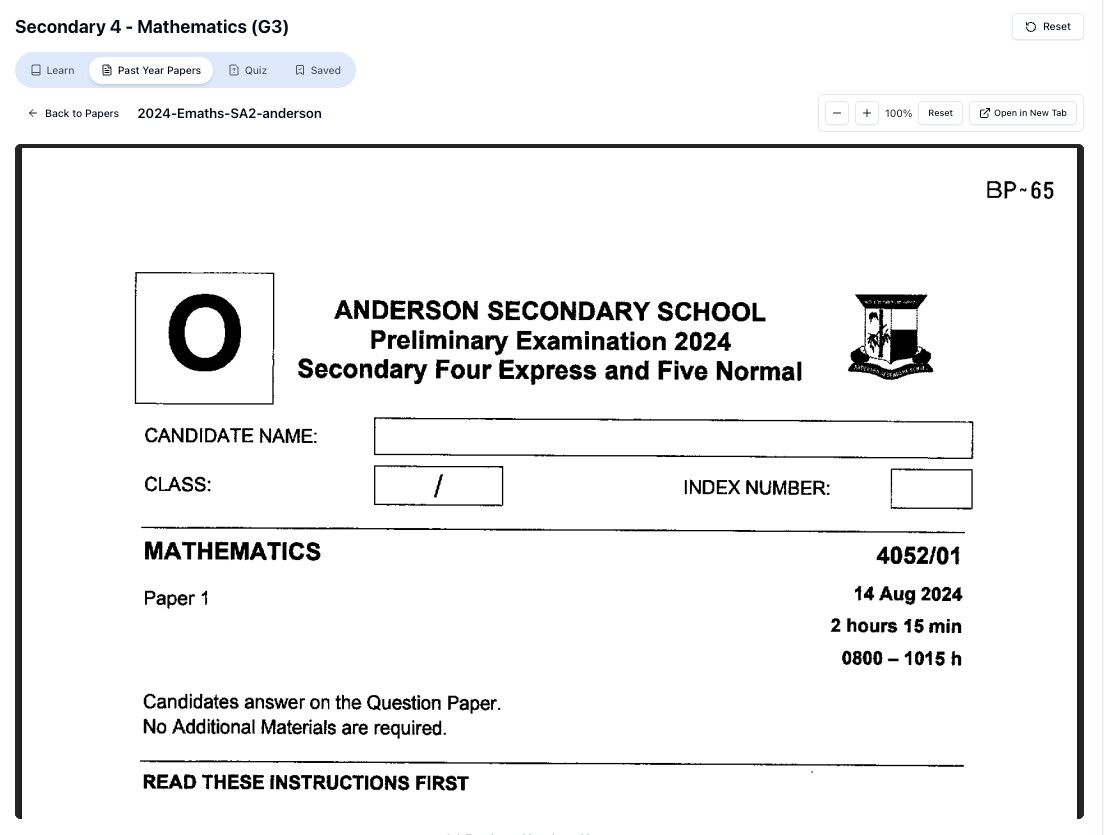
“Access more than 1000+ past year papers to practice”
👉 Start a paper today and test yourself like it’s the real exam.
How to tackle O Level questions
Understanding Acids, Bases, and Salts
One mistake I repeatedly see among my Sec 4 students is memorizing definitions without understanding. Think of acids as the tangy taste in your favourite hawker centre dish. Bases, on the other hand, are like the cleaning agents that keep the MRT stations spotless. When they react, they form salts, just like how a pinch of seasoning can bring a dish together.
Quick check:
- What ions do acids release in water?
- What ions do bases release?
- What is formed when acids react with bases?
Reaction Equations
Writing equations for reactions between acids and bases can be tricky. Students usually panic when they see application questions like this. Let's break it down.
Step 1: Identify the acid and base in the question.
Why: Knowing the reactants helps you predict the products.
Step 2: Write the word equation for the reaction. For example, hydrochloric acid + sodium hydroxide → sodium chloride + water.
Why: This gives a clear picture of the reaction happening.
Step 3: Convert the word equation into a chemical equation: .
Why: Chemical equations show the exact substances and their amounts.
Step 4: Balance the equation. Make sure the number of each type of atom is the same on both sides.
Why: Balancing ensures the law of conservation of mass is followed.
Quick check
- Write the balanced chemical equation for the reaction between sulfuric acid and potassium hydroxide.
- What is the salt formed in this reaction?
Common mistakes students make
- Memorizing without understanding: Memorizing keywords won't help when the question is phrased differently. Always aim to understand the process.
- Writing general answers: Be precise. If the question asks for a specific reaction, give the exact chemical equation, not just the word equation.
- Forgetting to balance equations: This is crucial for full marks. Double-check your equations.
Exam tip
Precision matters more than length. In O-Level Chemistry, it's not about writing long answers but about being specific and accurate. Always double-check your equations and make sure they're balanced.
Worked examples
Question 1
Predict the products and write the balanced equation for the reaction between nitric acid and calcium hydroxide.
Solution
Step 1: Identify the reactants: Nitric acid () and calcium hydroxide ().
Why: Knowing the reactants helps in predicting the products.
Step 2: Predict the products: Calcium nitrate and water.
Why: Acids react with bases to form a salt and water.
Step 3: Write the chemical equation: .
Why: This represents the reaction in symbols.
Step 4: Balance the equation: .
Why: Balancing ensures the number of atoms is the same on both sides.
Question 2
What is the salt formed when hydrochloric acid reacts with magnesium oxide?
Solution
Step 1: Identify the reactants: Hydrochloric acid () and magnesium oxide ().
Why: This helps to identify the products formed.
Step 2: Predict the products: Magnesium chloride and water.
Why: A metal oxide reacts with an acid to form a salt and water.
Step 3: Write the chemical equation: .
Why: This shows the reaction in chemical form.
Step 4: Balance the equation, but here it is already balanced.
Why: Always check, even if it looks balanced at first glance.
Question 3
Write the balanced equation for the reaction between sulfuric acid and sodium hydroxide.
Solution
Step 1: Identify the reactants: Sulfuric acid () and sodium hydroxide ().
Why: Recognizing the reactants is the first step in predicting products.
Step 2: Predict the products: Sodium sulfate and water.
Why: Acids react with bases to form salt and water.
“Doing Secondary Science? Pick a topic and practise like it’s a real exam — with clear answers right after.”
👉 Try Tutorly now and start a Science topic in seconds.

Step 3: Write the chemical equation: .
Why: This equation represents the full reaction.
Step 4: Balance the equation, but here it is already balanced.
Why: Balancing is essential for accuracy.
Question 4
Calculate the number of moles of water produced when 0.5 moles of hydrochloric acid react with sodium hydroxide.
Solution
Step 1: Write the balanced chemical equation: .
Why: A balanced equation is needed to find the mole ratio.
Step 2: Identify the mole ratio from the equation: 1:1:1:1.
Why: This tells you how many moles of each reactant and product are involved.
Step 3: Use the mole ratio to find moles of water: 0.5 moles of produces 0.5 moles of .
Why: The 1:1 ratio means equal moles of acid and water.
Quick summary
- Acids release ions; bases release ions.
- Salts are formed from acid-base reactions.
- Write and balance chemical equations accurately.
- Understand the reactions, don't just memorize them.
- Be precise in exams — check your equations twice.
FAQ
Q: What is a strong acid?
A: A strong acid completely ionizes in water, releasing ions. An example is hydrochloric acid.
Q: How do I know if a reaction forms a salt?
A: If an acid reacts with a base or metal, it usually forms a salt and water or hydrogen gas.
Q: Why is balancing equations important?
A: Balancing ensures that the mass and charge are conserved in a reaction, following the law of conservation of mass.
Q: Can acids react with metals?
A: Yes, acids react with metals to produce a salt and hydrogen gas.
Q: Is water always a product in acid-base reactions?
A: Yes, water is usually formed when acids react with bases.
Free on Tutorly.sg
Practise Acids bases and salts with step-by-step help — free to start
On Tutorly.sg/app you can practise unlimited Singapore syllabus questions, get instant explanations when you are stuck, and use past-year papers — no sign-up needed to start.
- ✓ PSLE, O Level, A Level, and more
- ✓ Step-by-step working when you are stuck
- ✓ Works on phone and laptop
Free practice
Try it yourself
Practice more questions on Acids, Bases, and Salts with step-by-step help here.
- ✓ Unlimited similar questions
- ✓ Step-by-step help when you are stuck
- ✓ No sign-up needed to start
Practise with free question sets
Work through more exam-style questions with answers and step-by-step solutions:
- 35+ O Level Acids, bases and salts Practice Questions for 2026 (based on Singapore MOE Syllabus)
- Topic study hub
Want unlimited similar questions with AI marking? Practise on Tutorly.sg/app
Related Topics You Should Learn Next
- O Level Chemistry: Mastering Acids, Bases, and Salts Without Memorizing →
- O Level Chemistry: Avoiding Common Mistakes in Acids, Bases, and Salts →
- Sec 3 Physics Tuition: A Complete Guide To Building Strong O-Level Foundations →
- How To Answer Source Based Questions In History Singapore: A Clear O-Level Strategy →
- Topic cluster hub
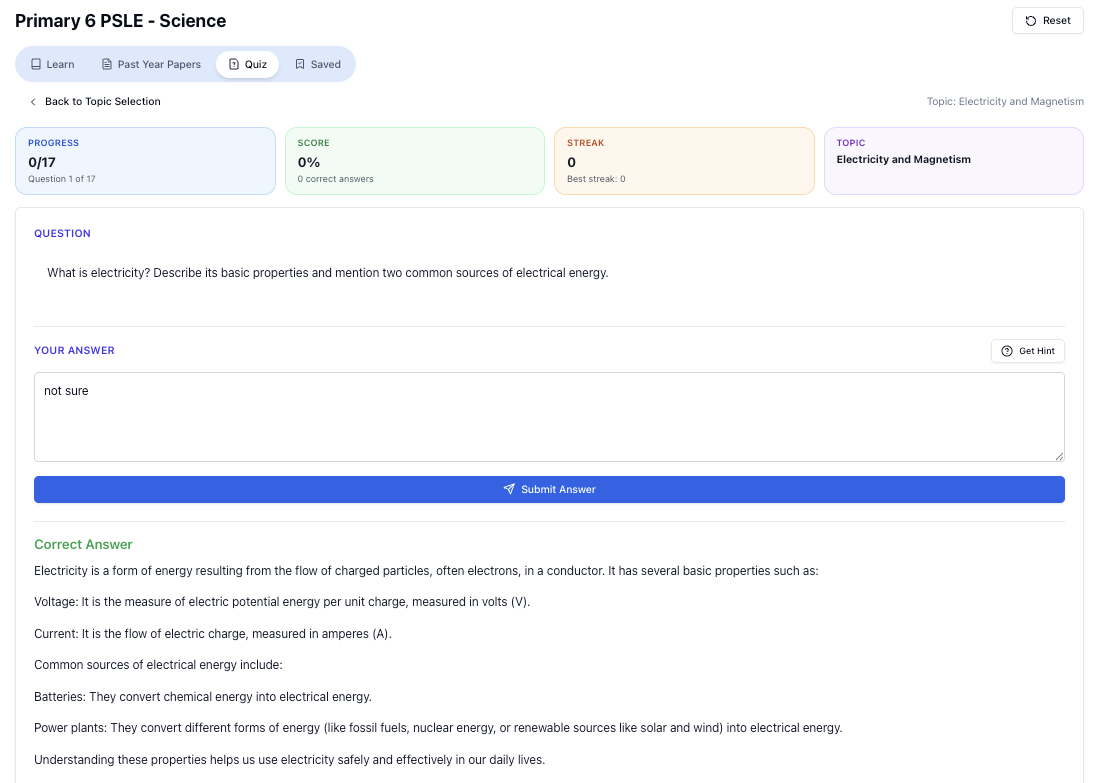
“Practice PSLE Science questions and get clear, step-by-step answers instantly.”
👉 Try a question now and see how fast you can improve.
Free on Tutorly.sg
Practise Acids bases and salts with step-by-step help — free to start
On Tutorly.sg/app you can practise unlimited Singapore syllabus questions, get instant explanations when you are stuck, and use past-year papers — no sign-up needed to start.
- ✓ PSLE, O Level, A Level, and more
- ✓ Step-by-step working when you are stuck
- ✓ Works on phone and laptop