

Free on Tutorly.sg
Practise Mechanics with step-by-step help — free to start
On Tutorly.sg/app you can practise unlimited Singapore syllabus questions, get instant explanations when you are stuck, and use past-year papers — no sign-up needed to start.
- ✓ PSLE, O Level, A Level, and more
- ✓ Step-by-step working when you are stuck
- ✓ Works on phone and laptop
Quick answer
Ever felt your heart drop when an A Level Mechanics question looks nothing like what you saw in class? Don't worry. We'll go through step-by-step solutions for these questions, so you can understand the process and not just memorize answers.
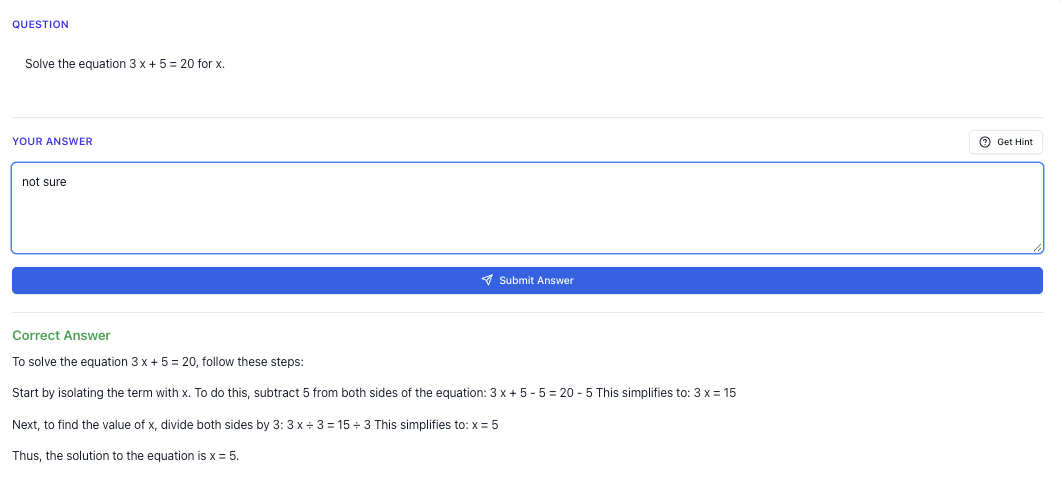
“Stuck on a question? See simple explanations that help you understand fast.”
👉 Give it a try and turn confusion into clarity in minutes.
What you need to know
Mechanics, in the context of A Level Physics, involves studying the motion of objects and the forces that affect them. It requires understanding concepts like velocity, acceleration, and force, and how they interact. This isn't just about memorizing formulas but understanding how to apply them when questions take on different forms.
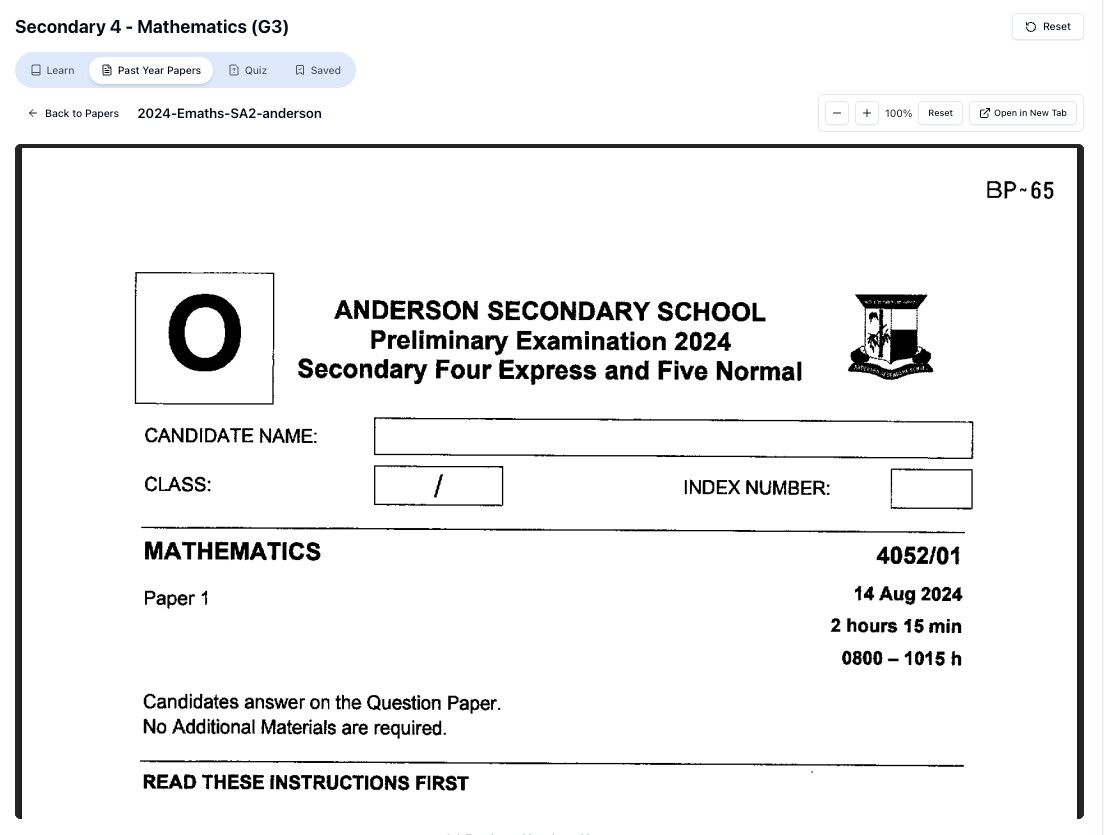
“Access more than 1000+ past year papers to practice”
👉 Start a paper today and test yourself like it’s the real exam.
Common mistakes students make
One mistake I repeatedly see among my Sec 4 students is trying to memorize keywords without understanding what they really mean. This often leads to panic during exams when questions are phrased differently. Another common slip is answering too generally. In these exams, precision matters more than lengthy answers. When you see an unfamiliar question, breathe first and break it down into smaller parts.
Exam tip
Be precise with your answers. Use specific terms like "net force" or "resultant acceleration" rather than just saying "force" or "acceleration." This shows the examiner that you understand the concept deeply. Remember, clarity in your steps can earn you marks even if the final answer isn't perfect.
Worked examples
Question 1: Calculating Resultant Force
A 5 kg object is subjected to a force of 20 N to the right and 5 N to the left. Calculate the resultant force and the acceleration of the object.
Solution
Step 1: Identify the forces acting on the object.
Why: This helps you understand which forces need to be combined.
Step 2: Calculate the net force: .
Why: The net force is the difference between the forces acting in opposite directions.
Step 3: Use Newton's second law, , to find acceleration: .
Why: This equation relates force, mass, and acceleration.
Step 4: Solve for acceleration: .
Why: Dividing the net force by mass gives you the acceleration.
Question 2: Motion Under Gravity
An object is dropped from a height of 20 m. Calculate the time it takes to hit the ground.
Solution
Step 1: Use the formula , where , , and .
Why: This equation helps calculate distance under constant acceleration (gravity).
Step 2: Substitute the values into the equation: .
Why: Plugging in known values helps simplify the equation.
Step 3: Solve for : .
Why: Isolating lets you find the time.
“Doing Secondary Science? Pick a topic and practise like it’s a real exam — with clear answers right after.”
👉 Try Tutorly now and start a Science topic in seconds.

Step 4: Calculate 𝑡: .
Why: Taking the square root gives you the time it takes to reach the ground.
Quick summary
- Mechanics involves motion and force.
- Understand, don't just memorize — it helps when questions look different.
- Be precise: specific terms can earn marks.
- Always start by identifying forces or motions in a problem.
- Use Newton's laws and kinematic equations appropriately.
FAQ
Why do I keep losing marks even though I know the formulas?
Many students lose marks because they don't apply the formulas correctly to the problem's context. Understanding the process is key.
What if I see a question I've never seen before?
Take a deep breath and break the problem into smaller parts. Identify knowns and unknowns before deciding which formula to use.
How can I improve my precision in answers?
Practice writing concise answers and using specific terms. Review marked papers to see where precision cost you marks.
Why is it important to show every step in my solution?
Showing steps helps you get method marks, even if the final answer is wrong. It also shows the examiner your thought process.
What should I do if I get stuck during an exam?
Pause, breathe, and revisit what you know about the topic. Sometimes stepping back helps see the solution more clearly.
Free on Tutorly.sg
Practise Mechanics with step-by-step help — free to start
On Tutorly.sg/app you can practise unlimited Singapore syllabus questions, get instant explanations when you are stuck, and use past-year papers — no sign-up needed to start.
- ✓ PSLE, O Level, A Level, and more
- ✓ Step-by-step working when you are stuck
- ✓ Works on phone and laptop
Free practice
Try it yourself
For more practice with step-by-step solutions, try similar questions on Tutorly. It's a great way to reinforce what you've learned here.
- ✓ Unlimited similar questions
- ✓ Step-by-step help when you are stuck
- ✓ No sign-up needed to start
Related Topics You Should Learn Next
- How To Master A Level Physics Mechanics Questions In Singapore
- A Level Mechanics: Understanding Forces Simply
- A Level Physics Mechanics: Common Mistakes & How to Fix Them
- [JC H 2 Physics Mechanics Topic Cluster](https://tutorly.sg/learn/jc-h 2-physics-mechanics)
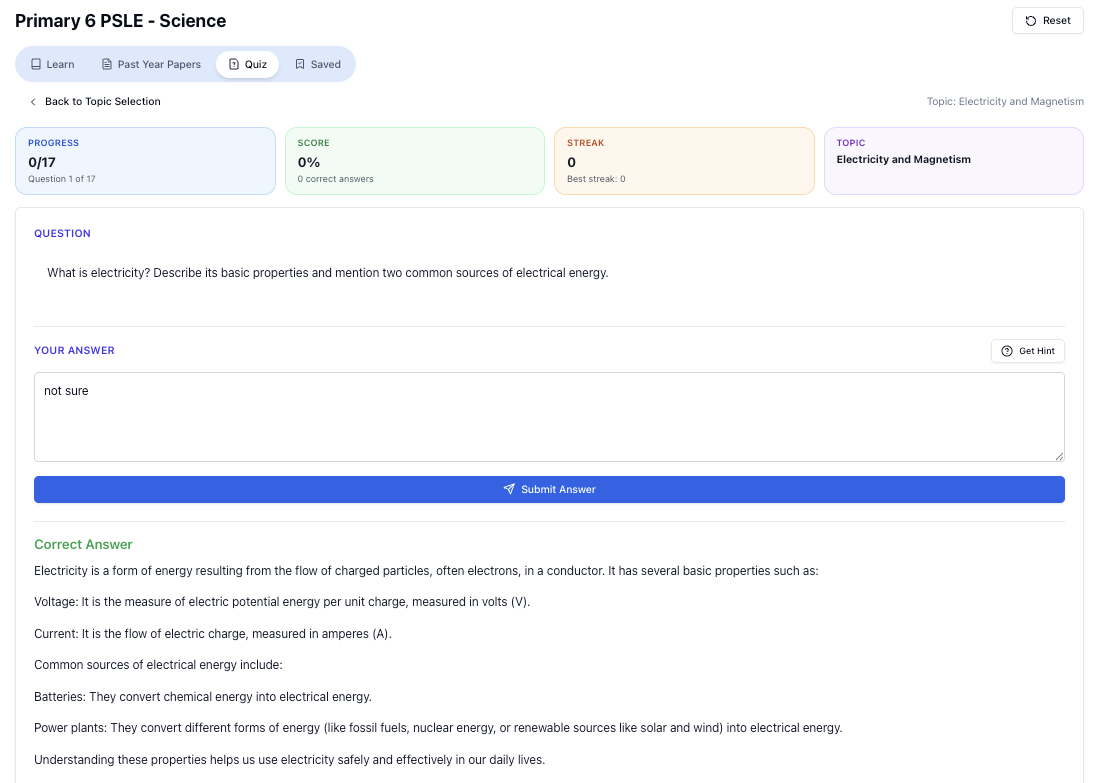
“Practice PSLE Science questions and get clear, step-by-step answers instantly.”
👉 Try a question now and see how fast you can improve.
Free on Tutorly.sg
Practise Mechanics with step-by-step help — free to start
On Tutorly.sg/app you can practise unlimited Singapore syllabus questions, get instant explanations when you are stuck, and use past-year papers — no sign-up needed to start.
- ✓ PSLE, O Level, A Level, and more
- ✓ Step-by-step working when you are stuck
- ✓ Works on phone and laptop