

Free on Tutorly.sg
Practise Mechanics with step-by-step help — free to start
On Tutorly.sg/app you can practise unlimited Singapore syllabus questions, get instant explanations when you are stuck, and use past-year papers — no sign-up needed to start.
- ✓ PSLE, O Level, A Level, and more
- ✓ Step-by-step working when you are stuck
- ✓ Works on phone and laptop
Quick answer
Feeling lost when forces come up in A Level Physics? Don't worry, you're not alone. Forces are about understanding interactions in the simplest terms: how objects push or pull each other. Once you get this, solving problems becomes like following a recipe — just need to know the steps.
“Stuck on a question? See simple explanations that help you understand fast.”
👉 Give it a try and turn confusion into clarity in minutes.
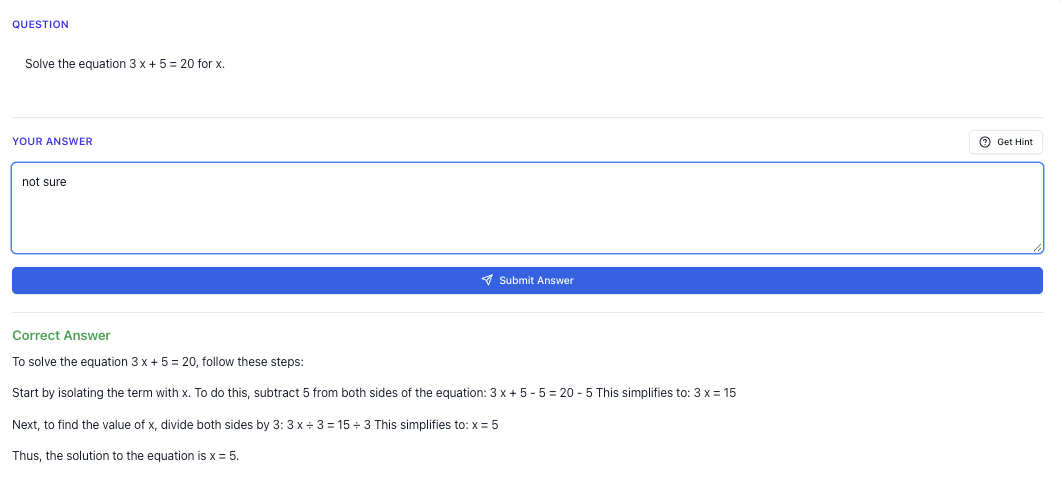
What you need to know
Forces in mechanics are simply pushes or pulls acting on an object. They make things move, stop, or change direction. Think of it like the MRT — the train moves because forces are acting on it, just like how you have to push through crowds to get on during rush hour.
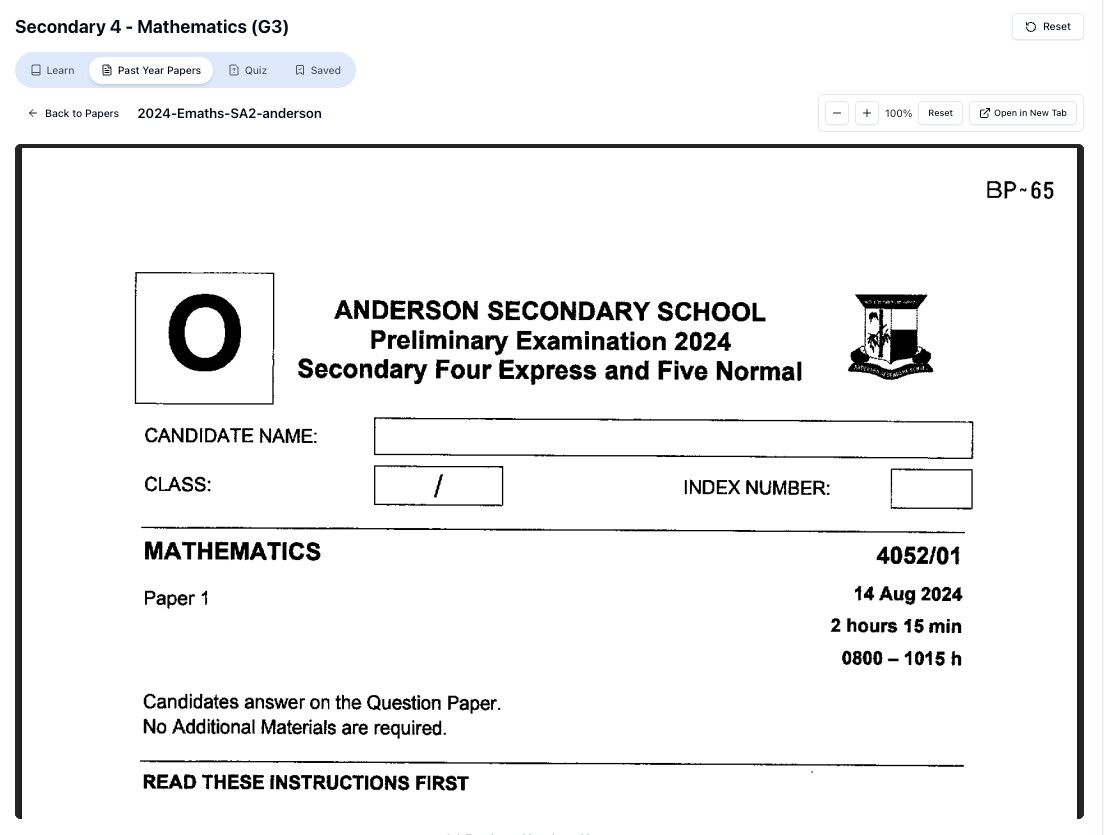
“Access more than 1000+ past year papers to practice”
👉 Start a paper today and test yourself like it’s the real exam.
Understanding Forces: The Basics
Types of Forces
-
Gravitational Force: This is the force that pulls objects towards the Earth. It's what makes things fall when you drop them.
-
Frictional Force: This force opposes motion. It's like when you slide a book across a table — the friction slows it down.
-
Normal Force: This is the support force exerted by a surface, like a table holding up a book.
-
Tension Force: Found in ropes or strings, like when you pull a kite string tight.
-
Applied Force: Any force you apply to an object, like pushing a shopping cart.
Quick check
- What type of force keeps an object from falling through the floor?
- Which force slows down a sliding object?
- What force is acting when you pull a rope?
Answers: 1. Normal force, 2. Frictional force, 3. Tension force.
Common mistakes students make
One mistake I repeatedly see among my Sec 4 students is mixing up forces. For example, calling friction a type of tension because both involve contact. Remember, friction opposes motion, while tension is about pulling. Always label your forces clearly in diagrams.
Students usually panic when they see application questions like this. The examiner is testing whether you truly understand the process, not just memorized terms. Focus on understanding what each force does.
Exam tip
Precision matters more than length in your answers. Don't write long descriptions; instead, be clear and specific. When describing forces, always mention the direction and type of each force. This shows your understanding and gets you the marks.
Worked examples
Question
A 10 kg box is resting on a flat surface. Calculate the normal force acting on the box.
Solution
Step 1: Identify the forces acting on the box.
Why: We need to know what forces are involved before we can calculate anything. Here, it's gravitational and normal force.
Step 2: Calculate the gravitational force using , where 𝑚 is mass and 𝑔 is gravity (9.8 m/s²).
Why: The gravitational force is what pulls the box down, and it's crucial for finding the normal force.
Step 3: Since the box is on a flat surface and not moving vertically, the normal force is equal to the gravitational force.
Why: On a flat surface, with no vertical movement, these forces balance out.
Answer: The normal force is 98 N.
Question
A car is moving with a constant velocity. What can you say about the forces acting on it?
“Doing Secondary Science? Pick a topic and practise like it’s a real exam — with clear answers right after.”
👉 Try Tutorly now and start a Science topic in seconds.

Solution
Step 1: Recognize that constant velocity means no net force.
Why: According to Newton's First Law, an object in motion stays in motion with the same speed unless acted on by a net force.
Step 2: Identify the forces: gravitational, normal, frictional, and applied forces.
Why: We need to consider all forces to understand the balance.
Step 3: State that the applied force equals the frictional force.
Why: For constant velocity, forces are balanced, meaning applied equals friction.
Answer: The forces are balanced, so the car continues at constant velocity.
Quick summary
- Forces are pushes or pulls on an object.
- Types include gravitational, frictional, normal, tension, and applied.
- Common mistake: mixing up types of forces.
- Exam tip: clarity and precision over long answers.
- Understand forces to solve problems effectively.
FAQ
What is a force in simple terms?
A force is a push or pull on an object that can make it move, stop, or change direction.
Why is understanding forces important in mechanics?
Forces explain how and why objects move. Without understanding forces, solving mechanics problems becomes very difficult.
How do I identify forces in a problem?
Look for keywords like "push," "pull," "resting," or "moving." These often hint at specific forces involved.
Can forces be negative?
Yes, when we talk about direction. A negative force means it's acting in the opposite direction to what you've defined as positive.
What if I don't understand a problem at all?
Okay, breathe first. Break it down. Identify the forces, and think step-by-step. Practice makes it easier.
Free on Tutorly.sg
Practise Mechanics with step-by-step help — free to start
On Tutorly.sg/app you can practise unlimited Singapore syllabus questions, get instant explanations when you are stuck, and use past-year papers — no sign-up needed to start.
- ✓ PSLE, O Level, A Level, and more
- ✓ Step-by-step working when you are stuck
- ✓ Works on phone and laptop
Free practice
Try it yourself
Practise similar questions with step-by-step help on Tutorly
- ✓ Unlimited similar questions
- ✓ Step-by-step help when you are stuck
- ✓ No sign-up needed to start
Related Topics You Should Learn Next
- How To Master A Level Physics Mechanics Questions In Singapore
- A Level Physics Mechanics: Common Mistakes & How to Fix Them
- [How To Use An AI Tutor For A Level H 2 Physics In Singapore](/blog/ai-tutor-for-a-level-h 2-physics-singapore)
- [JC H 2 Physics Tuition: A Practical Guide For A Level Students In Singapore](/blog/jc-h 2-physics-tuition)
- Topic cluster hub: [https://tutorly.sg/learn/jc-h 2-physics-mechanics](https://tutorly.sg/learn/jc-h 2-physics-mechanics)
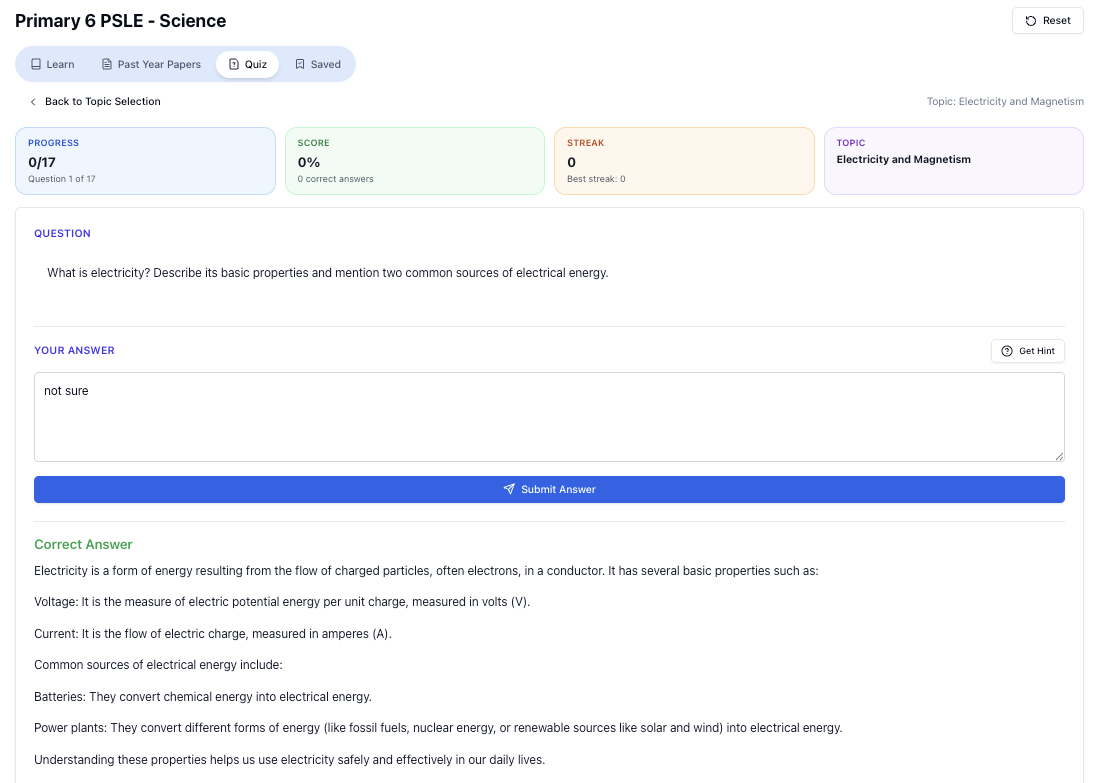
“Practice PSLE Science questions and get clear, step-by-step answers instantly.”
👉 Try a question now and see how fast you can improve.
Free on Tutorly.sg
Practise Mechanics with step-by-step help — free to start
On Tutorly.sg/app you can practise unlimited Singapore syllabus questions, get instant explanations when you are stuck, and use past-year papers — no sign-up needed to start.
- ✓ PSLE, O Level, A Level, and more
- ✓ Step-by-step working when you are stuck
- ✓ Works on phone and laptop