

Free on Tutorly.sg
Practise Physical chemistry with step-by-step help — free to start
On Tutorly.sg/app you can practise unlimited Singapore syllabus questions, get instant explanations when you are stuck, and use past-year papers — no sign-up needed to start.
- ✓ PSLE, O Level, A Level, and more
- ✓ Step-by-step working when you are stuck
- ✓ Works on phone and laptop
Quick answer
If A Level Physical Chemistry feels like an uphill battle, you’re not alone. Many students think they’re bad at it, but often it’s just missing basics from earlier years. Understanding core concepts and practising with precision can make this subject much more manageable.
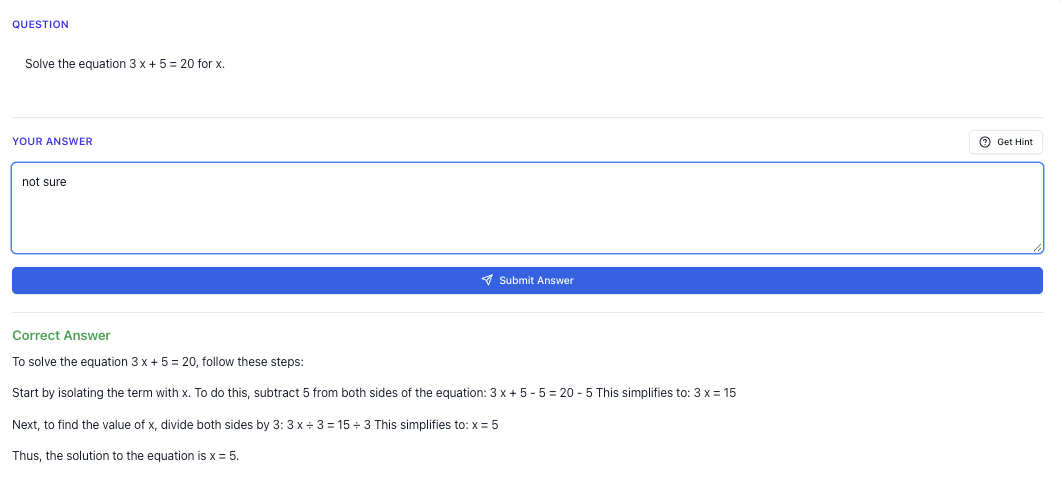
“Stuck on a question? See simple explanations that help you understand fast.”
👉 Give it a try and turn confusion into clarity in minutes.
What you need to know
Physical chemistry combines principles from physics and chemistry to explain how matter behaves on a molecular and atomic level. You’ll deal with concepts like thermodynamics, kinetics, and equilibrium — which can sound scary but are manageable with the right approach.
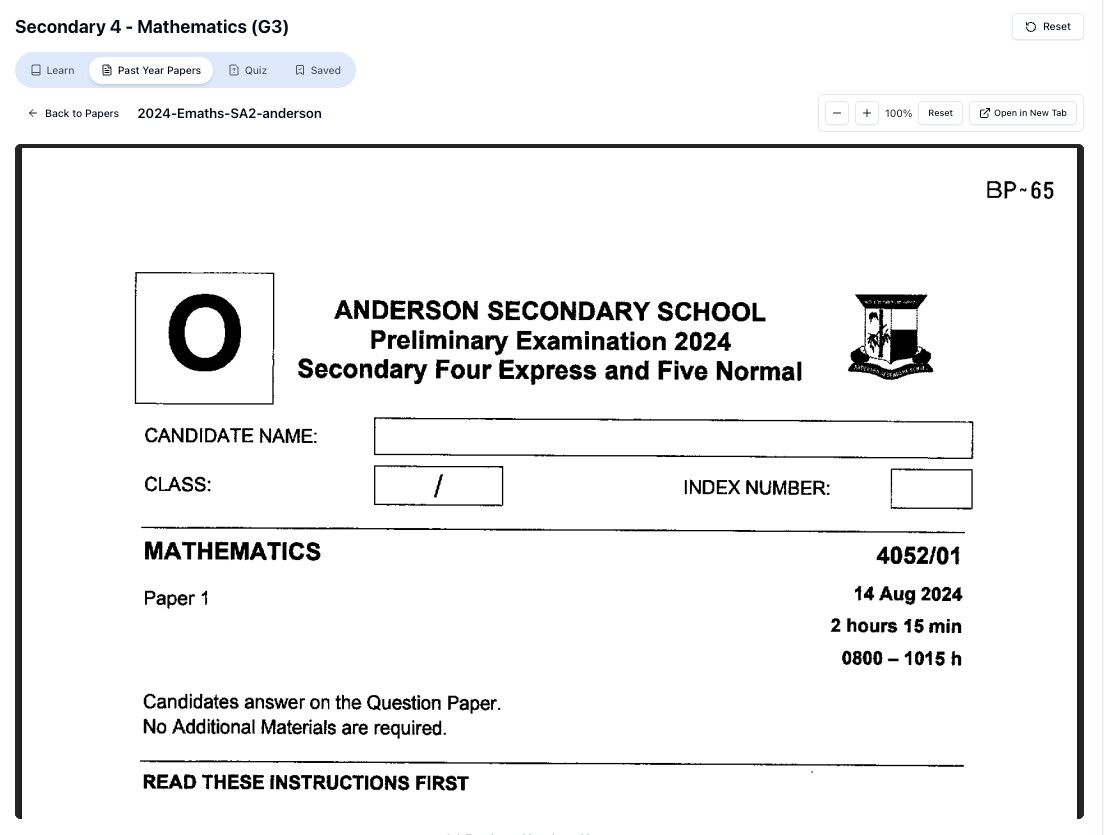
“Access more than 1000+ past year papers to practice”
👉 Start a paper today and test yourself like it’s the real exam.
Why Students Struggle with Physical Chemistry
Understanding vs. Memorization
One mistake I repeatedly see among my Sec 4 students is relying too much on memorizing keywords without understanding the processes. Physical chemistry demands more than just knowing terms; you need to see how concepts connect. For instance, knowing what "enthalpy" means isn't enough — you need to understand how it affects reactions.
Specificity Over Generality
Students often lose marks because they answer too generally. In O-Level questions, precision matters more than length. It's not about writing everything you know but about addressing exactly what the question asks. For example, if asked about the effect of temperature on reaction rates, you should focus on kinetic energy and collision frequency, not just temperature in isolation.
Application Questions
Students usually panic when they see application questions like this. These questions test your understanding of the process, not just your memory. Don't worry if the wording looks different from your notes. The concepts are the same; it’s just about applying them in new ways.
Quick Check
- What is the definition of enthalpy?
- How does temperature affect the rate of reaction?
- Why is understanding a concept better than memorizing it?
Answers:
- Enthalpy is the total heat content of a system.
- Temperature increases kinetic energy, leading to more frequent and successful collisions, increasing reaction rate.
- Understanding allows you to apply concepts to various scenarios, not just recall terms.
Common mistakes students make
Overcomplicating Answers
Many students try to write lengthy answers, thinking it shows understanding. However, in Singapore papers, clarity and precision are key. Stick to what the question asks.
Ignoring Units
Forgetting to include units is a common slip that costs marks. Always check your calculations and ensure units are consistent throughout.
Misreading Questions
Weaker students struggle most when the question is phrased differently from school notes. Take a moment to breathe and break down what’s being asked. Simplify the question in your own words before tackling it.
Exam tip
When answering questions, always start by identifying what’s being asked. Then, structure your answer to directly address this. Remember, examiners are looking for how well you understand the process, not how much you can write. Use bullet points or short paragraphs to keep your answers clear and concise.
Worked examples
Question
Calculate the change in Gibbs free energy for a reaction at 298 K given that the enthalpy change is 40 kJ/mol and the entropy change is 100 J/mol·K.
Solution
Step 1: Convert the entropy change to kJ by dividing by 1000: .
Why: This ensures both values (enthalpy and entropy) are in the same unit, making calculations accurate.
“Doing Secondary Science? Pick a topic and practise like it’s a real exam — with clear answers right after.”
👉 Try Tutorly now and start a Science topic in seconds.

Step 2: Use the Gibbs free energy equation:
Why: This formula shows how temperature, enthalpy, and entropy affect the spontaneity of a reaction.
Step 3: Substitute the values into the equation:
Why: Substituting the values lets you compute the Gibbs free energy change for the reaction.
Step 4: Calculate the result:
Why: This final value shows whether the reaction is spontaneous. A positive indicates non-spontaneity under these conditions.
Quick summary
- Understand concepts, don’t just memorize keywords.
- Answer questions with precision, focusing on what’s asked.
- Include units in calculations to avoid losing marks.
- Break down complex questions into simpler terms.
- Use the Gibbs free energy formula to determine reaction spontaneity.
FAQ
Why do I struggle with Physical Chemistry?
Often, it's due to gaps in foundational knowledge rather than lack of ability. Reinforce your basics to improve.
How can I improve my precision in answers?
Practice focusing on the specific demands of each question and avoid unnecessary details.
What should I do if I don’t understand a question?
Break it down into smaller parts and identify key terms. Reframe the question in simpler words if needed.
How can I effectively use an AI tutor for chemistry?
AI tutors can provide personalized practice and feedback, helping you focus on weak areas. Check out how [an AI tutor can help with JC 1 H 2 Chemistry](https://tutorly.sg/blog/ai-tutor-for-jc 1-h 2-chemistry-singapore).
Free on Tutorly.sg
Practise Physical chemistry with step-by-step help — free to start
On Tutorly.sg/app you can practise unlimited Singapore syllabus questions, get instant explanations when you are stuck, and use past-year papers — no sign-up needed to start.
- ✓ PSLE, O Level, A Level, and more
- ✓ Step-by-step working when you are stuck
- ✓ Works on phone and laptop
Free practice
Try it yourself
Practise similar questions with step-by-step guidance on Tutorly. This will help you reinforce concepts and improve precision.
- ✓ Unlimited similar questions
- ✓ Step-by-step help when you are stuck
- ✓ No sign-up needed to start
Related Topics You Should Learn Next
- [JC H 2 Chemistry Tuition: A Practical Guide To Acing A-Level Chem In Singapore](https://tutorly.sg/blog/jc-h 2-chemistry-tuition)
- [AI Tutor For JC 2 H 2 Chemistry In Singapore: How To Survive (And Actually Do Well) In Your Final Year](https://tutorly.sg/blog/ai-tutor-for-jc 2-h 2-chemistry-singapore)
- [H 2 Chemistry Tuition In Singapore (2026): Worth it?](https://tutorly.sg/blog/h 2-chemistry-tuition)
- [JC H 2 Chemistry Physical Guide](https://tutorly.sg/blog/jc-h 2-chemistry-physical-guide)
- [JC H 2 Chemistry Physical Topic Cluster](https://tutorly.sg/learn/jc-h 2-chemistry-physical)
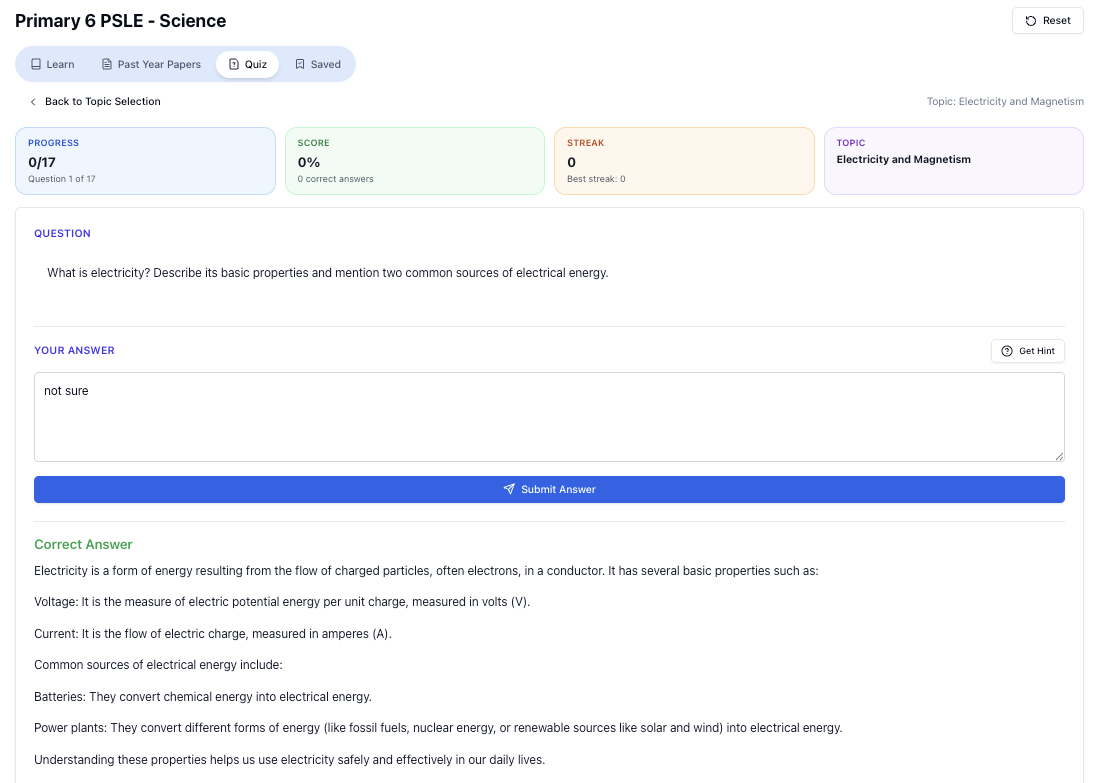
“Practice PSLE Science questions and get clear, step-by-step answers instantly.”
👉 Try a question now and see how fast you can improve.
Free on Tutorly.sg
Practise Physical chemistry with step-by-step help — free to start
On Tutorly.sg/app you can practise unlimited Singapore syllabus questions, get instant explanations when you are stuck, and use past-year papers — no sign-up needed to start.
- ✓ PSLE, O Level, A Level, and more
- ✓ Step-by-step working when you are stuck
- ✓ Works on phone and laptop