

Free on Tutorly.sg
Practise Oral examination with step-by-step help — free to start
On Tutorly.sg/app you can practise unlimited Singapore syllabus questions, get instant explanations when you are stuck, and use past-year papers — no sign-up needed to start.
- ✓ PSLE, O Level, A Level, and more
- ✓ Step-by-step working when you are stuck
- ✓ Works on phone and laptop
Quick answer
Heart sinking when the PSLE Oral question looks different from what you've practiced? You're not alone. Here, we'll break down four tricky oral questions step by step, so you can gain confidence and secure those marks.
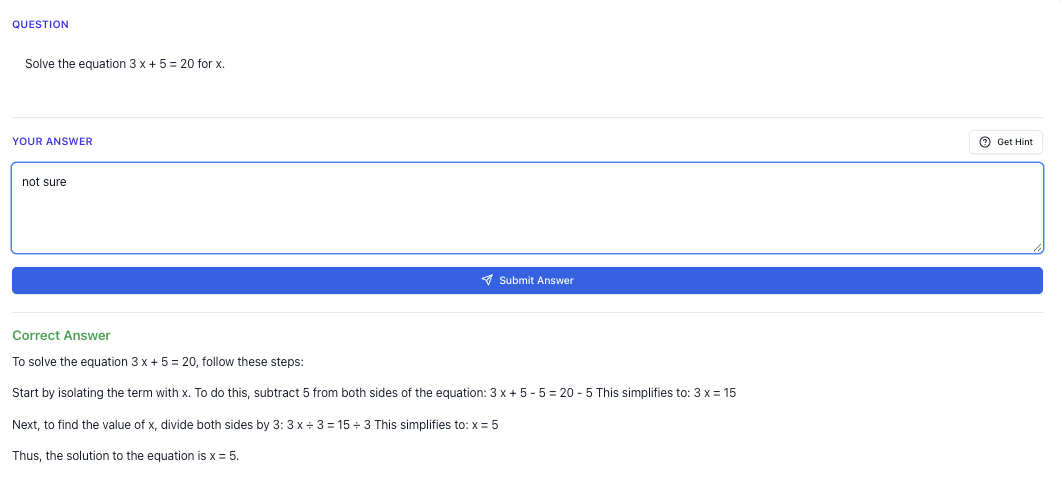
“Stuck on a question? See simple explanations that help you understand fast.”
👉 Give it a try and turn confusion into clarity in minutes.
What you need to know
The PSLE Oral Examination tests your ability to express ideas clearly in spoken English. It involves reading aloud and having a conversation based on a picture or topic. It's not just about speaking in grammatically correct sentences but sounding natural and confident.
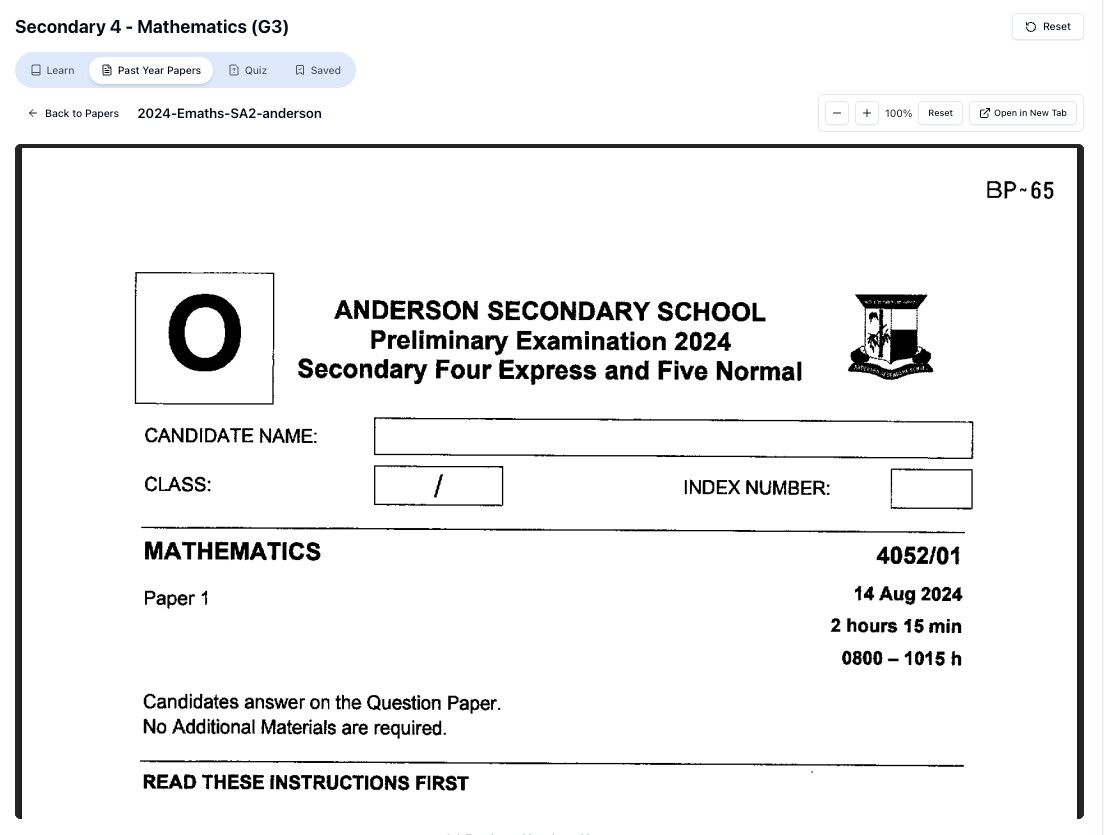
“Access more than 1000+ past year papers to practice”
👉 Start a paper today and test yourself like it’s the real exam.
Common mistakes students make
Many students make these mistakes during the PSLE Oral:
-
Memorising without understanding: You might have memorised complex vocabulary but can't use it naturally. A more natural way to say this is to practice using simpler words confidently.
-
Translating from mother tongue: This sentence sounds awkward because direct translation often leads to unnatural phrasing. Native speakers usually phrase it differently.
-
Overthinking pronunciation: Stressing too much about pronunciation can make you sound robotic. Focus on clarity and natural rhythm.
-
Freezing up when questions differ: Many students at Band 6 make this mistake repeatedly. Breathe first, and remember that clarity usually counts more than difficult words.
Exam tip
Marks: Focus on clarity and expression. It's better to speak simply and clearly than to use complex words incorrectly.
Presentation: Stand or sit up straight, make eye contact, and use gestures naturally. This shows confidence.
Time: Practice pacing. Don't rush through your answers. A steady pace helps clarity.
Question types: Familiarize yourself with different question types, like describing a picture or discussing a given topic. Practice with friends or family.
Worked examples
Question 1: Picture Discussion
Picture: A family having a picnic in the park.
Solution
Step 1: Describe what you see in the picture. "I see a family of four having a picnic in the park."
Why: Start with a simple description to set the scene.
Step 2: Add details about the actions. "The mother is laying out the food, while the father is playing with the children."
Why: Adding actions helps to paint a clearer picture and engages the listener.
Step 3: Include emotions or atmosphere. "Everyone seems happy and relaxed, enjoying the sunny day."
Why: Describing emotions adds depth and shows your understanding of the situation.
Step 4: Relate it to your experience. "I've had similar picnics with my family, and they are always fun."
Why: Personal connections make your answer more engaging and relatable.
Question 2: Reading Aloud
Text: "The cat sat on the mat, watching the birds outside the window."
Solution
Step 1: Read the sentence slowly and clearly.
Why: Clarity is more important than speed to ensure the listener understands.
Step 2: Emphasize key words, like "sat" and "watching."
Why: Emphasizing key words highlights important actions and maintains listener interest.
Step 3: Use natural intonation. "The cat sat on the mat, watching the birds outside the window."
Why: Natural intonation makes your reading sound more engaging and less robotic.
Question 3: Conversation Prompt
Prompt: "Talk about your favorite holiday."
Solution
Step 1: Start with a clear opening. "My favorite holiday is Chinese New Year."
Why: A clear opening sets the topic and direction for your response.
Step 2: Explain why it's your favorite. "I love it because I get to see all my relatives and eat delicious food."
Why: Explaining reasons gives substance to your answer.
Step 3: Share a memorable experience. "I remember playing traditional games with my cousins last year."
Why: Personal stories make your conversation richer and more engaging.
Step 4: Conclude with a reflection. "It's a time of joy and togetherness."
“Doing Secondary Science? Pick a topic and practise like it’s a real exam — with clear answers right after.”
👉 Try Tutorly now and start a Science topic in seconds.

Why: A reflection helps to neatly wrap up your response.
Question 4: Stimulus-Based Conversation
Stimulus: A picture of a busy street market.
Solution
Step 1: Describe the picture briefly. "The market is bustling with people and colorful stalls."
Why: A brief description sets the scene for further discussion.
Step 2: Discuss the activity. "People are buying fruits, vegetables, and various snacks."
Why: Describing activities provides context and detail.
Step 3: Relate it to a personal experience. "I often visit markets like this with my family on weekends."
Why: Relating to personal experience makes your answer more relatable and authentic.
Step 4: Offer an opinion. "I think street markets are a great place to experience local culture."
Why: Offering an opinion shows your ability to think critically about the topic.
Quick summary
- Start with a simple description for picture questions.
- Use personal experiences to make your answers relatable.
- Focus on clarity and natural rhythm in reading.
- Practice different question types to build confidence.
- Relate stimulus-based discussions to personal experiences.
FAQ
Q1: What if I don't know what to say during the exam?
Take a deep breath and start with what you see or know. It's okay to pause and think.
Q2: How can I improve my pronunciation?
Practice reading aloud regularly and listen to native speakers to mimic their rhythm and intonation.
Q3: Is it okay to use Singlish during the exam?
It's best to avoid Singlish to ensure clarity and formality in your speech.
Q4: How long should my answers be?
Aim for clear and concise responses. Quality over quantity is key.
Q5: What should I do if I make a mistake?
Don't panic. Correct yourself and continue. Examiners appreciate self-correction.
Free on Tutorly.sg
Practise Oral examination with step-by-step help — free to start
On Tutorly.sg/app you can practise unlimited Singapore syllabus questions, get instant explanations when you are stuck, and use past-year papers — no sign-up needed to start.
- ✓ PSLE, O Level, A Level, and more
- ✓ Step-by-step working when you are stuck
- ✓ Works on phone and laptop
Free practice
Try it yourself
Practice similar questions with step-by-step help on Tutorly.
- ✓ Unlimited similar questions
- ✓ Step-by-step help when you are stuck
- ✓ No sign-up needed to start
Related Topics You Should Learn Next
- PSLE English Language Oral examination complete guide Singapore
- PSLE Oral examination explained simply Singapore English Language
- Oral examination complete guide Singapore
- PSLE English Oral
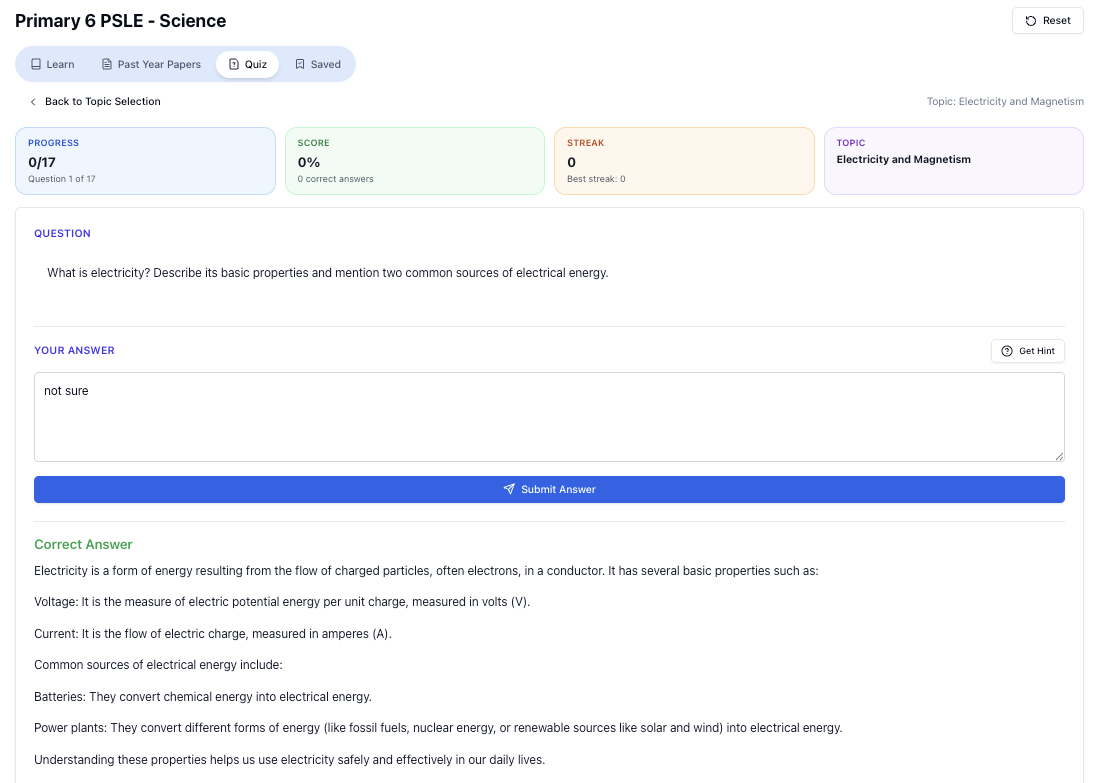
“Practice PSLE Science questions and get clear, step-by-step answers instantly.”
👉 Try a question now and see how fast you can improve.
Free on Tutorly.sg
Practise Oral examination with step-by-step help — free to start
On Tutorly.sg/app you can practise unlimited Singapore syllabus questions, get instant explanations when you are stuck, and use past-year papers — no sign-up needed to start.
- ✓ PSLE, O Level, A Level, and more
- ✓ Step-by-step working when you are stuck
- ✓ Works on phone and laptop