

Free on Tutorly.sg
Practise Geometry and measurement with step-by-step help — free to start
On Tutorly.sg/app you can practise unlimited Singapore syllabus questions, get instant explanations when you are stuck, and use past-year papers — no sign-up needed to start.
- ✓ PSLE, O Level, A Level, and more
- ✓ Step-by-step working when you are stuck
- ✓ Works on phone and laptop
Quick answer
Have you ever felt your heart sink when you see your exam script with marks lost on questions you thought you knew how to do? In PSLE Geometry, common mistakes often come from small slips in understanding or visualising. I'll show you how to avoid these pitfalls with simple tricks, so you'll feel confident and ready for the next exam.
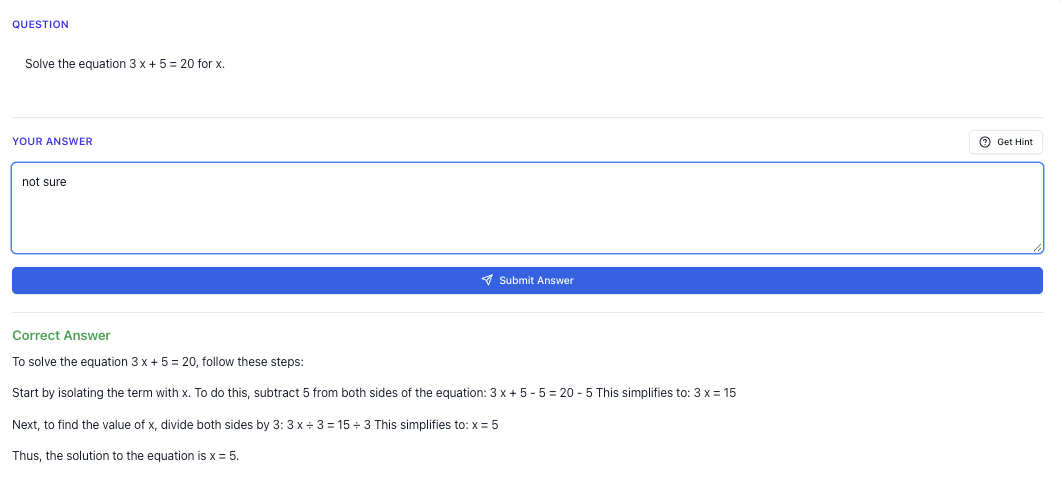
“Stuck on a question? See simple explanations that help you understand fast.”
👉 Give it a try and turn confusion into clarity in minutes.
What you need to know
Geometry in PSLE involves shapes, sizes, and the properties of space. You'll need to understand angles, lines, and measurements. It's not just about memorising formulas. It's about seeing the picture in your mind and understanding how the parts fit together.
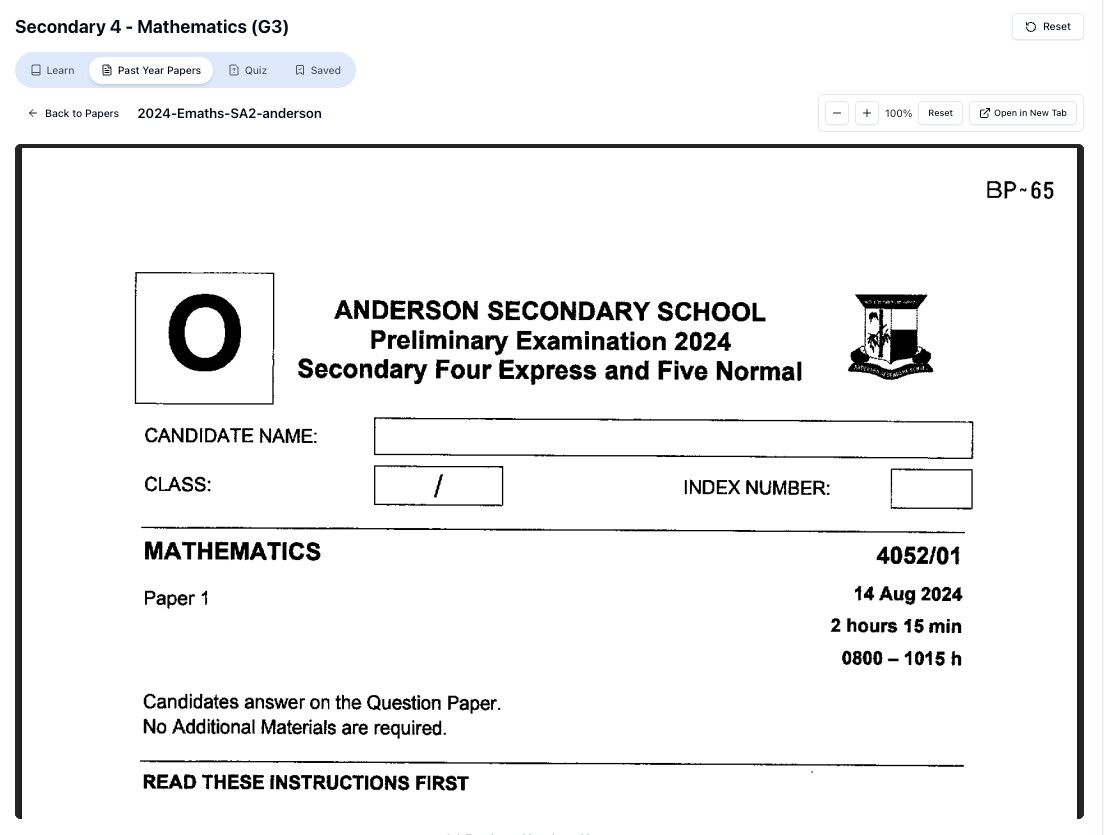
“Access more than 1000+ past year papers to practice”
👉 Start a paper today and test yourself like it’s the real exam.
Common mistakes students make
Misreading the Question
Sometimes, the question asks for something specific, like the perimeter, but you calculate the area instead. This happens when we rush or don't underline key words.
How to fix:
- Slow down: Read the question twice.
- Underlining: Underline key words like "perimeter" or "area" to keep you focused.
Forgetting Units
You might get the right number but lose marks because you forgot to write the units. This is a common slip, especially when you're in a hurry.
How to fix:
- Remember to check: Before you move on, ask yourself, "Did I write the units?"
- Practice: Make it a habit to write units in your daily practice.
Incorrect Angle Calculations
Angles can be tricky, especially when you're working with triangles or circles. Sometimes, students forget the sum of angles in a triangle is 180 degrees.
How to fix:
- A simple trick I teach my students is: Always write down the rule next to your working. For example, "Sum of angles in a triangle = 180°".
- Visualise: Draw and label the angles clearly on your diagram.
Quick check
- What is the perimeter of a rectangle with a length of 5 cm and a width of 3 cm?
- If one angle of a triangle is 90°, what is the sum of the other two angles?
- Calculate the area of a square with a side length of 4 cm.
Answers:
- 16 cm
- 90°
- 16 cm²
Exam tip
In exams, presentation matters as much as getting the right answer. Write neatly and label all parts of your diagram. This helps the examiner see your thought process clearly. Also, always leave some time to check your answers at the end.
Worked examples
Question
A triangle has angles 45°, 45°, and x°. What is the value of x?
Solution
Step 1: Write down the rule for the sum of angles in a triangle: 180°.
Why: This reminds us that all angles in a triangle add up to 180°.
Step 2: Add the known angles: 45° + 45° = 90°.
Why: We add the angles we know to find out what is left for x.
Step 3: Subtract from 180°: 180° - 90° = 90°.
Why: This gives us the value of the unknown angle, x.
Answer: The value of x is 90°.
Question
Calculate the area of a circle with a radius of 3 cm.
Solution
Step 1: Write down the formula for the area of a circle: 𝐴 = πr².
Why: This formula helps us calculate the space inside the circle.
“Doing Secondary Science? Pick a topic and practise like it’s a real exam — with clear answers right after.”
👉 Try Tutorly now and start a Science topic in seconds.

Step 2: Substitute the radius into the formula: 𝐴 = π(3)².
Why: By substituting, we apply the formula to this specific circle.
Step 3: Calculate: 𝐴 = π × 9 = 28.26 cm² (using π ≈ 3.14).
Why: This gives us the area in square centimeters.
Answer: The area of the circle is 28.26 cm².
Quick summary
- Read questions carefully and underline key terms.
- Always write units with your answers.
- Remember, angles in a triangle add up to 180°.
- Practice short, daily revision for better retention.
- Draw diagrams to help visualise the problem.
FAQ
Q1: How do I remember all the geometry formulas?
A1: Use stories or rhymes to link formulas to images. This makes them easier to recall.
Q2: Why do I keep making silly mistakes?
A2: Slow down and double-check your work. Practice helps reduce these mistakes over time.
Q3: What if I forget a formula during the exam?
A3: Try to visualise the problem. Sometimes drawing can help jog your memory.
Q4: How can I practise geometry effectively?
A4: Use a mix of past papers and interactive tools like Tutorly to get step-by-step help.
Free on Tutorly.sg
Practise Geometry and measurement with step-by-step help — free to start
On Tutorly.sg/app you can practise unlimited Singapore syllabus questions, get instant explanations when you are stuck, and use past-year papers — no sign-up needed to start.
- ✓ PSLE, O Level, A Level, and more
- ✓ Step-by-step working when you are stuck
- ✓ Works on phone and laptop
Free practice
Try it yourself
Want to practise similar questions with step-by-step help? Head over to for interactive learning and instant feedback.
- ✓ Unlimited similar questions
- ✓ Step-by-step help when you are stuck
- ✓ No sign-up needed to start
Practise with free question sets
Work through exam-style questions with answers and step-by-step solutions:
- [40+ P6 PSLE Speed Questions for (Singapore MOE Syllabus) with Step-by-Step Solutions](/questions/p 6-speed-questions)
- 35+ PSLE Math Geometry and Measurement Questions for (Singapore MOE Syllabus) with Solutions
- Topic study hub
[Practise unlimited questions on Tutorly.sg/app](https://www.tutorly.sg/app)
Related Topics You Should Learn Next
- PSLE Mathematics: Geometry and Measurement Made Simple
- PSLE Mathematics: Geometry and Measurement Made Simple
- PSLE Mathematics: Geometry and Measurement Made Simple
- Online Geometry Tutor: Expert Guide
- Topic cluster hub
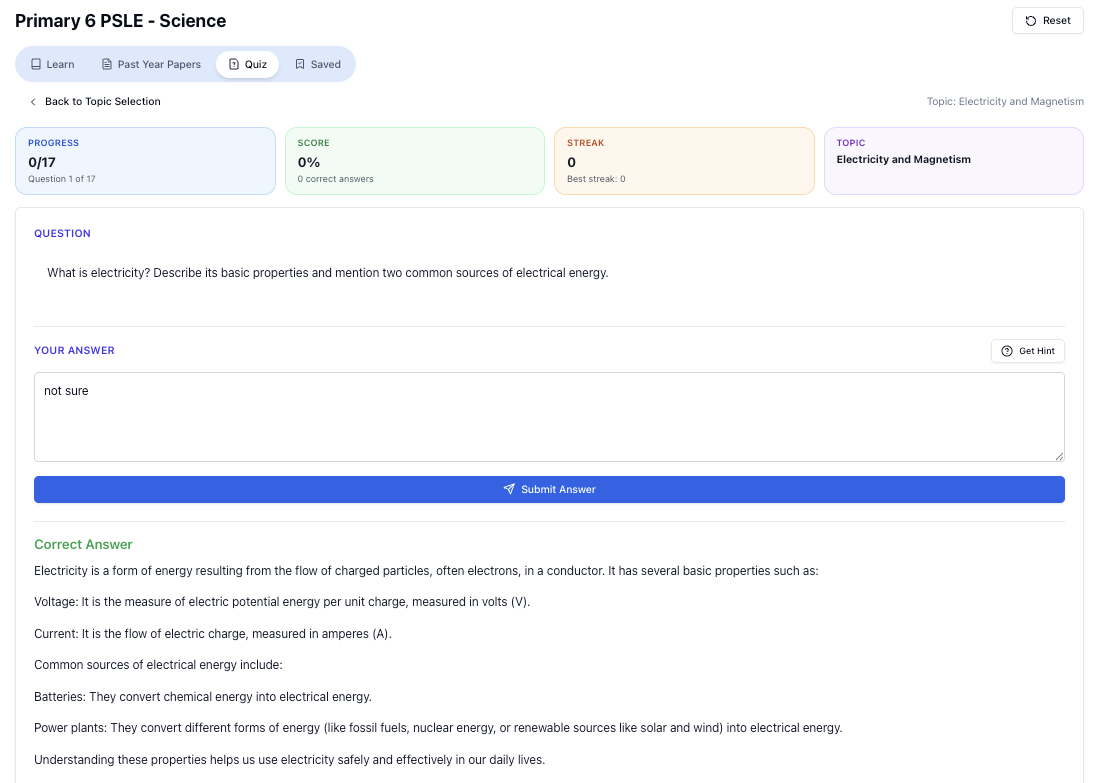
“Practice PSLE Science questions and get clear, step-by-step answers instantly.”
👉 Try a question now and see how fast you can improve.
Free on Tutorly.sg
Practise Geometry and measurement with step-by-step help — free to start
On Tutorly.sg/app you can practise unlimited Singapore syllabus questions, get instant explanations when you are stuck, and use past-year papers — no sign-up needed to start.
- ✓ PSLE, O Level, A Level, and more
- ✓ Step-by-step working when you are stuck
- ✓ Works on phone and laptop