

Free on Tutorly.sg
Practise Oral with step-by-step help — free to start
On Tutorly.sg/app you can practise unlimited Singapore syllabus questions, get instant explanations when you are stuck, and use past-year papers — no sign-up needed to start.
- ✓ PSLE, O Level, A Level, and more
- ✓ Step-by-step working when you are stuck
- ✓ Works on phone and laptop
Quick answer
“Stuck on a question? See simple explanations that help you understand fast.”
👉 Give it a try and turn confusion into clarity in minutes.
Feeling overwhelmed by O Level Chinese Oral? You're not alone. Many students feel the pressure when they see a question they don't know how to answer. But with the right tips and practice, you'll gain confidence. By the end of this guide, you'll know how to tackle the oral exam with a clear plan and avoid common mistakes.
What you need to know
The O Level Chinese Oral exam tests your ability to speak and understand spoken Chinese. This includes reading a passage aloud and discussing a topic. It's about clear pronunciation, fluency, and expressing ideas clearly.
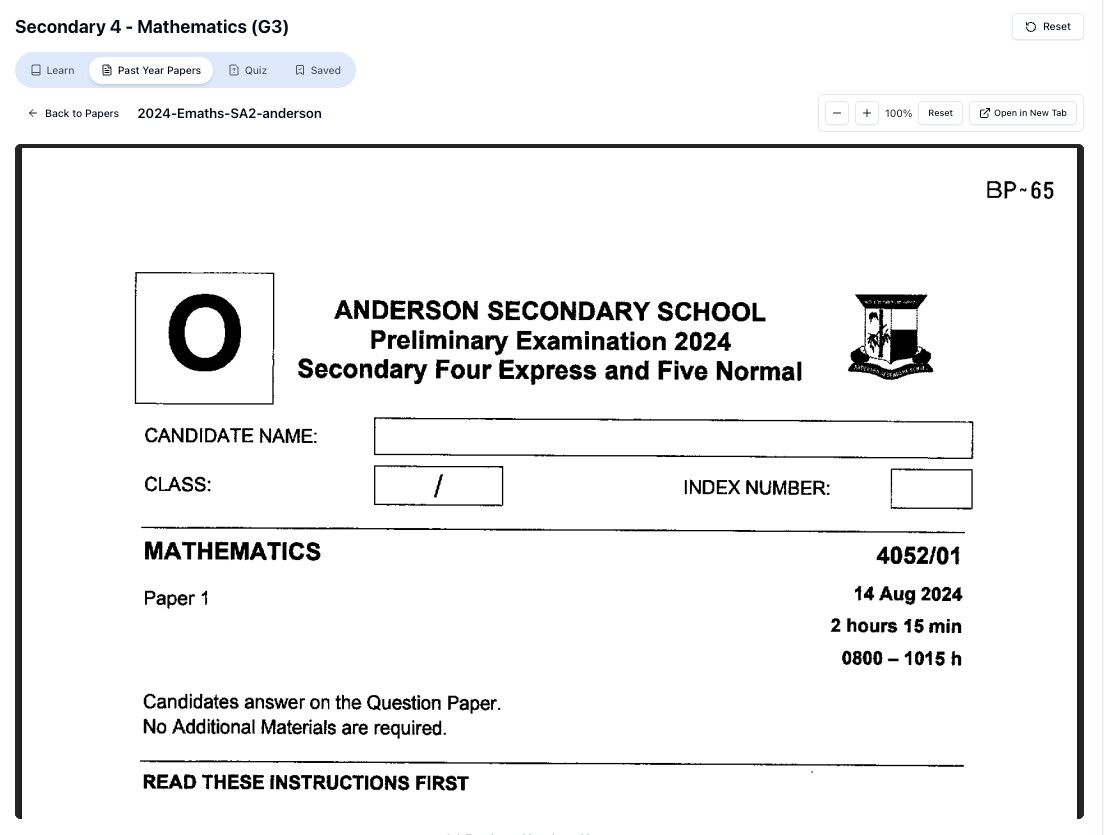
“Access more than 1000+ past year papers to practice”
👉 Start a paper today and test yourself like it’s the real exam.
Key Areas to Focus On
Reading Aloud
Step 1: Practice reading aloud from a variety of texts. Choose materials like news articles or short stories.
Why: This builds your confidence and helps you get used to different tones and vocabulary.
Step 2: Focus on intonation and pronunciation. Listen to recordings and try to mimic the way native speakers speak.
Why: Proper intonation and pronunciation make your speech clearer and more engaging.
Conversation
Step 1: Prepare for common topics. Topics like school life, hobbies, or current events often come up.
Why: Being prepared for likely topics reduces stress and gives you confidence.
Step 2: Practice with a friend or tutor. Record your conversation and listen to it.
Why: Hearing yourself helps identify areas for improvement and builds fluency.
Quick Check
- Read a short passage aloud. Record yourself and listen for clarity and pronunciation.
- Discuss a topic for 2 minutes. Focus on expressing your ideas clearly.
- Mimic a short dialogue from a video. Pay attention to tone and expression.
Common mistakes students make
Mispronunciation
Mistake: Mispronouncing words can confuse the examiner and cost you marks.
Fix: Practice with a teacher or use online resources to hear correct pronunciations.
Lack of Fluency
Mistake: Pausing too often or speaking too slowly can disrupt your flow.
Fix: Practice speaking on familiar topics to improve your fluency.
Not Answering the Question
Mistake: Sometimes students go off-topic or don't answer the question directly.
Fix: Listen carefully to the question and structure your response to address it clearly.
Exam tip
- Marks: Focus on clarity and fluency. Even if you're unsure, keep speaking.
- Presentation: Maintain eye contact and speak confidently.
- Time: Practice managing your time so you can cover all points without rushing.
- Question Types: Be ready for both reading and conversational topics.
Worked examples
Question: Reading Aloud
Step 1: Look at the passage and underline difficult words.
Why: Identifying challenging words helps you focus on them during practice.
Step 2: Read the passage aloud slowly at first. Focus on pronunciation.
Why: Slow reading helps ensure clarity and accuracy.
“Doing Secondary Science? Pick a topic and practise like it’s a real exam — with clear answers right after.”
👉 Try Tutorly now and start a Science topic in seconds.

Step 3: Increase your speed gradually while maintaining clarity.
Why: This simulates exam conditions and improves fluency.
Solution
Step 1: Listen to a recording of a native speaker reading the passage.
Why: This gives you a model to imitate.
Step 2: Record your reading and compare it to the model.
Why: Comparison helps identify areas for improvement.
Quick summary
- Practice reading aloud from various texts.
- Focus on pronunciation and intonation.
- Prepare for common conversation topics.
- Practice speaking with a friend or tutor.
- Listen to recordings to improve pronunciation.
- Avoid going off-topic in responses.
- Maintain eye contact and speak confidently.
FAQ
Q 1: How can I improve my pronunciation?
Listen to native speakers and practice repeating after them. Use language apps or online resources for guidance.
Q 2: What topics should I prepare for the conversation section?
Common topics include school life, hobbies, and current events. Being familiar with these helps you feel more confident.
Q 3: How much time should I spend on each part of the exam?
Allocate time according to the marks each section carries. Practice managing your time during mock exams.
Q 4: What if I don't understand the question?
Ask the examiner to repeat it. It's better to clarify than to answer incorrectly.
Free on Tutorly.sg
Practise Oral with step-by-step help — free to start
On Tutorly.sg/app you can practise unlimited Singapore syllabus questions, get instant explanations when you are stuck, and use past-year papers — no sign-up needed to start.
- ✓ PSLE, O Level, A Level, and more
- ✓ Step-by-step working when you are stuck
- ✓ Works on phone and laptop
Free practice
Try it yourself
Practise similar questions with step-by-step help on Tutorly. Visit .
- ✓ Unlimited similar questions
- ✓ Step-by-step help when you are stuck
- ✓ No sign-up needed to start
Related Topics You Should Learn Next
- O Level Chinese Oral Overview
- O Level Chinese Oral Complete Guide Singapore
- Chinese Oral Techniques and Tips
- Chinese Conversation Practice
“Practice PSLE Science questions and get clear, step-by-step answers instantly.”
👉 Try a question now and see how fast you can improve.
Free on Tutorly.sg
Practise Oral with step-by-step help — free to start
On Tutorly.sg/app you can practise unlimited Singapore syllabus questions, get instant explanations when you are stuck, and use past-year papers — no sign-up needed to start.
- ✓ PSLE, O Level, A Level, and more
- ✓ Step-by-step working when you are stuck
- ✓ Works on phone and laptop