

Free on Tutorly.sg
Practise Integration with step-by-step help — free to start
On Tutorly.sg/app you can practise unlimited Singapore syllabus questions, get instant explanations when you are stuck, and use past-year papers — no sign-up needed to start.
- ✓ PSLE, O Level, A Level, and more
- ✓ Step-by-step working when you are stuck
- ✓ Works on phone and laptop
Quick answer
You know the feeling — the heart sinks when you see an integration question in your O Level Additional Mathematics exam. But don't worry, with a solid understanding of the basic rules and common mistakes to avoid, you'll be able to tackle these questions confidently. In this guide, I'll walk you through the essential concepts and tricks to make integration less daunting.
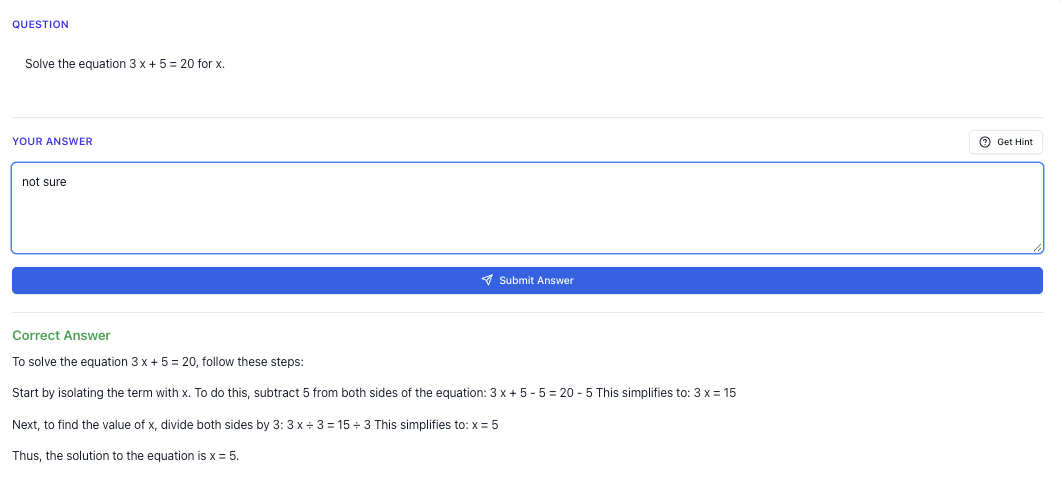
“Stuck on a question? See simple explanations that help you understand fast.”
👉 Give it a try and turn confusion into clarity in minutes.
What you need to know
Integration is a key topic in O Level Additional Mathematics. It involves finding the antiderivative of a function, which is the reverse process of differentiation. You use integration to calculate areas under curves and solve problems involving rates of change. Understanding the basic rules and when to apply them is crucial for exam success.
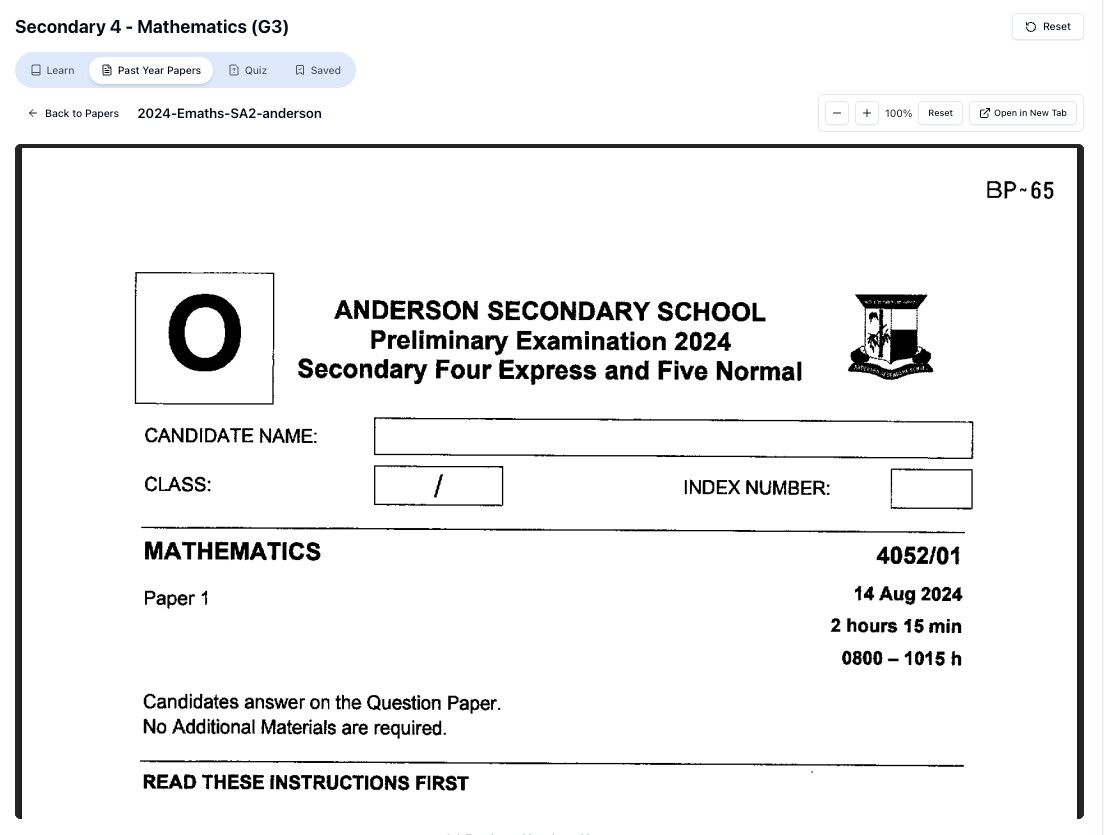
“Access more than 1000+ past year papers to practice”
👉 Start a paper today and test yourself like it’s the real exam.
Basic Integration Rules
-
Power Rule: If you have , integrate by adding 1 to the power and dividing by the new power.
- Example:
-
Constant Rule: The integral of a constant 𝑎 is ax + 𝐶.
- Example:
-
Sum Rule: Integrate terms separately in an expression.
- Example:
Quick check
Try these quick questions to test your understanding:
Answers:
- $3 x + C$
Common mistakes students make
Rushing algebra steps
This is where many students lose unnecessary marks. When you're in a hurry, it's easy to skip steps or make sign errors. Take your time to simplify expressions correctly before integrating.
Freezing during exams
Most students actually know the concept but freeze during exams. If you see a complicated question, breathe first. Break it down into smaller parts and tackle each one step by step.
Overcomplicating simple problems
Students often overcomplicate simple algebra questions. If you see a question that looks too simple, trust your instincts; it probably is straightforward. Don't second-guess yourself.
Exam tip
Always double-check your final answer to ensure you've added the constant of integration, 𝐶. Forgetting this little symbol can cost you marks even if your integration steps are correct.
Worked examples
Question 1
Integrate .
Solution
Step 1: Integrate each term separately:
Why: Integration is linear, so you can handle each term on its own.
Step 2: Apply the power rule to each term.
- For :
- For 2𝑥:
- For $1: x$
Why: The power rule helps us simplify each term to its antiderivative.
Step 3: Combine all terms and add 𝐶:
Why: The constant 𝐶 accounts for any constant term that could have been differentiated away.
Question 2
“Doing Secondary Science? Pick a topic and practise like it’s a real exam — with clear answers right after.”
👉 Try Tutorly now and start a Science topic in seconds.

Integrate .
Solution
Step 1: Integrate each term separately:
Why: Breaking it down makes it easier to apply the power rule.
Step 2: Apply the power rule.
- For :
- For 4𝑥:
- For $7: 7 x$
Why: Applying the power rule gives us the antiderivative for each term.
Step 3: Combine all terms and add 𝐶:
Why: Always include 𝐶 for completeness.
Quick summary
- Integration reverses differentiation; use it to find areas under curves.
- Basic rules: Power Rule, Constant Rule, Sum Rule.
- Avoid rushing; double-check algebra steps to prevent careless mistakes.
- Always add the constant 𝐶 at the end of integration.
- Practice breaking down complex questions into simpler parts.
FAQ
Q 1: What is the purpose of the constant 𝐶 in integration?
The constant 𝐶 represents any constant that was differentiated to zero. It ensures our solution accounts for all possible original functions.
Q 2: How can I improve my integration skills for exams?
Practice regularly with past exam papers and focus on understanding the basic rules deeply. Also, learn to spot patterns in questions.
Q 3: Why do I keep making sign errors?
Sign errors often happen when you rush or skip steps. Write each step clearly and take your time to check your work.
Q 4: What is a common mistake with integration questions?
A common mistake is forgetting to add the constant of integration, 𝐶. Remembering to include it can save you easy marks.
Free on Tutorly.sg
Practise Integration with step-by-step help — free to start
On Tutorly.sg/app you can practise unlimited Singapore syllabus questions, get instant explanations when you are stuck, and use past-year papers — no sign-up needed to start.
- ✓ PSLE, O Level, A Level, and more
- ✓ Step-by-step working when you are stuck
- ✓ Works on phone and laptop
Free practice
Try it yourself
Practise similar integration questions with step-by-step help on Tutorly. Visit for more guided exercises and to improve your integration skills.
- ✓ Unlimited similar questions
- ✓ Step-by-step help when you are stuck
- ✓ No sign-up needed to start
Related Topics You Should Learn Next
- [A Level H 2 Math Integration Questions Singapore: A Full Tutorial For Tough Problems](/blog/a-level-h 2-math-integration-questions-singapore)
- O Level Additional Mathematics Integration Guide
- O Level Additional Mathematics Integration Topic Cluster Hub
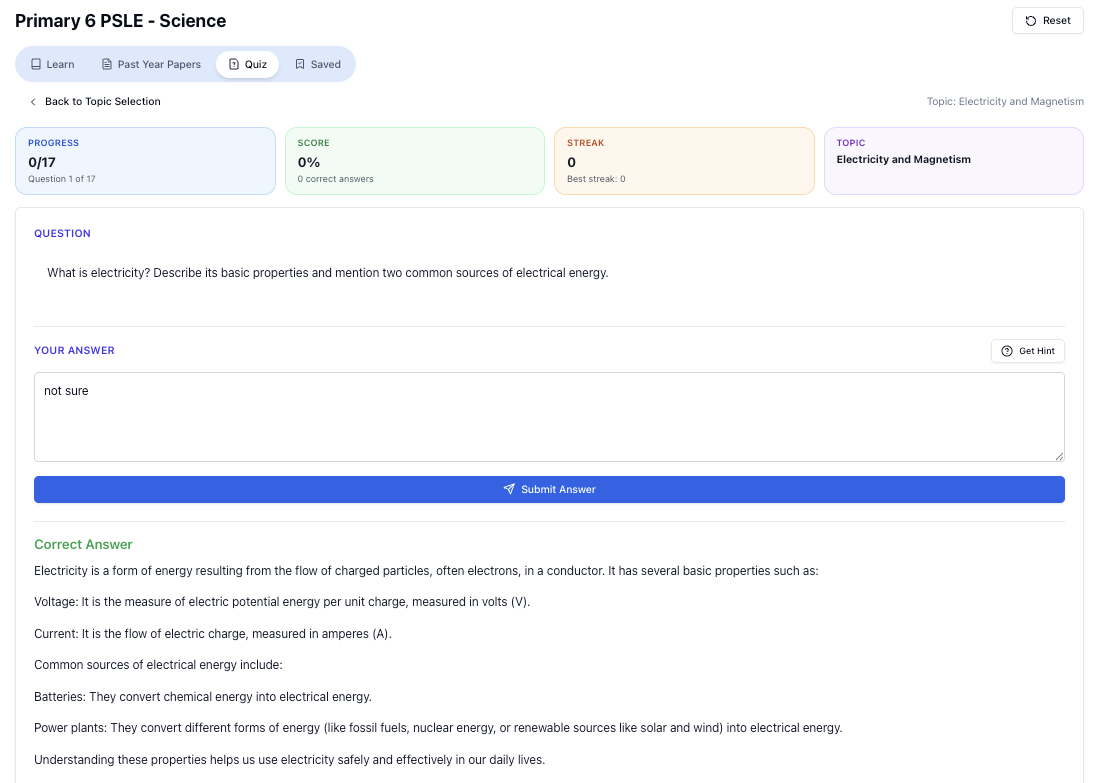
“Practice PSLE Science questions and get clear, step-by-step answers instantly.”
👉 Try a question now and see how fast you can improve.
Free on Tutorly.sg
Practise Integration with step-by-step help — free to start
On Tutorly.sg/app you can practise unlimited Singapore syllabus questions, get instant explanations when you are stuck, and use past-year papers — no sign-up needed to start.
- ✓ PSLE, O Level, A Level, and more
- ✓ Step-by-step working when you are stuck
- ✓ Works on phone and laptop