

Free on Tutorly.sg
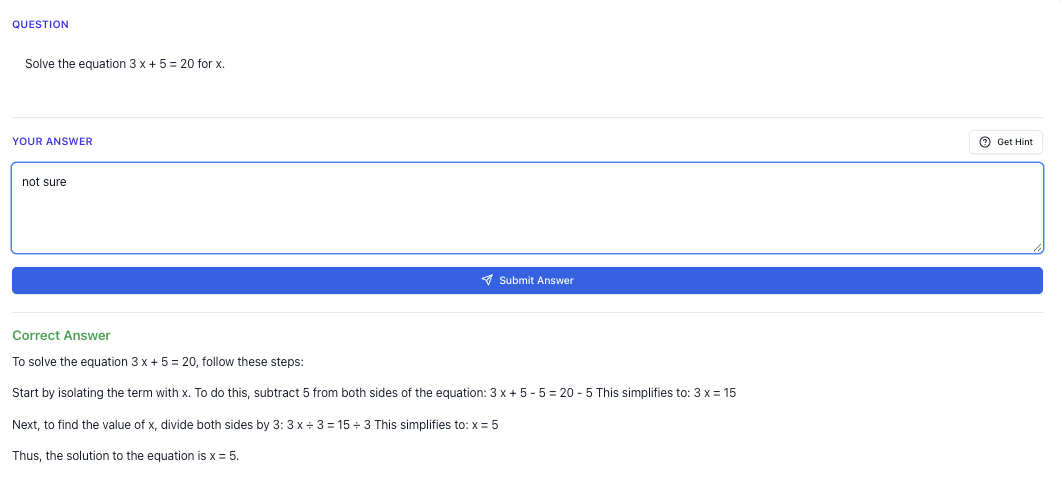
Practise Algebra with step-by-step help — free to start
On Tutorly.sg/app you can practise unlimited Singapore syllabus questions, get instant explanations when you are stuck, and use past-year papers — no sign-up needed to start.
- ✓ PSLE, O Level, A Level, and more
- ✓ Step-by-step working when you are stuck
- ✓ Works on phone and laptop
Quick answer
Feeling your heart sink halfway through an algebra exam because you're running out of time? You're not alone. Many students know the algebra concepts but freeze under pressure. By understanding common mistakes and learning quick fixes, you can save time and score higher.
“Stuck on a question? See simple explanations that help you understand fast.”
👉 Give it a try and turn confusion into clarity in minutes.
What you need to know
Algebra in lower secondary mathematics is about solving equations and understanding variables. It's more about applying what you've learned than just memorising formulas. You need to be quick but also careful to avoid mistakes that cost marks.
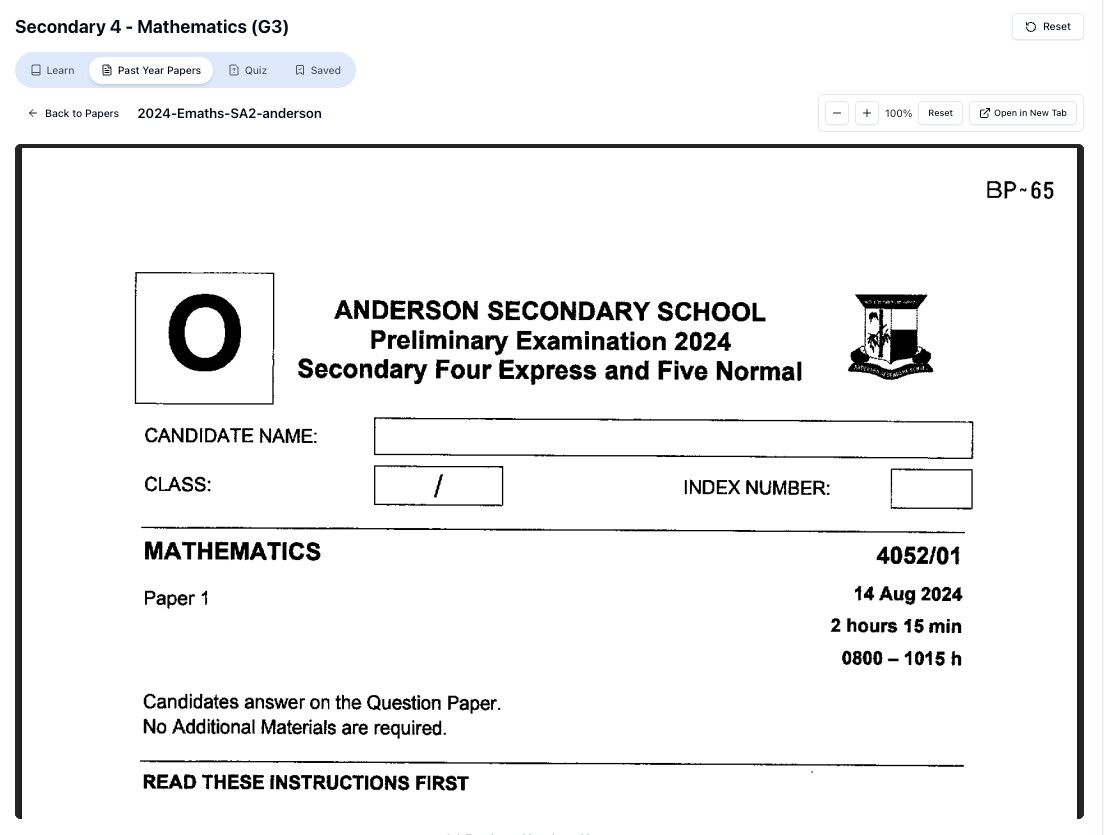
“Access more than 1000+ past year papers to practice”
👉 Start a paper today and test yourself like it’s the real exam.
Key Mistakes That Cost Marks
Rushing Algebra Steps
When you're in a hurry, it's easy to skip steps. This is where many students lose unnecessary marks. You might think you can do it in your head, but it's crucial to write each step down clearly. This way, you can spot mistakes early.
Overcomplicating Simple Questions
Sometimes, a question seems more complex than it is. Students often overthink and add unnecessary steps. The key pattern to recognise is simplicity. If a question looks straightforward, it probably is.
Freezing During Application Questions
Singapore exam questions are increasingly about applying concepts. It's normal to freeze when you see a new type of question. Remember, you should immediately think of the basic formula or method that fits the pattern.
Common mistakes students make
-
Not checking your work. After solving, always check. It's easy to miss negative signs or small errors.
-
Misreading the question. Sometimes, we rush and miss key details. Read carefully to understand what is asked.
-
Ignoring units. In word problems, don't forget to include units in your final answer. This can cost marks.
-
Switching signs incorrectly. When moving terms across an equation, remember to change the sign.
-
Forgetting to combine like terms. Always simplify your equations by combining like terms first.
Exam tip
Stay calm and pace yourself. Allocate specific time for each section and stick to it. If you get stuck, move on and come back later. Presentation matters — write neatly, and show all your steps clearly.
Worked examples
Question
Solve the equation $3 x + 5 = 2 x + 9.
Solution
Step 1: Subtract 2𝑥 from both sides: $3 x - 2 x + 5 = 9.
Why: We need to get all the 𝑥 terms on one side to simplify the equation.
Step 2: Simplify the equation: .
Why: Combining like terms helps us see the equation more clearly.
Step 3: Subtract 5 from both sides: .
Why: Isolating 𝑥 gives us the solution.
Quick check
“Doing Secondary Science? Pick a topic and practise like it’s a real exam — with clear answers right after.”
👉 Try Tutorly now and start a Science topic in seconds.

Solve these on your own:
- $4 x + 7 = 2 x + 15
- $5 x - 3 = 3 x + 9
Answers:
Quick summary
- Write each step clearly to avoid careless mistakes.
- Recognise simple patterns, don't overcomplicate.
- Allocate time wisely; move on if stuck.
- Always check your work before submitting.
- Use units in your final answer.
FAQ
1. What if I run out of time during an exam?
Try to allocate time for each section. If stuck, move on and return later.
2. How do I avoid careless mistakes?
Write each step clearly and check your work. Don't rush.
3. What if I don't understand a question?
Look for familiar patterns or formulas and apply them.
4. How important is neatness in exams?
Very important. Neat work helps you track your steps and avoid errors.
5. Should I memorise formulas?
Understand them instead. Knowing when to apply a formula is more useful.
Free on Tutorly.sg
Practise Algebra with step-by-step help — free to start
On Tutorly.sg/app you can practise unlimited Singapore syllabus questions, get instant explanations when you are stuck, and use past-year papers — no sign-up needed to start.
- ✓ PSLE, O Level, A Level, and more
- ✓ Step-by-step working when you are stuck
- ✓ Works on phone and laptop
Free practice
Try it yourself
Practise similar algebra questions with step-by-step help on Tutorly
- ✓ Unlimited similar questions
- ✓ Step-by-step help when you are stuck
- ✓ No sign-up needed to start
Related Topics You Should Learn Next
- Lower Secondary Mathematics: Mastering Algebra Without Panic
- How To Master O Level Math Algebra Questions (Singapore Secondary Level) With Smart Worksheet Practice
- Lower Secondary Mathematics: Fixing Algebra Mistakes That Cost You Marks
- How To Simplify Algebra: Singapore Secondary Level Tutorial
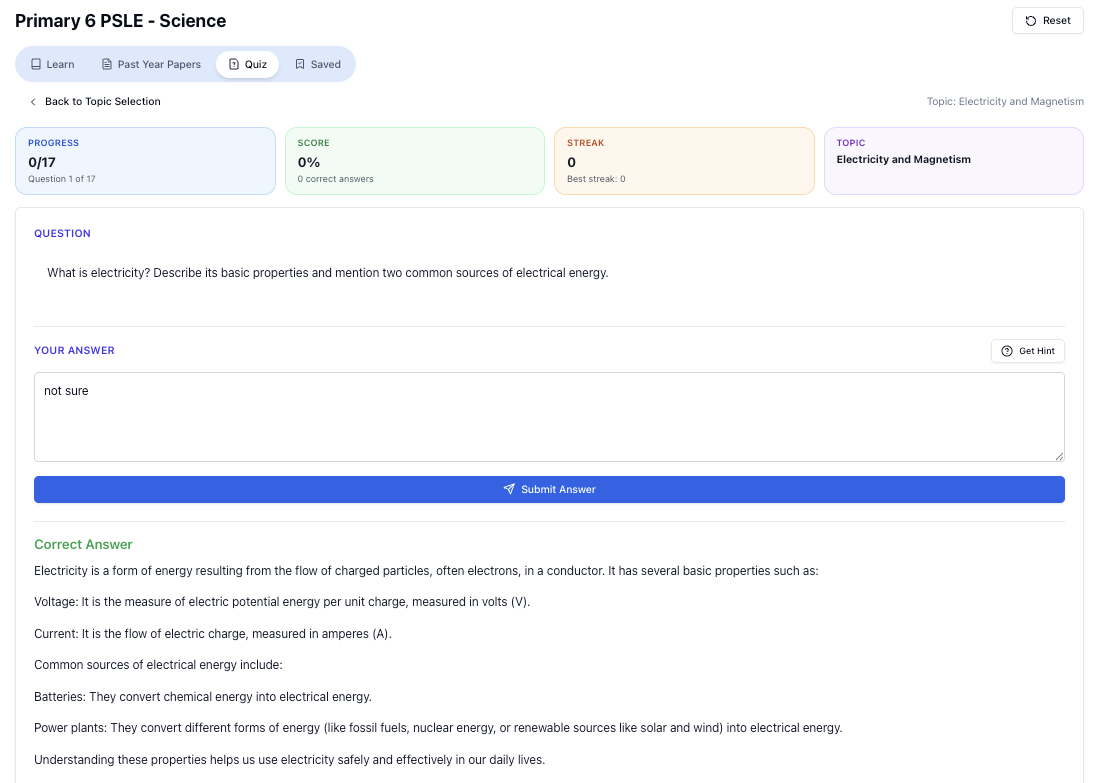
“Practice PSLE Science questions and get clear, step-by-step answers instantly.”
👉 Try a question now and see how fast you can improve.
Free on Tutorly.sg
Practise Algebra with step-by-step help — free to start
On Tutorly.sg/app you can practise unlimited Singapore syllabus questions, get instant explanations when you are stuck, and use past-year papers — no sign-up needed to start.
- ✓ PSLE, O Level, A Level, and more
- ✓ Step-by-step working when you are stuck
- ✓ Works on phone and laptop