

Free on Tutorly.sg
Practise Physical chemistry with step-by-step help — free to start
On Tutorly.sg/app you can practise unlimited Singapore syllabus questions, get instant explanations when you are stuck, and use past-year papers — no sign-up needed to start.
- ✓ PSLE, O Level, A Level, and more
- ✓ Step-by-step working when you are stuck
- ✓ Works on phone and laptop
Quick answer
If your heart sinks during A Level Chemistry exams because you run out of time, you're not alone. Many Singapore students lose marks on questions they know how to solve. The key is understanding what the examiner wants and managing time well. By the end of this article, you'll have practical tips to help you score better without the panic.
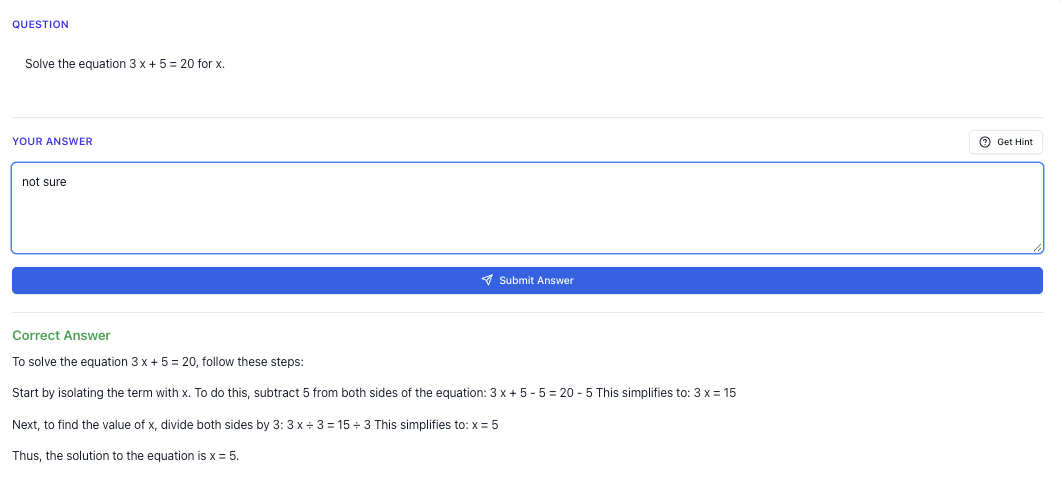
“Stuck on a question? See simple explanations that help you understand fast.”
👉 Give it a try and turn confusion into clarity in minutes.
What you need to know
Physical chemistry at A Levels involves understanding how substances interact and change. This includes topics like thermodynamics, kinetics, and equilibrium. It's not just about memorizing formulas; it's about understanding the processes behind them.
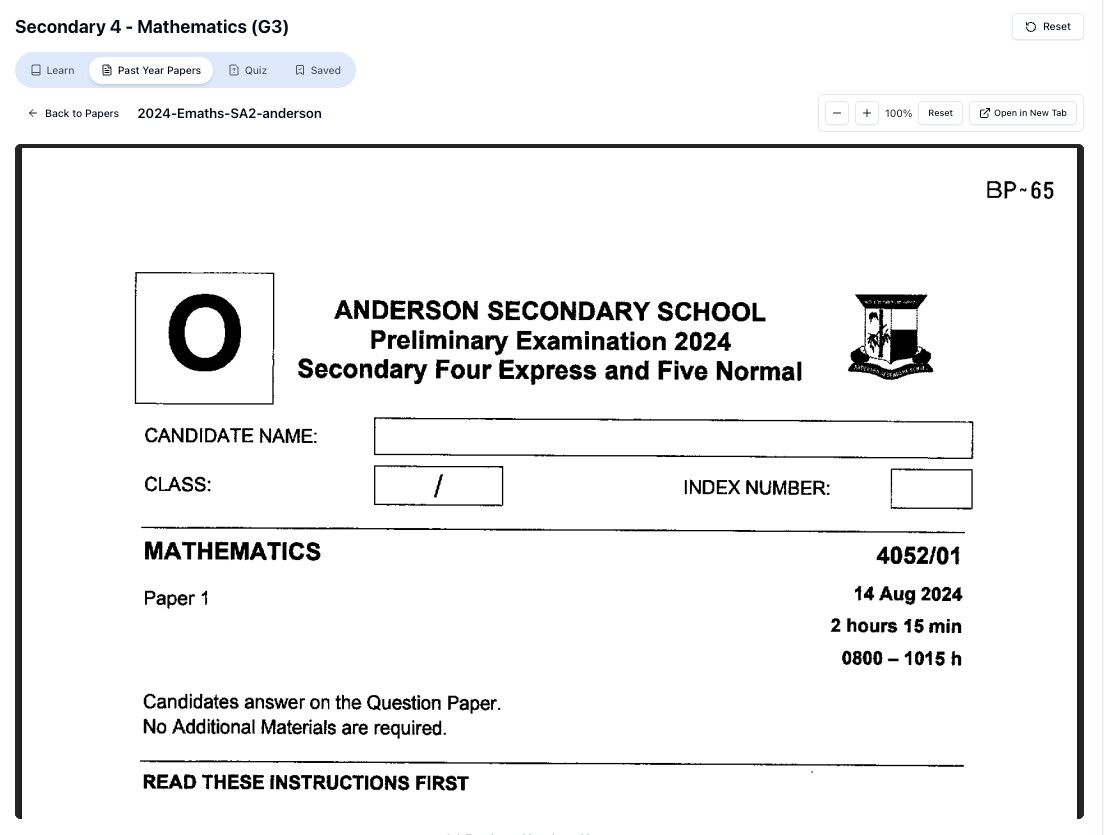
“Access more than 1000+ past year papers to practice”
👉 Start a paper today and test yourself like it’s the real exam.
Mistakes That Cost Marks
1. Memorizing Without Understanding
One mistake I repeatedly see among my Sec 4 students is memorizing keywords without understanding them. In A Level Chemistry, you're tested on your understanding, not just your memory. When you truly grasp a concept, you can handle questions that are worded differently from what you learned in school.
2. Writing General Answers
Students usually panic when they see application questions like this. They write long answers hoping to hit the right point. But A Level examiners look for precision, not length. Be specific and direct in your answers.
3. Running Out of Time
Running out of time is common, especially in the second half of the paper. You might know the answers but can't write them down fast enough. Learning to manage your time can prevent this.
Common mistakes students make
- Misreading the question: This part trips everyone up. Always underline key terms.
- Overcomplicating answers: Keep it simple. Answer what is asked.
- Ignoring units: Marks are lost for missing units. Always include them.
Exam tip
Timing and Presentation
- Timing: Allocate time based on marks. Spend more time on high-mark questions.
- Presentation: Use clear handwriting. Organize your work logically.
- Question Types: Know the common question styles, like calculation and explanation.
Worked examples
Question
Calculate the change in Gibbs free energy () for a reaction at 298 K where the enthalpy change () is -150 kJ/mol and the entropy change () is -200 J/mol·K.
Solution
Step 1: Convert to kJ/mol·K.
Why: Keeping units consistent is crucial for accurate calculations.
Step 2: Use the formula .
Why: This formula links enthalpy, temperature, and entropy to find Gibbs free energy.
Step 3: Substitute the values: .
Why: Plugging in values lets us solve for directly.
“Doing Secondary Science? Pick a topic and practise like it’s a real exam — with clear answers right after.”
👉 Try Tutorly now and start a Science topic in seconds.

Step 4: Calculate .
Why: The final answer tells us if the reaction is spontaneous.
Quick summary
- Understand concepts, don't just memorize.
- Be precise, not lengthy, in answers.
- Manage your time efficiently.
- Read questions carefully and underline key terms.
- Use consistent units in calculations.
FAQ
Q 1: How can I manage my time better during exams?
Allocate time based on marks. Practice with timed papers to get used to the pressure.
Q 2: What's the best way to understand physical chemistry concepts?
Connect them to real-life examples, like how humidity affects reactions.
Q 3: Why do I lose marks even when my answers are long?
Lengthy answers can lack focus. Be specific and answer precisely what is asked.
Q 4: How can I improve my calculation skills?
Practice regularly and always check your units to avoid simple mistakes.
Q 5: Are there any specific tips for application questions?
Understand the process and think about what the examiner is testing.
Free on Tutorly.sg
Practise Physical chemistry with step-by-step help — free to start
On Tutorly.sg/app you can practise unlimited Singapore syllabus questions, get instant explanations when you are stuck, and use past-year papers — no sign-up needed to start.
- ✓ PSLE, O Level, A Level, and more
- ✓ Step-by-step working when you are stuck
- ✓ Works on phone and laptop
Free practice
Try it yourself
Practice similar questions with step-by-step help on Tutorly.
- ✓ Unlimited similar questions
- ✓ Step-by-step help when you are stuck
- ✓ No sign-up needed to start
Related Topics You Should Learn Next
- [JC H 2 Chemistry Tuition: A Practical Guide To Acing A-Level Chem In Singapore](/blog/jc-h 2-chemistry-tuition)
- [AI Tutor for A Level H 2 Chemistry in Singapore: How to Actually Use It to Boost Your Grades](/blog/ai-tutor-for-a-level-h 2-chemistry-singapore)
- [How An AI Tutor Can Actually Help With JC 1 H 2 Chemistry In Singapore](/blog/ai-tutor-for-jc 1-h 2-chemistry-singapore)
- [JC H 2 Chemistry Tuition: A Practical Guide To Acing A-Level Chem In Singapore](/blog/jc-h 2-chemistry-tuition)
- [Topic cluster hub](https://tutorly.sg/learn/jc-h 2-chemistry-physical)
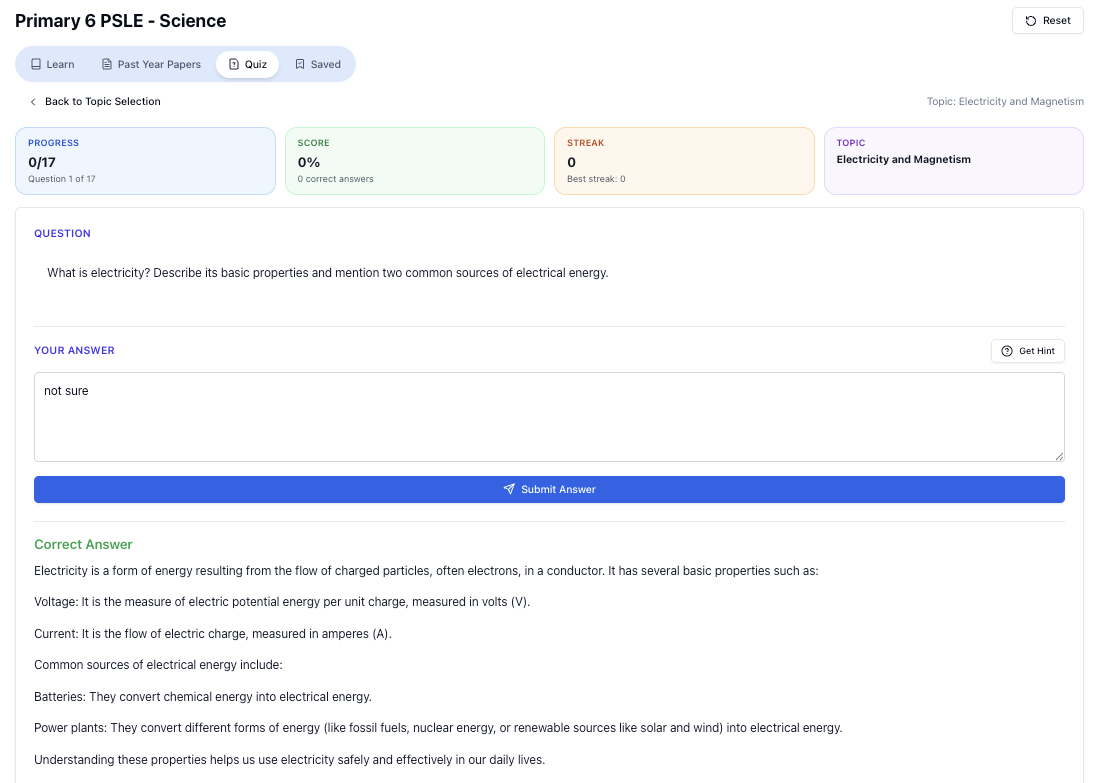
“Practice PSLE Science questions and get clear, step-by-step answers instantly.”
👉 Try a question now and see how fast you can improve.
Free on Tutorly.sg
Practise Physical chemistry with step-by-step help — free to start
On Tutorly.sg/app you can practise unlimited Singapore syllabus questions, get instant explanations when you are stuck, and use past-year papers — no sign-up needed to start.
- ✓ PSLE, O Level, A Level, and more
- ✓ Step-by-step working when you are stuck
- ✓ Works on phone and laptop