

Free on Tutorly.sg
Practise Vectors with step-by-step help — free to start
On Tutorly.sg/app you can practise unlimited Singapore syllabus questions, get instant explanations when you are stuck, and use past-year papers — no sign-up needed to start.
- ✓ PSLE, O Level, A Level, and more
- ✓ Step-by-step working when you are stuck
- ✓ Works on phone and laptop
Quick answer
Vectors in A Level Maths often seem daunting, but they're just about direction and magnitude. Focus on understanding basic operations and applications rather than memorising. This way, you can tackle any vector question with confidence.
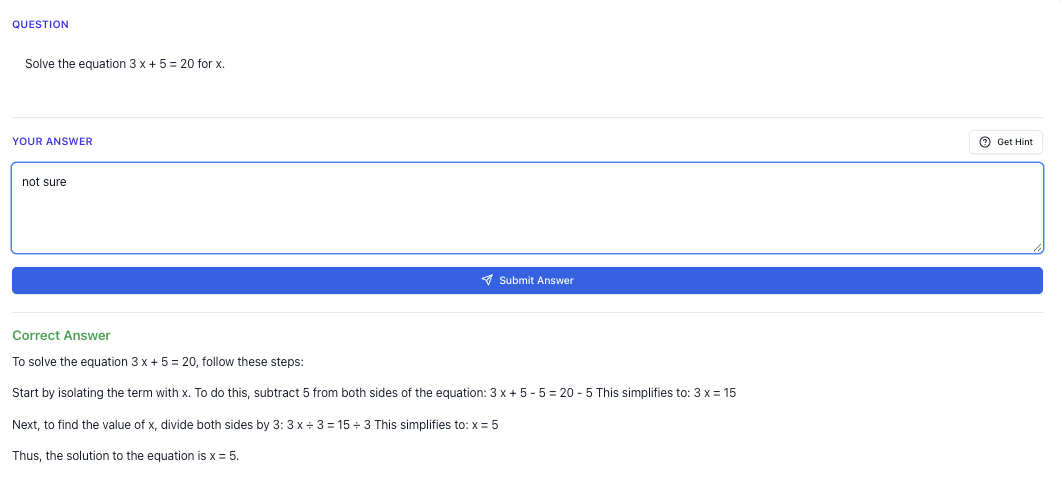
“Stuck on a question? See simple explanations that help you understand fast.”
👉 Give it a try and turn confusion into clarity in minutes.
What you need to know
A vector is a quantity that has both direction and magnitude. Think of it like an arrow pointing somewhere — its length is the magnitude, and where it points is the direction. In exams, you'll often deal with vectors in 2 D or 3 D space, represented as or .
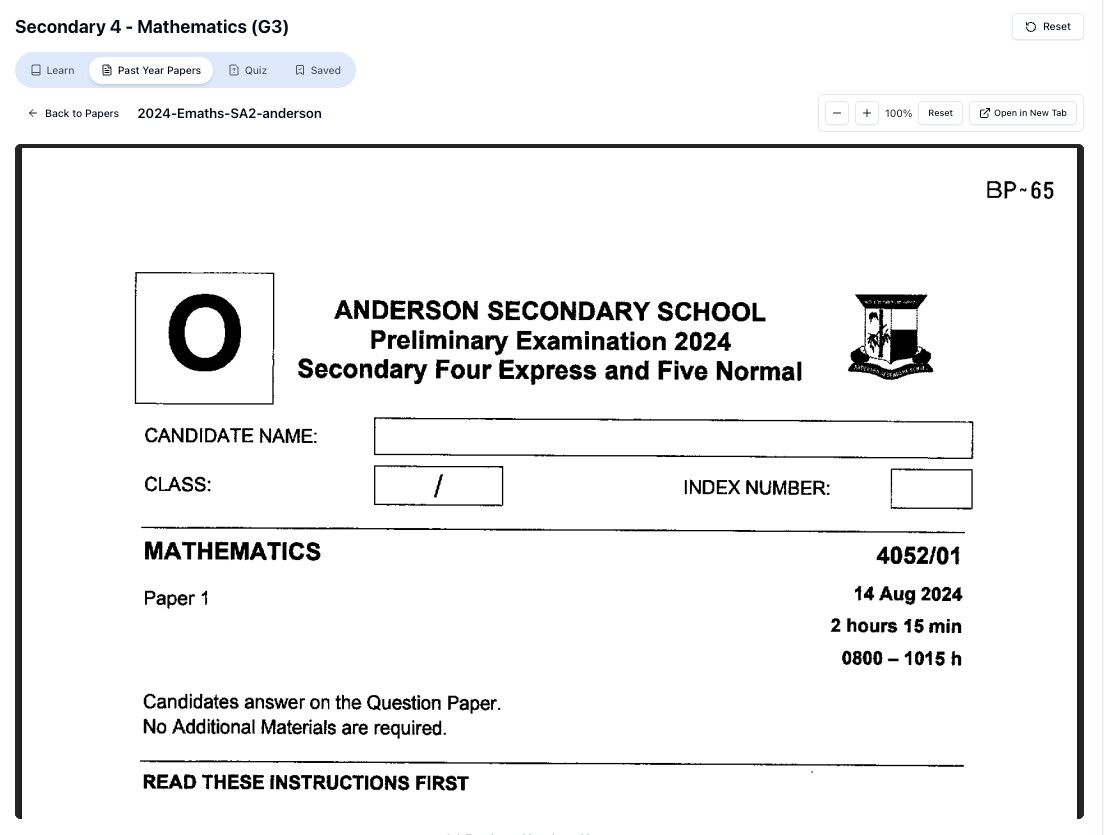
“Access more than 1000+ past year papers to practice”
👉 Start a paper today and test yourself like it’s the real exam.
Vector Basics
Addition and Subtraction
When you add or subtract vectors, you do it component-wise.
Step 1: Combine the corresponding components. If and , then .
Why: This keeps the vector's direction and magnitude consistent with its components.
Scalar Multiplication
Multiplying a vector by a scalar changes its magnitude but not its direction.
Step 1: Multiply each component of the vector by the scalar. For , if and , then .
Why: This stretches or shrinks the vector, making it longer or shorter.
Dot Product
The dot product of two vectors gives a scalar (a plain number) and shows how much one vector goes in the direction of another.
Step 1: Multiply corresponding components and add them up. For vectors and , .
Why: This measures the projection of one vector onto another, useful for finding angles.
Quick check
- Add and .
- Find the scalar multiple if .
- Calculate the dot product of and .
Answers:
- $11
Revision checklist
- Rushing Steps: Slow down when adding or subtracting components. Check each component separately.
- Forgetting Scalar Multiplication: Remember to multiply all components by the scalar, not just one.
- Overcomplicating Dot Product: Focus on multiplying and adding components accurately.
- Units and Directions: Always check if your final vector answer has correct units and directions.
Exam tip
Vectors questions in exams often test your ability to apply rather than just recall. Look for key words like "magnitude" or "direction" and relate them to what you've learned. Draw diagrams if needed to visualise the problem.
Worked examples
Question 1
Find the vector sum of and .
Solution
Step 1: Add corresponding components:
.
Why: By adding each component, we ensure the new vector has the correct direction and magnitude.
Question 2
Calculate the dot product of and .
“Doing Secondary Science? Pick a topic and practise like it’s a real exam — with clear answers right after.”
👉 Try Tutorly now and start a Science topic in seconds.

Solution
Step 1: Multiply corresponding components and sum them up:
.
Why: This gives us how much goes in the direction of , a useful scalar.
Quick summary
- Vectors have both direction and magnitude, similar to an arrow.
- Add and subtract vectors by combining components.
- Scalar multiplication changes the length of the vector.
- Dot product results in a scalar, useful for angles.
- Practice with diagrams to visualise problems.
- Slow down to avoid careless mistakes during exams.
- Recognize keywords in questions to apply correct methods.
FAQ
Why do I get stuck on vector questions?
Many students freeze because they try to memorise rather than understand the concept. Visualising vectors can help.
How do I know when to use the dot product?
Use it when the question involves angles or projections between vectors.
What if I make calculation errors often?
Check each step methodically and practice breaking down the components. Double-check your arithmetic.
Are vectors really important for exams?
Yes, they test your understanding of space and direction, which are crucial in many math problems.
Free on Tutorly.sg
Practise Vectors with step-by-step help — free to start
On Tutorly.sg/app you can practise unlimited Singapore syllabus questions, get instant explanations when you are stuck, and use past-year papers — no sign-up needed to start.
- ✓ PSLE, O Level, A Level, and more
- ✓ Step-by-step working when you are stuck
- ✓ Works on phone and laptop
Free practice
Try it yourself
Practise similar past-year vector questions with step-by-step help on Tutorly
- ✓ Unlimited similar questions
- ✓ Step-by-step help when you are stuck
- ✓ No sign-up needed to start
Practise with free question sets
Work through exam-style questions with answers and step-by-step solutions:
- [35+ A Level H 2 Vectors Questions for (Singapore MOE Syllabus) with Exam-Style Solutions](/questions/jc-h 2-math-vectors-questions)
- [Topic study hub](/learn/jc-h 2-math-vectors)
[Practise unlimited questions on Tutorly.sg/app](https://www.tutorly.sg/app)
Related Topics You Should Learn Next
- [JC H 2 Math: Vectors](https://tutorly.sg/learn/jc-h 2-math-vectors)
- [Vector Calculations for A Levels](https://tutorly.sg/blog/jc-h 2-math-vectors-guide)
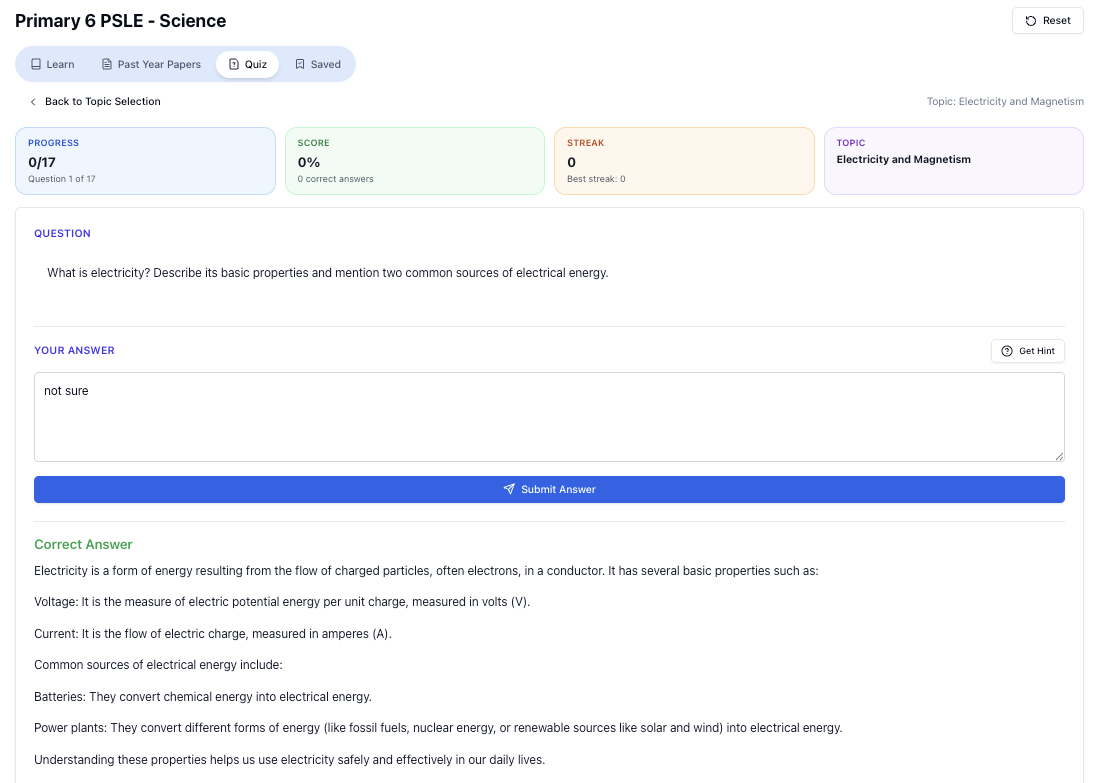
“Practice PSLE Science questions and get clear, step-by-step answers instantly.”
👉 Try a question now and see how fast you can improve.
Free on Tutorly.sg
Practise Vectors with step-by-step help — free to start
On Tutorly.sg/app you can practise unlimited Singapore syllabus questions, get instant explanations when you are stuck, and use past-year papers — no sign-up needed to start.
- ✓ PSLE, O Level, A Level, and more
- ✓ Step-by-step working when you are stuck
- ✓ Works on phone and laptop