

Free on Tutorly.sg
Practise Vectors with step-by-step help — free to start
On Tutorly.sg/app you can practise unlimited Singapore syllabus questions, get instant explanations when you are stuck, and use past-year papers — no sign-up needed to start.
- ✓ PSLE, O Level, A Level, and more
- ✓ Step-by-step working when you are stuck
- ✓ Works on phone and laptop
Quick answer
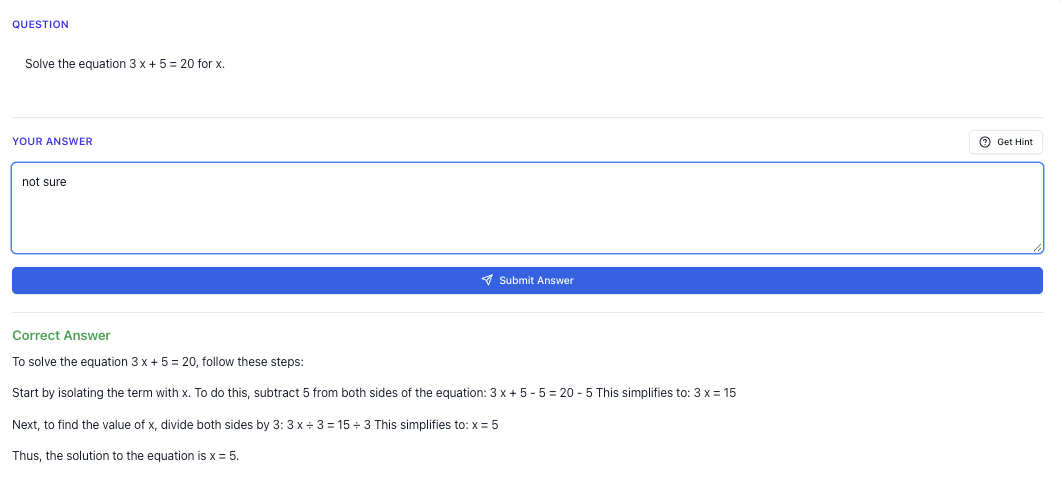
Vectors are like arrows that have both direction and size (or magnitude). In A Level exams, you often need to find a vector's length or direction or add them together. If you panic when you see these questions, don't worry — once you understand the steps, you can tackle them calmly.
“Stuck on a question? See simple explanations that help you understand fast.”
👉 Give it a try and turn confusion into clarity in minutes.
What you need to know
A vector is a mathematical object with both magnitude (size) and direction. Think of it like an arrow pointing from one place to another. When you see a vector question, you should immediately think about how to break it down into simple steps — this is where many students lose unnecessary marks.
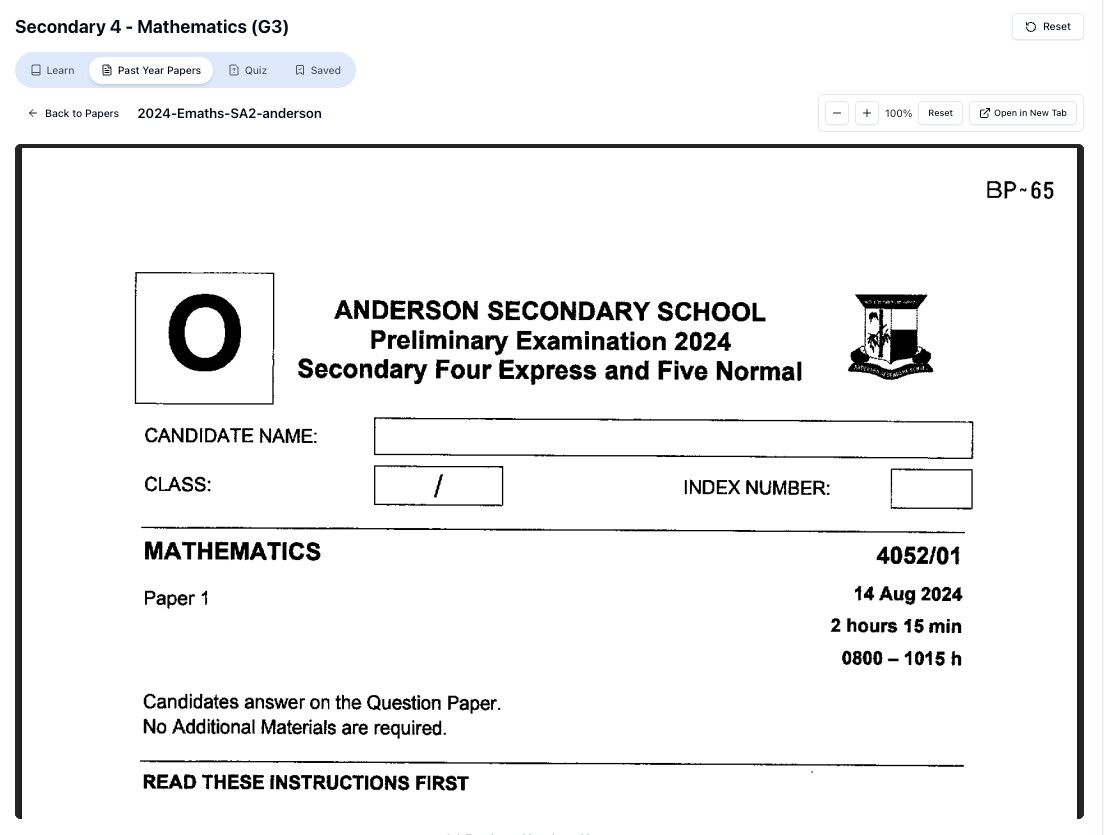
“Access more than 1000+ past year papers to practice”
👉 Start a paper today and test yourself like it’s the real exam.
Basics of Vectors
- Magnitude: This is the length of the vector. It's like the distance the arrow travels.
- Direction: This tells you which way the arrow points.
- Notation: Vectors are often written in bold (like v) or with an arrow on top (like ).
Quick check
- What do vectors have that numbers don't?
- How do you find the magnitude of a vector ?
- What is the direction of a vector?
Answers:
- Both magnitude and direction.
- Magnitude is .
- The direction is given by the angle the vector makes with the positive x-axis.
Common mistakes students make
- Rushing Algebra: Many students rush through simplifying vector expressions and make careless mistakes. Always double-check your steps.
- Forgetting Units: Sometimes, students forget to include units in their final answer, especially for magnitude.
- Overcomplicating Questions: It's easy to overthink vector components. Break them down into simple parts.
Exam tip
Always start by identifying what the question is asking for — magnitude, direction, or both. Write down the formula you need, and take a deep breath before you begin. Presentation matters, so keep your steps clear and logical.
Worked examples
Question
Find the magnitude and direction of vector .
Solution
Step 1: Calculate the magnitude using the formula: .
Why: This formula gives the length of the "arrow" representing the vector.
Step 2: Substitute the given values: .
Why: Substituting values helps you find the actual magnitude.
Step 3: Find the direction using .
Why: This inverse tangent function finds the angle made with the x-axis.
Step 4: Calculate: .
Why: This gives you the angle, which is the direction of the vector.
Question
Determine the resultant vector of and .
Solution
Step 1: Add the corresponding components of and .
Why: Adding vectors involves adding their x and y components separately.
Step 2: Calculate: (2 + 4, 3 + (-1)) = (6, 2).
Why: This gives you the resultant vector by combining both vectors.
“Doing Secondary Science? Pick a topic and practise like it’s a real exam — with clear answers right after.”
👉 Try Tutorly now and start a Science topic in seconds.

Quick summary
- Vectors have both magnitude and direction.
- Use for magnitude.
- Use for direction.
- Add vectors by adding their components.
- Check units and simplify carefully.
FAQ
Q: How do I find a unit vector?
A: Divide each component of the vector by its magnitude. This gives a vector with a magnitude of 1.
Q: Why do I need vectors?
A: Vectors are used to represent quantities that have both direction and magnitude, like force or velocity.
Q: What if I can't find the direction?
A: Double-check your trigonometry. Make sure you use correctly.
Q: Can vectors have negative components?
A: Yes, negative components just mean the vector points in the opposite direction along that axis.
Free on Tutorly.sg
Practise Vectors with step-by-step help — free to start
On Tutorly.sg/app you can practise unlimited Singapore syllabus questions, get instant explanations when you are stuck, and use past-year papers — no sign-up needed to start.
- ✓ PSLE, O Level, A Level, and more
- ✓ Step-by-step working when you are stuck
- ✓ Works on phone and laptop
Free practice
Try it yourself
Practice more vector questions with step-by-step help on Tutorly
- ✓ Unlimited similar questions
- ✓ Step-by-step help when you are stuck
- ✓ No sign-up needed to start
Practise with free question sets
Work through exam-style questions with answers and step-by-step solutions:
- [35+ A Level H 2 Vectors Questions for (Singapore MOE Syllabus) with Exam-Style Solutions](/questions/jc-h 2-math-vectors-questions)
- [Topic study hub](/learn/jc-h 2-math-vectors)
[Practise unlimited questions on Tutorly.sg/app](https://www.tutorly.sg/app)
Related Topics You Should Learn Next
- [JC H 2 Math Vectors](https://tutorly.sg/learn/jc-h 2-math-vectors)
- [Pillar Article: JC H 2 Math Vectors Guide](https://tutorly.sg/blog/jc-h 2-math-vectors-guide)
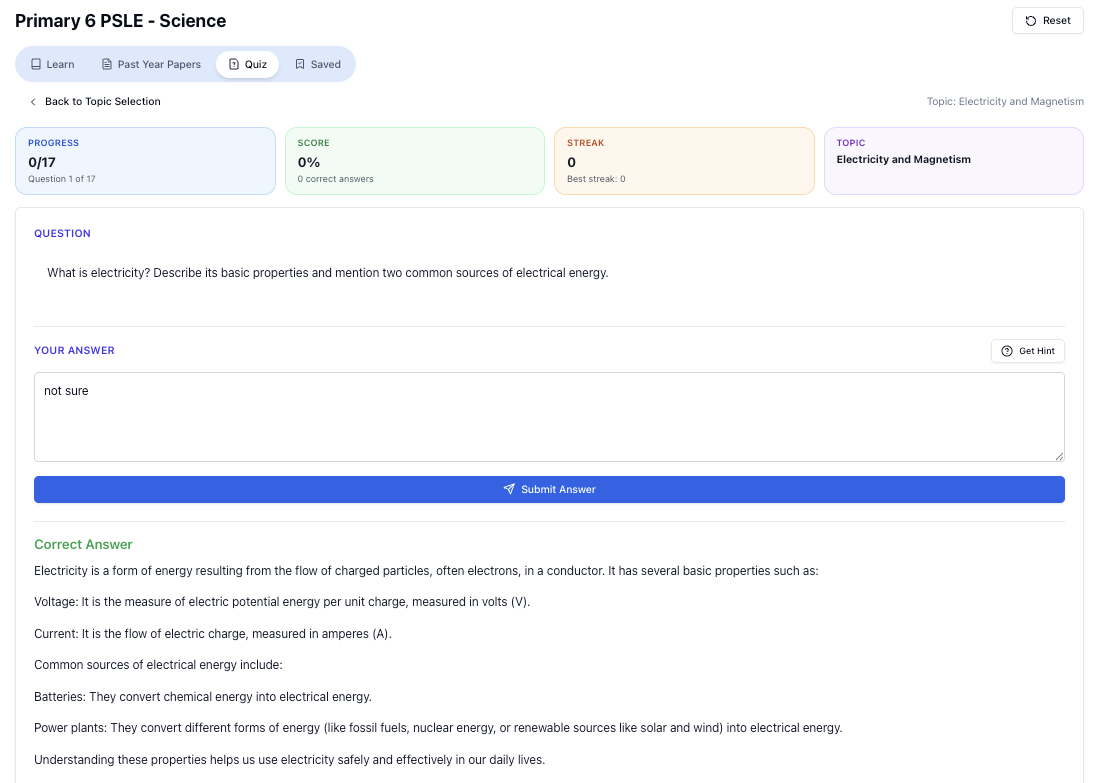
“Practice PSLE Science questions and get clear, step-by-step answers instantly.”
👉 Try a question now and see how fast you can improve.
Free on Tutorly.sg
Practise Vectors with step-by-step help — free to start
On Tutorly.sg/app you can practise unlimited Singapore syllabus questions, get instant explanations when you are stuck, and use past-year papers — no sign-up needed to start.
- ✓ PSLE, O Level, A Level, and more
- ✓ Step-by-step working when you are stuck
- ✓ Works on phone and laptop