

Free on Tutorly.sg
Practise Organic chemistry with step-by-step help — free to start
On Tutorly.sg/app you can practise unlimited Singapore syllabus questions, get instant explanations when you are stuck, and use past-year papers — no sign-up needed to start.
- ✓ PSLE, O Level, A Level, and more
- ✓ Step-by-step working when you are stuck
- ✓ Works on phone and laptop
Quick answer
When faced with A Level organic chemistry questions, many students freeze if the question doesn't match their notes. The key is understanding the process, not just memorizing keywords. Let's break down some common questions into simple steps, so you can tackle them with confidence.
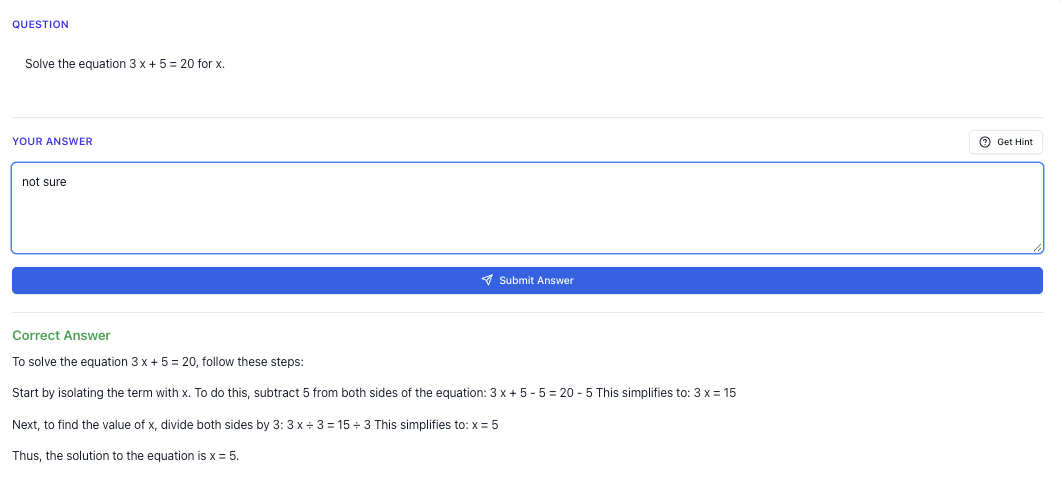
“Stuck on a question? See simple explanations that help you understand fast.”
👉 Give it a try and turn confusion into clarity in minutes.
What you need to know
Organic chemistry is the study of carbon-based compounds. At A Level, you'll encounter questions that require you to apply concepts rather than just recall facts. This means understanding how reactions work, not just what they are.
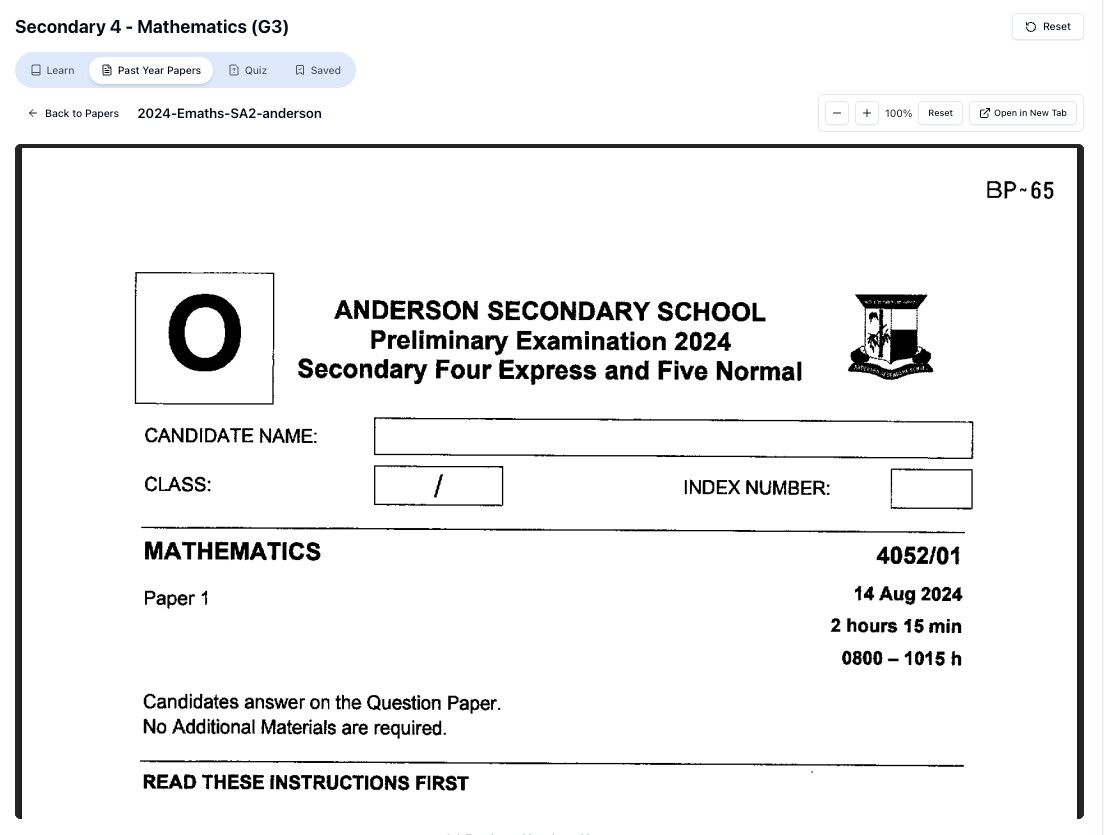
“Access more than 1000+ past year papers to practice”
👉 Start a paper today and test yourself like it’s the real exam.
Mistake 1: Not Understanding Functional Groups
One mistake I repeatedly see among my Sec 4 students is not truly understanding functional groups. These are specific groups of atoms within molecules that determine their reactions. Recognizing functional groups helps you predict how a molecule will behave in a reaction.
Quick check
- What is the functional group in ethanol?
- Identify the functional group in propanoic acid.
- Which functional group is present in amines?
Answers:
- Hydroxyl group (–OH)
- Carboxyl group (–COOH)
- Amino group (–NH 2)
Common mistakes students make
1. Memorizing without understanding: Many students memorize reactions without understanding why they happen. This leads to panic when questions are phrased differently.
2. Answering too generally: Being precise is crucial. For example, saying "it's an oxidation reaction" without specifying what is oxidized can cost you marks.
3. Getting confused by different phrasing: Examiners often test if you understand the process by changing the way questions are asked. Practice applying concepts in different scenarios.
Exam tip
In exams, focus on the process rather than the final answer. Marks are often awarded for the method, so show your working clearly. Use clear labels for each step, and remember to explain why each step is necessary.
Worked examples
Question 1: Identify the product of the following reaction
Given: Ethene reacts with bromine.
Solution
Step 1: Write the balanced equation for the reaction.
Why: This shows the reactants and products clearly.
Step 2: Identify the type of reaction.
Why: Knowing this helps you understand what happens during the reaction. This is an addition reaction.
Step 3: Draw the structure of the product.
Why: Visualizing the structure helps ensure you've accounted for all atoms.
Step 4: Confirm that the mole ratio is correct.
Why: Ensures the reaction is balanced and everything adds up.
Question 2: Predict the major product of the following reaction
Given: Propene reacts with HCl.
Solution
Step 1: Identify the type of reaction.
Why: This is an electrophilic addition reaction.
Step 2: Consider Markovnikov's rule.
Why: This rule helps predict where the H and Cl will add on the molecule.
Step 3: Draw the structure of the major product.
Why: This helps visualize the correct product based on the rule.
Step 4: Verify the stability of the carbocation intermediate.
Why: More stable intermediates lead to major products in reactions.
Question 3: Explain the mechanism of the following reaction
Given: Ethanol is dehydrated to form ethene.
Solution
Step 1: Identify the catalyst used.
Why: Concentrated sulfuric acid is typically used for dehydration.
Step 2: Write the reaction mechanism.
Why: Understanding the steps helps you see how ethanol becomes ethene.
Step 3: Draw each step of the mechanism.
Why: Visualizing the process helps ensure you understand each part.
Step 4: Confirm the removal of water.
Why: Dehydration means losing water, so ensure this is shown in the mechanism.
“Doing Secondary Science? Pick a topic and practise like it’s a real exam — with clear answers right after.”
👉 Try Tutorly now and start a Science topic in seconds.

Question 4: Determine the reagent needed for the following transformation
Given: Convert but-2-ene to butan-2-ol.
Solution
Step 1: Identify the type of reaction needed.
Why: This is a hydration reaction.
Step 2: Choose the correct reagent.
Why: Water with an acid catalyst (like H2SO 4) is needed.
Step 3: Write the balanced chemical equation.
Why: This clarifies the reactants and products involved.
Step 4: Confirm the addition follows Markovnikov's rule.
Why: This ensures the correct product is formed.
Quick summary
- Understand functional groups and their reactions.
- Show each step clearly in exams.
- Apply concepts to new question formats.
- Use Markovnikov’s rule for predicting major products.
- Visualize reaction mechanisms.
FAQ
Q 1: How do I identify the functional group in a molecule?
Look for specific atoms or groups of atoms that define the molecule's properties, like –OH for alcohols.
Q 2: What is Markovnikov's rule?
It predicts that in addition reactions, the hydrogen atom adds to the carbon with more hydrogen atoms already attached.
Q 3: How do I write a balanced chemical equation?
Ensure the number of each type of atom is the same on both sides of the equation.
Q 4: What is an electrophilic addition reaction?
A reaction where an electron-rich area of a molecule reacts with an electron-poor species.
Q 5: Why is understanding mechanisms important?
It helps you see how reactions proceed, which aids in predicting products.
Free on Tutorly.sg
Practise Organic chemistry with step-by-step help — free to start
On Tutorly.sg/app you can practise unlimited Singapore syllabus questions, get instant explanations when you are stuck, and use past-year papers — no sign-up needed to start.
- ✓ PSLE, O Level, A Level, and more
- ✓ Step-by-step working when you are stuck
- ✓ Works on phone and laptop
Free practice
Try it yourself
To practice similar organic chemistry questions with step-by-step help, visit . You'll find exercises that mimic exam styles and detailed solutions.
- ✓ Unlimited similar questions
- ✓ Step-by-step help when you are stuck
- ✓ No sign-up needed to start
Practise with free question sets
Work through more exam-style questions with answers and step-by-step solutions:
- [35+ A Level Organic chemistry Practice Questions for 2026 (based on Singapore MOE Syllabus)](/questions/jc-h 2-chemistry-organic-questions)
- [Topic study hub](/learn/jc-h 2-chemistry-organic)
Want unlimited similar questions with AI marking? Practise on Tutorly.sg/app
Related Topics You Should Learn Next
- How To Tackle A Level Chemistry Organic Questions In Singapore
- A Level Chemistry: Organic Chemistry Complete Guide for Singapore Students
- A Level Chemistry: Organic Chemistry Explained Simply for Singapore Students
- Organic Chemistry Tutor Online (2026): What to do next
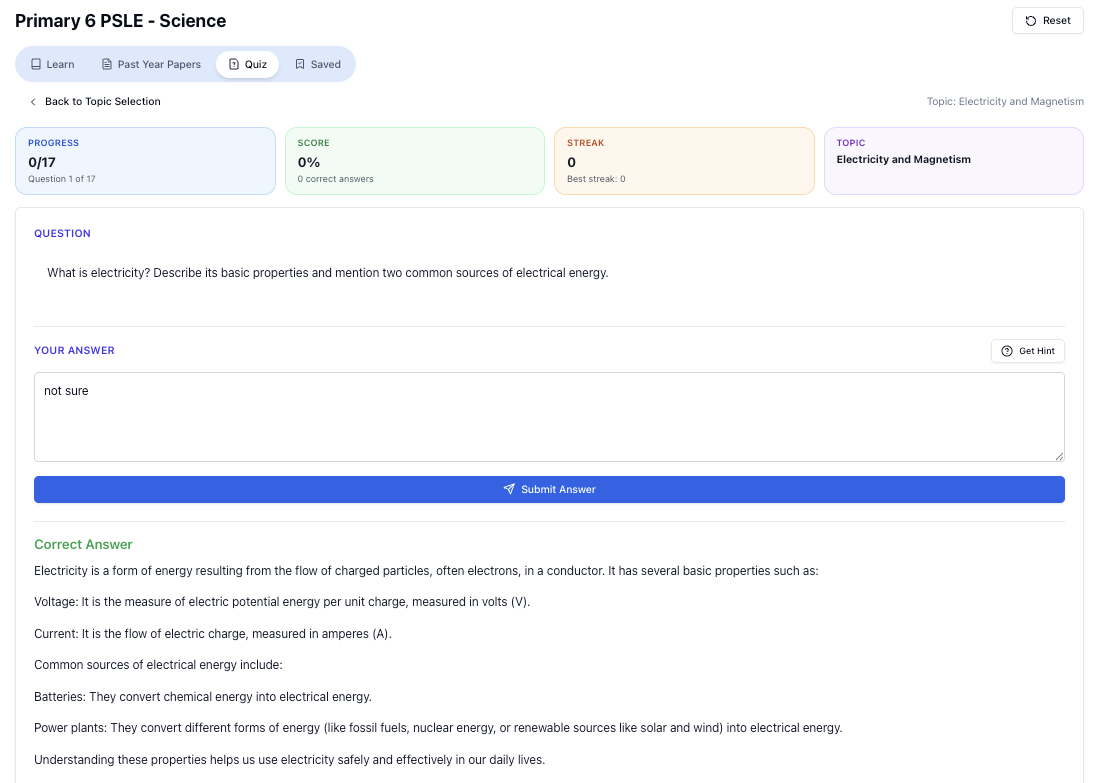
“Practice PSLE Science questions and get clear, step-by-step answers instantly.”
👉 Try a question now and see how fast you can improve.
Free on Tutorly.sg
Practise Organic chemistry with step-by-step help — free to start
On Tutorly.sg/app you can practise unlimited Singapore syllabus questions, get instant explanations when you are stuck, and use past-year papers — no sign-up needed to start.
- ✓ PSLE, O Level, A Level, and more
- ✓ Step-by-step working when you are stuck
- ✓ Works on phone and laptop